
Microsoft's New Patent Replaces AI Chips with Beams of Light
Microsoft has filed a patent for a system that performs AI calculations using grids of laser light rather than electrical circuits — a fundamentally different approach to the hardware that runs neural networks.
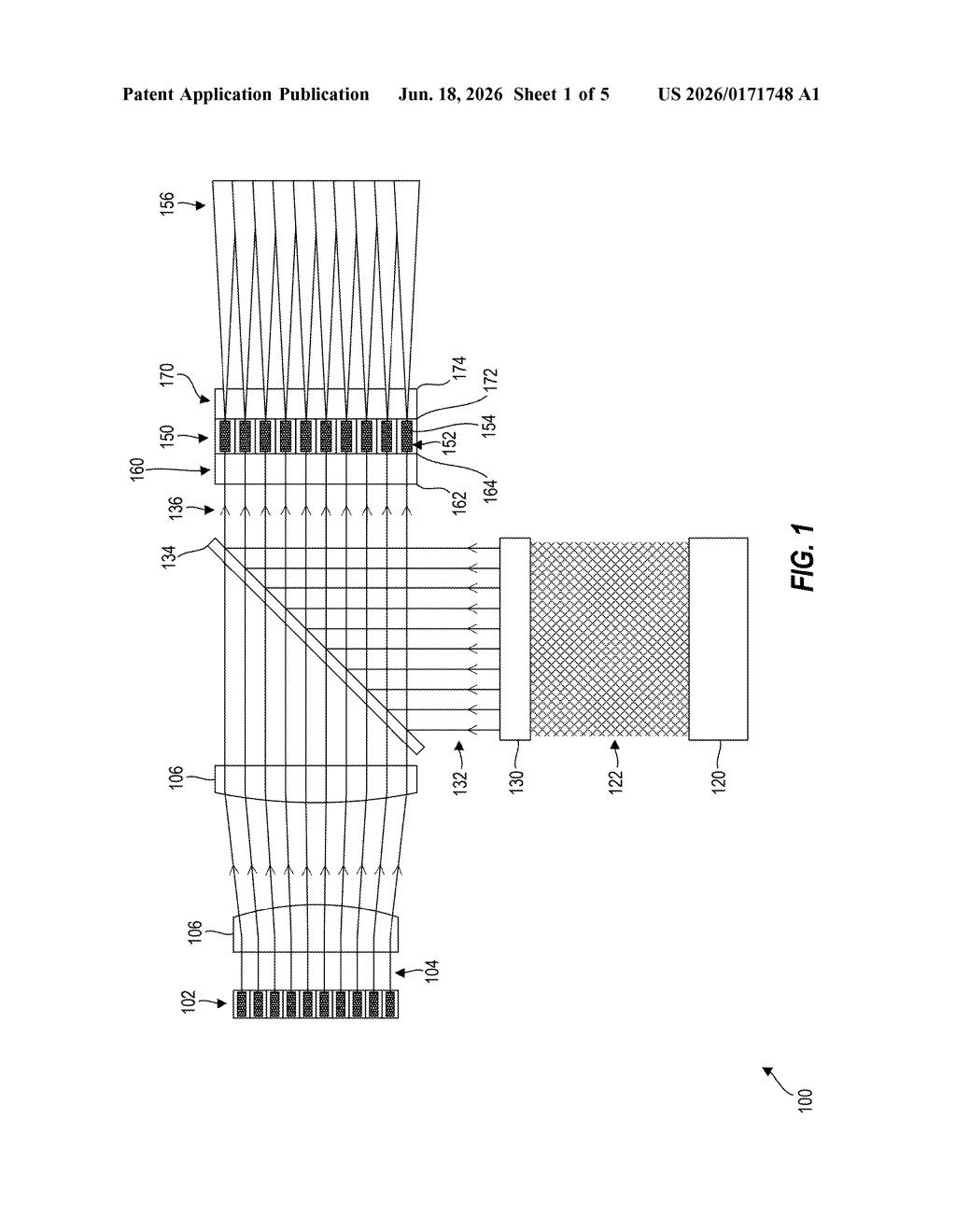
How Microsoft's light-based AI computing system works
Imagine if instead of doing math with electricity flowing through silicon chips, your computer could do it with beams of light bouncing around tiny mirrors. That's the basic idea here. Microsoft's patent describes a grid of miniature laser cavities — dozens or potentially hundreds of them — that can be tuned and synchronized to carry out the kinds of calculations that power AI.
Each laser in the grid receives two things: a "pump" beam that energizes it, and a weaker "injection" signal that carries the data. By carefully tuning that injection signal, you can control what the laser outputs — and that output is the computation. It's a bit like using one tuning fork to force another to vibrate at exactly the right frequency.
This matters because today's AI chips generate enormous amounts of heat and consume huge amounts of power. Doing the same math with photons (light particles) instead of electrons could, in theory, be far faster and far more energy-efficient. Microsoft is clearly exploring whether light-based hardware could become a practical alternative.
Inside the injection-locking laser cavity matrix
The patent describes a laser matrix system designed to function as the physical substrate for an optical neural network — meaning it's hardware that performs AI-style math using laser light instead of transistors.
The system has four main components:
- Pump light sources — lasers that energize the system, operating at a shorter wavelength (higher energy)
- Injection lasers — separate lasers that generate a reference signal at a longer wavelength, which carries the data
- Light modulators — devices that encode information onto the injection light (think of them as switches that shape the signal)
- A laser cavity matrix — the core grid of individual laser cavities, each containing a gain medium (a material that amplifies light when energized)
The key mechanism is injection locking — a phenomenon where a weak incoming light signal forces a laser cavity to synchronize its output to that signal's frequency and phase. In this system, the modulated injection light essentially "programs" each cavity's output. Because the output power comes from the pump (not the weak injection signal), the cavity acts as an amplifying, controllable element — exactly what you need to implement the weighted multiplications that neural networks rely on.
By arranging many such cavities in a matrix, the system can perform many such operations in parallel, all at the speed of light.
What optical AI hardware means for data center energy costs
The biggest bottleneck in modern AI infrastructure is energy. Training and running large neural networks requires enormous data centers packed with chips that draw gigawatts of power and generate corresponding heat. Optical computing — doing math with photons — promises to sidestep that problem because light travels without resistive losses and can carry multiple signals simultaneously on different wavelengths.
Microsoft's investment in this approach signals that at least one major cloud and AI company is actively exploring post-silicon paths for AI acceleration. This patent is early-stage hardware architecture work, not a shipping product. But if optical neural networks become practical, they could reshape how companies like Microsoft build the data centers behind services like Azure and Copilot — and what your AI-powered tools ultimately cost to run.
This is genuinely interesting foundational research, not a routine incremental filing. Optical computing for AI has been a persistent research goal for decades, and a concrete laser-matrix architecture from Microsoft's engineering team suggests real investment, not just a defensive patent. Whether it ever ships as production hardware is another question entirely — the gap between a working optical lab demonstration and a reliable, manufacturable data center component is enormous — but it's worth tracking.
There are more where this came from
We read every patent application Big Tech publishes and send you the ones worth knowing. Plain English, free, every week.
Want this weekly breakdown for a company we don't cover? Patentlyze Pro →