
Samsung Patents a TV That Picks Its Own Fix for Out-of-Sync Audio
You're watching a movie and the actor's lips move half a second before you hear the words. Samsung's latest patent targets exactly that maddening experience — and it wants the TV to fix it without you ever touching a settings menu.
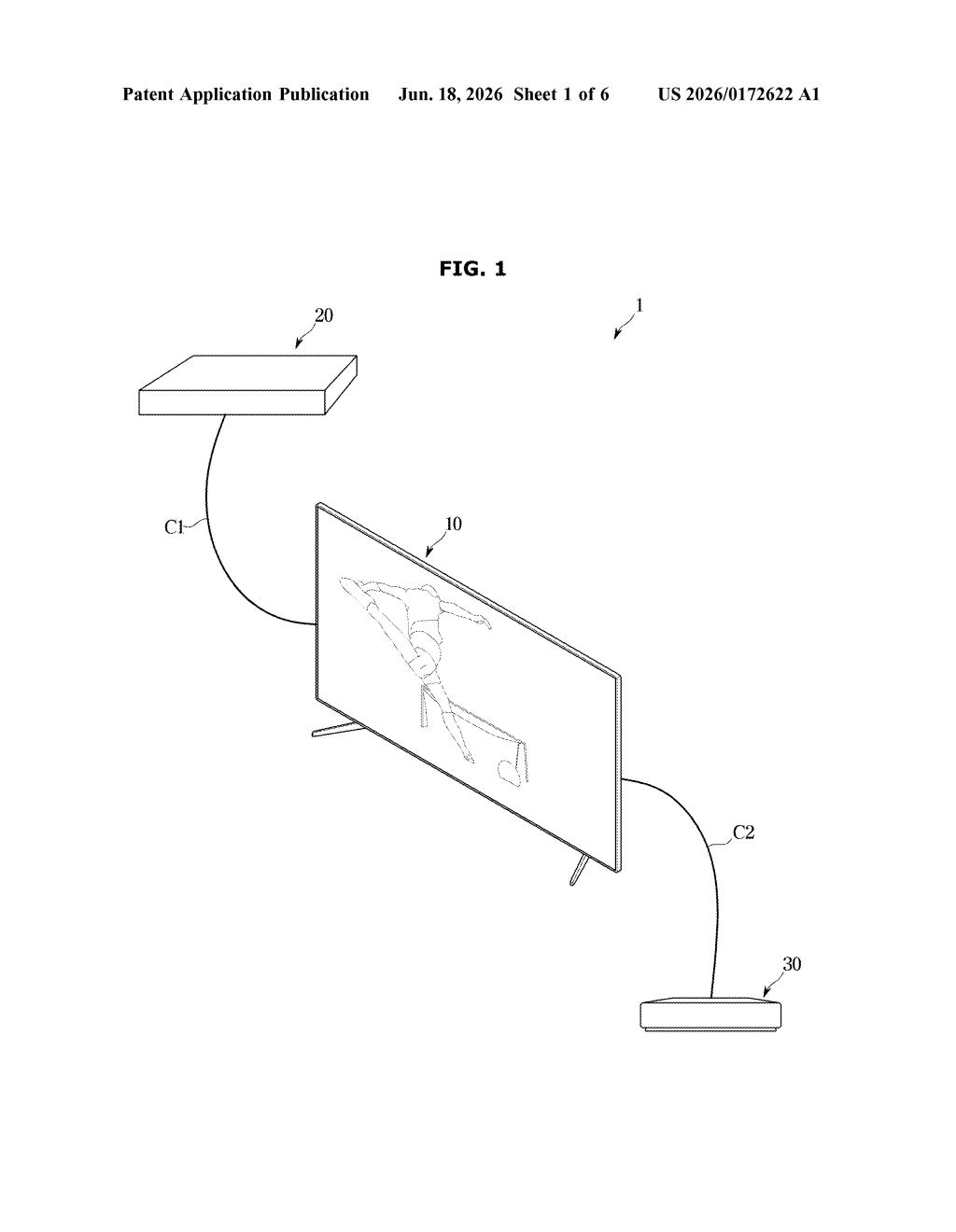
What Samsung's automatic lip sync switching actually does
Imagine watching a show where the dialogue never quite matches the speaker's mouth. That audio-video mismatch — often called a lip sync problem — is a common headache when your TV is connected to a streaming box, a Blu-ray player, and a separate soundbar all at once.
Samsung's patent describes a TV that has two separate correction systems built in. One system talks directly to whatever device is feeding it video (a streaming stick, a game console, etc.) and asks that device to handle the timing fix. The other system coordinates with the soundbar or speaker connected to the TV. The TV automatically figures out which approach to use based on what your source device is capable of.
The goal is that your TV quietly sorts out the sync problem on its own — no diving into audio delay settings, no guessing whether the fix should live in the TV, the soundbar, or the streaming box.
How the TV picks between two sync-correction paths
The patent describes a display apparatus (a TV) with two distinct connection interfaces and three controllers working together.
Interface one connects to a source device — think a streaming box, game console, or Blu-ray player. It uses that connection's data channel (likely HDMI's built-in control protocol) to request a lip sync correction directly from the source.
Interface two connects to a sound output device — a soundbar or AV receiver. It uses a separate data channel on that connection to coordinate timing between the TV's picture and the speaker's audio output.
The main controller is the decision-maker. It checks whether the source device plugged into interface one actually supports the first correction method. If it does, the TV routes the fix through the source device. If it doesn't — because the device is older or doesn't support the protocol — the TV falls back to the second method, coordinating directly with the sound output device instead.
- First correction path: source device handles timing adjustment via the HDMI data channel
- Second correction path: TV and soundbar negotiate the delay between themselves
- Main controller: detects which path is available and chooses automatically
What this means for soundbars and home theater setups
Lip sync errors are one of the most complained-about issues in home theater setups, and they're notoriously hard to fix because the problem can originate at any point in the chain — the source, the TV, or the speakers. Today, fixing it usually means manually adjusting an "audio delay" slider buried in a settings menu and guessing your way to a tolerable result.
If this system works as described, it means your TV takes ownership of the problem rather than leaving it to you. For Samsung, which sells both TVs and soundbars under its own brand, this kind of end-to-end coordination is a natural pitch — and a reason to keep everything in the Samsung ecosystem. Third-party devices that don't support the preferred correction protocol would still work, just via the fallback path.
This is a genuinely useful quality-of-life fix for a real problem that frustrates a lot of people. It's not flashy engineering, but automatic fallback logic that handles device compatibility differences is exactly the kind of invisible work that makes a product feel polished. Whether it ships or stays on paper, the underlying problem is worth solving.
There are more where this came from
We read every patent application Big Tech publishes and send you the ones worth knowing. Plain English, free, every week.
Want this weekly breakdown for a company we don't cover? Patentlyze Pro →