
Samsung's New Patent Lets AR Glasses Read Your Body to Switch Menus
Imagine tilting your head or shifting your stance and watching your AR headset's entire menu system change automatically — no button press, no voice command. That's the core idea in Samsung's latest headset patent.
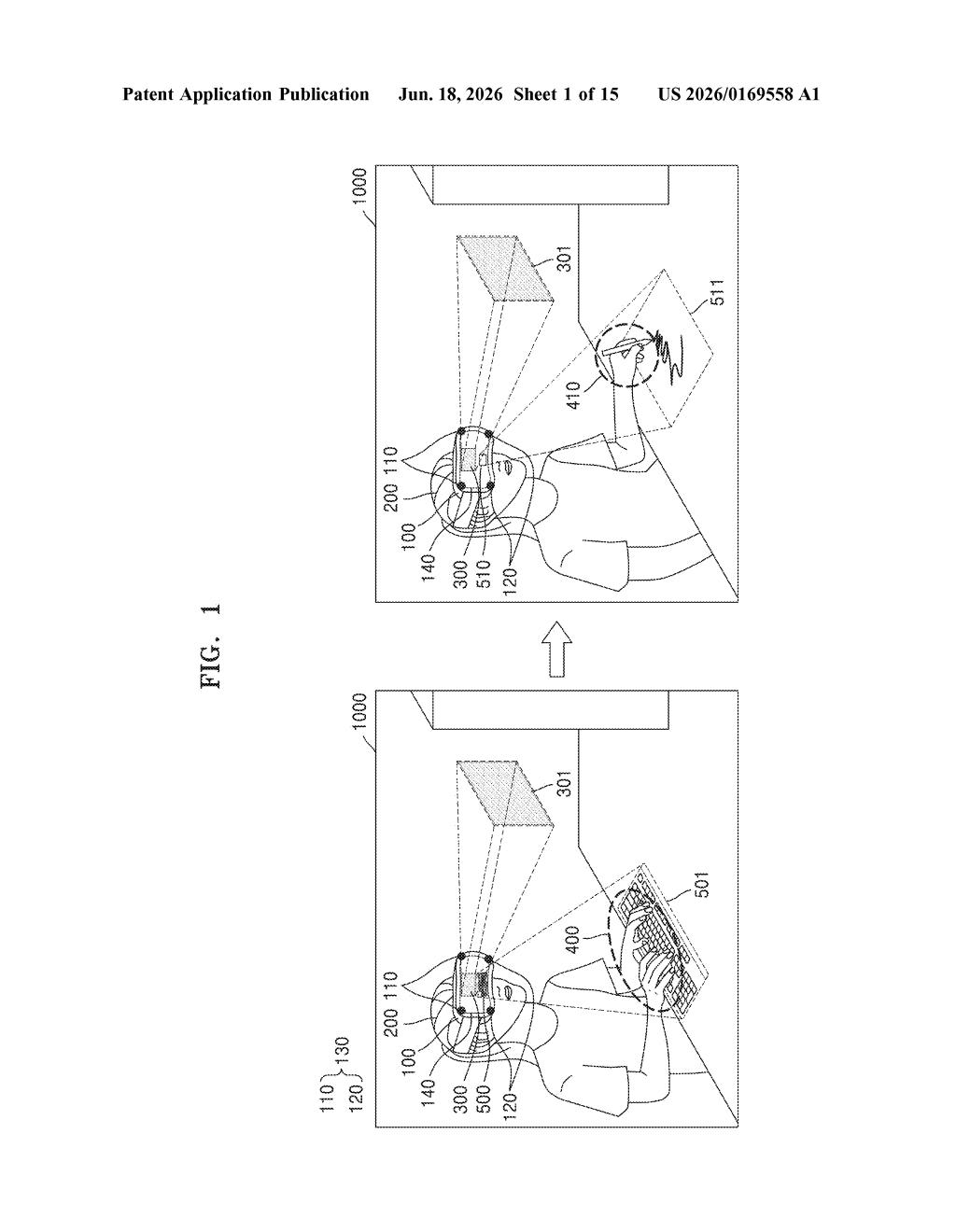
How Samsung's headset reads your pose to swap menus
Picture this: you're wearing a Samsung AR headset and you lean forward slightly, and the fitness tracking panel pops up. You stand upright again, and it switches back to your home screen. That's roughly what this patent is describing — a headset that uses a built-in camera to watch how you're holding your body and swaps the on-screen interface to match.
The system works by comparing your current posture against a list of preset poses you've set up in advance. Each pose is linked to a specific menu or app view. When the camera sees your body match one of those saved poses, the headset automatically replaces whatever's on the display with the corresponding interface.
Think of it like muscle-memory shortcuts — except instead of pressing a key combination, you just stand or sit a certain way. The goal is to make switching between tasks feel more physical and intuitive, especially when your hands are occupied.
How the camera maps body pose to a specific interface
The patent describes a head-mounted display (HMD) — think an AR or mixed-reality headset — that uses its onboard camera to detect the wearer's full-body pose in real time.
Here's the basic flow the patent lays out:
- The headset is showing one interface (say, a home screen).
- The camera captures an image of the user.
- Software analyzes that image to identify the user's current body pose — the position and orientation of their limbs and torso.
- That detected pose is compared against a stored list of preset poses, each of which has been assigned to a specific interface.
- If there's a match, the headset immediately replaces the current display with the interface tied to that pose.
The key technical detail is that the pose-to-interface mapping is configurable in advance, meaning users presumably set up which posture triggers which view. The camera does the continuous recognition work, acting as a passive sensor rather than requiring any deliberate gesture input.
The patent doesn't specify what pose-detection algorithm is used under the hood, but body-pose recognition typically relies on skeletal tracking — software that maps key joints (shoulders, elbows, hips) from the camera image and compares their relative positions to a reference template.
What this means for hands-free AR headset control
Headsets are notoriously awkward to control. Controllers add weight and bulk, voice commands fail in noisy environments, and eye-tracking or hand-tracking can feel imprecise. A pose-based shortcut system could give users a reliable, hands-free way to flip between contexts — particularly in physical tasks like workouts, cooking, or on a factory floor where your hands simply aren't free.
For Samsung, this filing lands in the context of its Galaxy XR ecosystem, which is expanding with devices like the Galaxy Ring and rumored headset hardware. Building out a body-aware interaction model now could be important groundwork if Samsung wants its headsets to feel less like strapped-on smartphones and more like natural extensions of how you move through the world.
This is a genuinely practical idea — body posture as a shortcut layer is the kind of low-friction interaction design that AR headsets badly need. The real question is whether the pose-matching is reliable enough in practice that it doesn't misfire when you just happen to stand a certain way. If Samsung can make it accurate, this could be a quiet but real differentiator for their headset lineup.
There are more where this came from
We read every patent application Big Tech publishes and send you the ones worth knowing. Plain English, free, every week.
Want this weekly breakdown for a company we don't cover? Patentlyze Pro →