
Adobe Patents Slider Controls That Let You Dial In Exact AI Image Attributes
Instead of typing 'make it a little brighter' and hoping for the best, Adobe's new patent describes a system where you'd literally slide a dial to control exactly how much of any visual quality — age, warmth, sharpness, saturation — shows up in an AI-generated image.
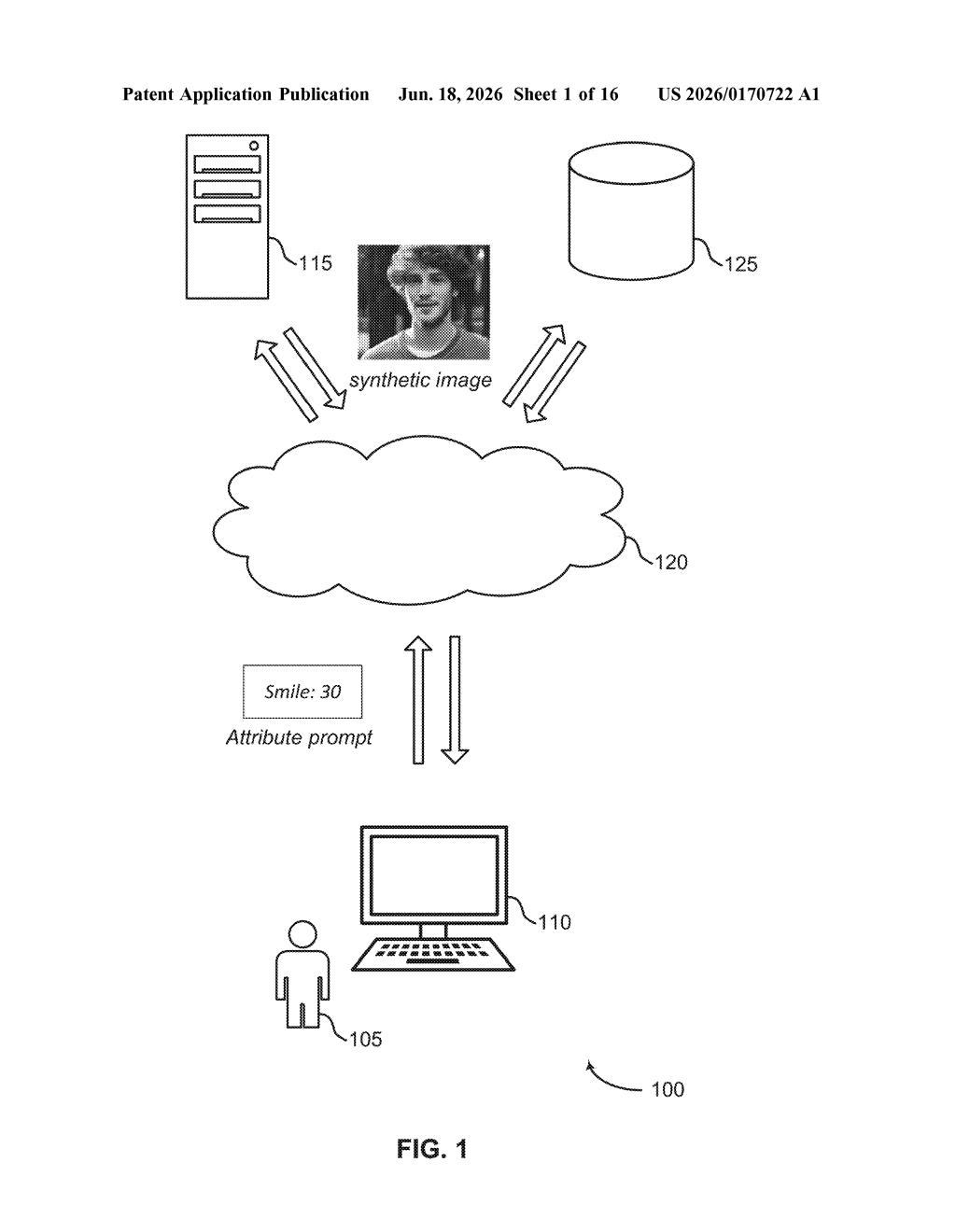
What Adobe's attribute sliders actually do to your AI images
Imagine you're generating an AI photo of a face and you want it to look slightly older — not ancient, not young, just nudged a bit. Today, you'd type something vague into a prompt and re-roll until you got lucky. Adobe's patent describes a different approach: a set of sliders, one per visual quality, that you move to a precise position before the image is even generated.
Each slider maps to what the patent calls an attribute — think age, brightness, expression, or color temperature. You set the level, and the system bakes that instruction directly into the AI's internal math before it draws anything. The result is supposed to match your slider position, not just approximately, but as a deliberate part of the generation process.
This could apply to both still images and video frames. If it works as described, it would give creative professionals a way to iterate on AI output the same way a photo editor adjusts a Lightroom panel — with predictable, repeatable control rather than prompt-and-pray.
How Adobe scales attribute tokens into image conditions
The patent describes a two-stage generation pipeline with a new control layer inserted at the front.
- Attribute prompt: You specify a level for a given quality — say, 0.8 out of 1.0 for "brightness" or a numeric age value. This is the slider position.
- Token scaling: The system takes a pre-trained internal representation of that attribute (called an attribute token — think of it as the AI's internal shorthand for "what brightness means") and multiplies it by your chosen level. A higher number stretches the token's influence; a lower number shrinks it.
- Condition embedding: An image generation prior model (a preliminary AI layer that sets up the creative "brief" before the main model draws anything) converts the scaled token into a condition embedding — essentially a packet of instructions that tells the downstream model exactly what level of that quality to depict.
- Image generation: The main image model reads those instructions and produces an image or video frame that reflects the specified attribute level.
The key engineering claim is that the attribute level is encoded numerically and continuously — not as a word like "very bright" but as a specific scaled value — which in theory produces more consistent and controllable outputs than free-text prompting alone.
What this means for designers using Adobe's AI tools
For working designers and video editors, the promise here is repeatability. Right now, getting an AI image to land on a specific look often means burning through dozens of generations. A slider system would let you lock in one attribute while adjusting another — the same workflow muscle memory from Lightroom or Premiere, applied to generative AI output.
Adobe already sells Firefly, its generative AI suite, and has been adding controls like style strength and composition guidance. This patent suggests the company is working toward a more granular, panel-based interface for attribute control — potentially extending to video via Adobe's Firefly Video tools. Whether this exact mechanism ships is uncertain, but it fits the direction Adobe has been publicly signaling for creative-professional AI tools.
This is a practical, unglamorous patent that solves a real problem creative professionals actually complain about: AI images are hard to iterate on precisely. Adobe is essentially trying to bring the Lightroom slider metaphor — one of the most intuitive tools in photo editing — into generative AI. That's a sensible design bet, and if it works well enough to ship, it could meaningfully separate Firefly from competitors that still lean on free-text prompting.
There are more where this came from
We read every patent application Big Tech publishes and send you the ones worth knowing. Plain English, free, every week.
Want this weekly breakdown for a company we don't cover? Patentlyze Pro →