
Adobe Patents a Self-Improving Image Generation Loop Using Two Competing AI Models
Adobe is patenting a technique where two AI models work against each other to produce better synthetic images — one pushing the output toward quality, one actively pulling it away from mediocrity. It's a tug-of-war approach to image generation, and it's designed to let models improve without needing more real-world data.
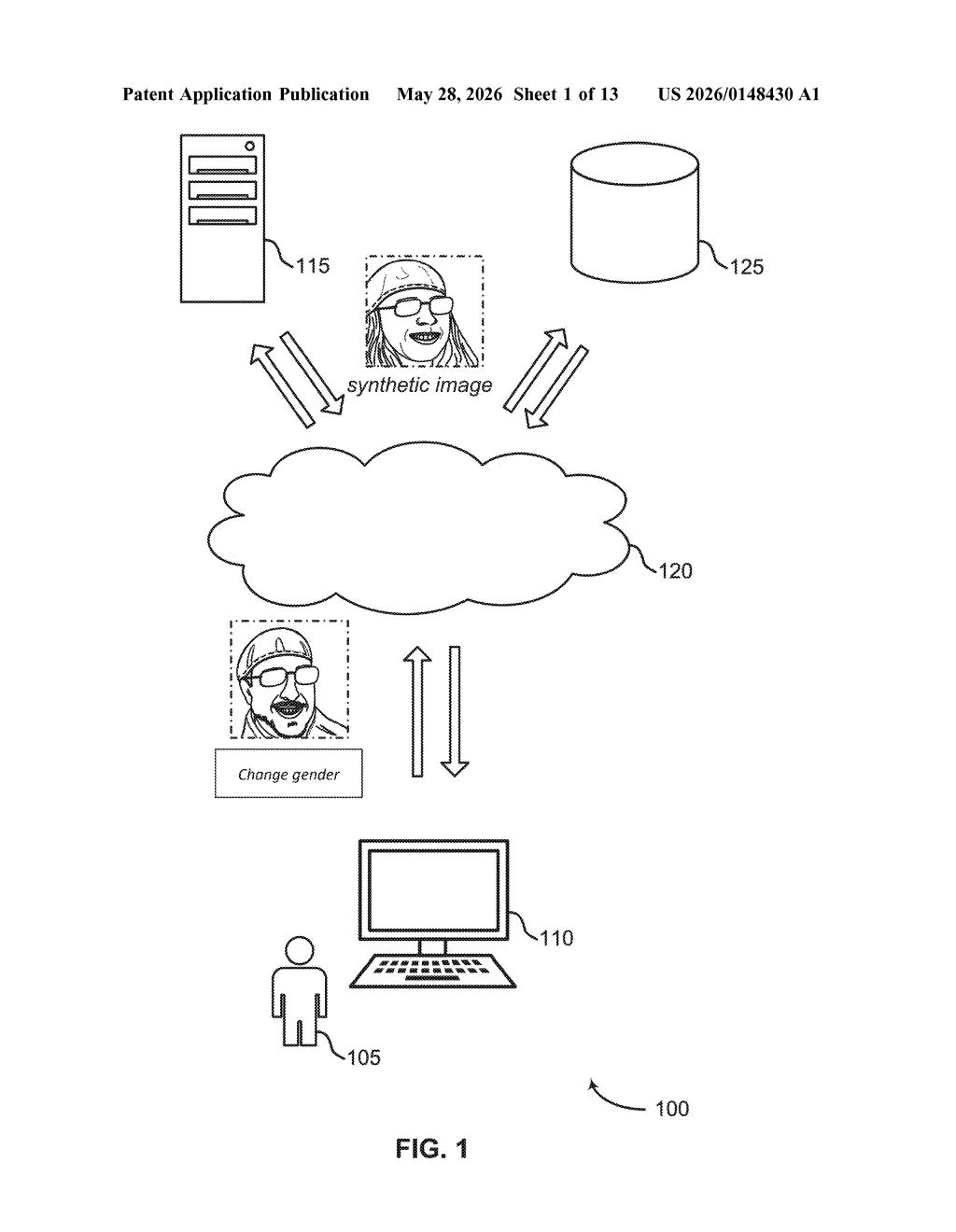
What Adobe's dual-model image generation actually does
Imagine you're trying to bake the perfect loaf of bread. One advisor tells you what a great loaf looks like, and another advisor tells you what a bad loaf looks like — and you use both to steer your baking decisions. Adobe's patent works on a similar principle for AI-generated images.
When you give the system a prompt — say, "a red bicycle on a cobblestone street" — a base model generates guidance toward a high-quality result, while a second auxiliary model generates guidance that the system actively works against. By combining these two signals, the output ends up better than either model could achieve alone.
The big payoff is that the synthetic images produced this way are good enough to feed back into training future models. That creates a loop: better synthetic data trains better models, which generate even better synthetic data. It's Adobe's attempt to get AI image generators to bootstrap their own improvement.
How Adobe's positive and negative score functions combine
The patent describes a diffusion-model pipeline (a class of AI that generates images by gradually denoising random noise) that uses two separate models to steer the generation process.
Score functions — the mathematical signals that tell a diffusion model which direction to move during generation — are the core mechanism here. Normally a single model produces one score function per prompt. Adobe's approach generates two:
- A first score function from a base image generation model, providing positive guidance ("go toward this")
- A second score function from an auxiliary image generation model, providing negative guidance ("move away from this")
These two score functions are mathematically combined into a combined score function that the generation process follows. The positive signal pulls the image toward quality; the negative signal repels it from low-quality or undesirable outputs. This is conceptually related to classifier-free guidance (a common technique where a model is nudged away from a null or generic output), but here the "negative" signal comes from a separate trained model rather than a null condition.
The resulting synthetic images are intended to be high-fidelity enough to serve as training data for the next generation of models — closing a self-improvement loop without requiring new human-labeled or real-world imagery.
What this means for AI-generated training data quality
The data bottleneck is one of the biggest practical constraints in training generative AI — real, high-quality labeled images are expensive to collect and curate. If Adobe can produce synthetic training images that are genuinely useful for retraining, it sidesteps that constraint entirely. That has significant implications for how quickly Adobe can iterate on Firefly and related tools without depending on external data pipelines.
There's also a subtler angle here: this approach could help Adobe avoid the "model collapse" problem, where AI models trained on AI-generated data gradually degrade in quality. By using a dual-guidance system that actively filters out low-quality outputs, the synthetic data entering the training loop would theoretically stay above a quality floor — which is the central unsolved problem in self-supervised generative AI research right now.
This is a genuinely interesting research-level patent from Adobe, tackling one of the more serious long-term risks in generative AI: what happens when you run out of good real-world training data. The dual-score-function approach is clever and grounded in real diffusion model theory. Whether it actually solves model collapse in practice is a separate question — but Adobe filing this suggests Firefly's improvement roadmap leans heavily on synthetic data, and that's a strategic bet worth watching.
There are more where this came from
We read every patent application Big Tech publishes and send you the ones worth knowing. Plain English, free, every week.
Want this weekly breakdown for a company we don't cover? Patentlyze Pro →