
Qualcomm's New Patent Gives Your Phone a Simulated World to Find Itself Indoors
Your phone's GPS struggles indoors and in dense cities because radio signals bounce unpredictably off walls and buildings. Qualcomm's new patent proposes fixing that by feeding devices a simulated copy of the real world — built from synthetic signal data — to figure out exactly where you are.
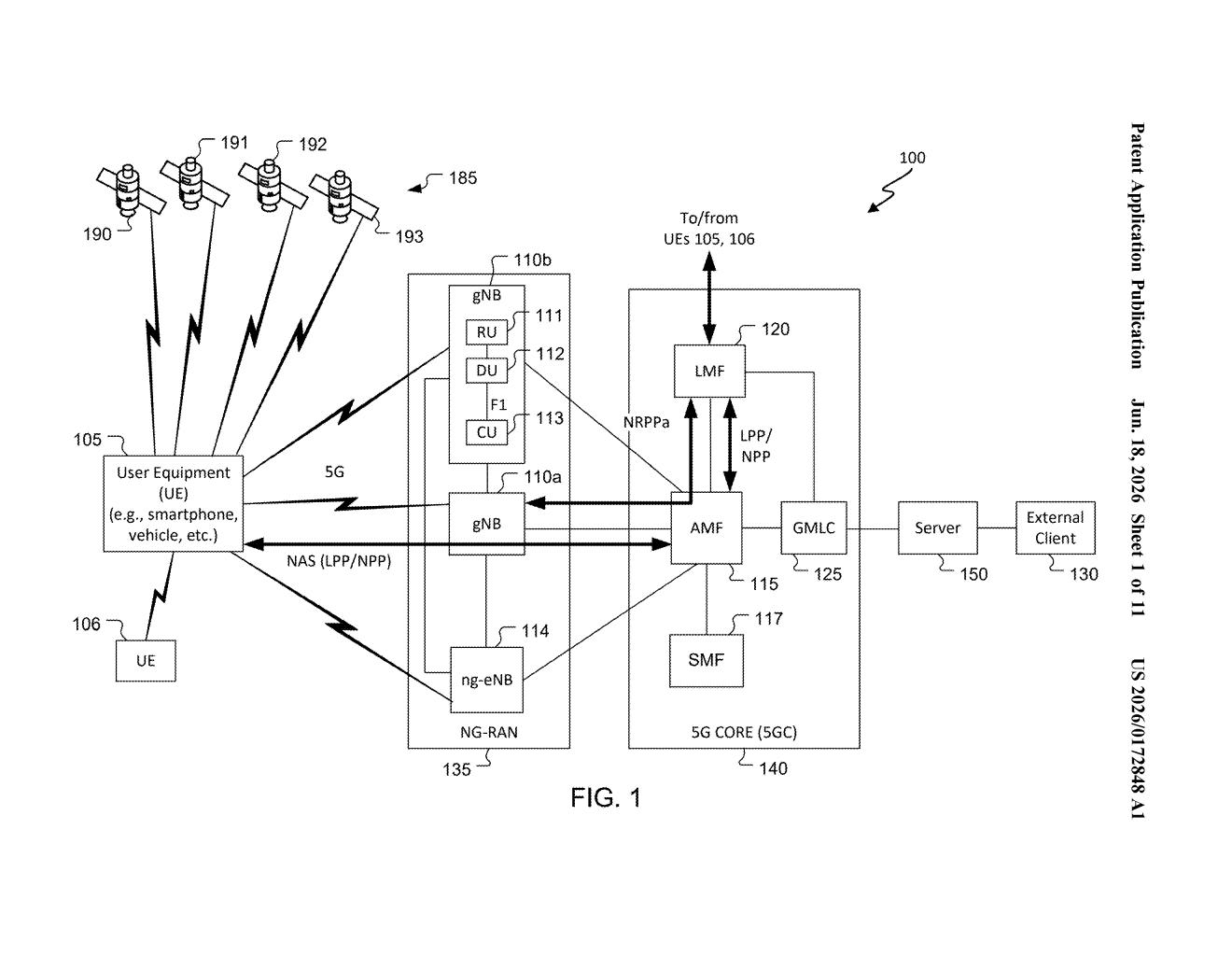
What Qualcomm's digital twin positioning actually does
Imagine your phone is trying to figure out where it is inside a busy airport or a downtown skyscraper. GPS barely works there because signals ricochet off every surface. A more powerful trick would be to give your phone a detailed map of how signals are expected to behave in that specific space — and that's exactly what this patent is about.
Qualcomm's idea is to use a digital twin — a virtual, computer-generated replica of a real physical space — to simulate how wireless signals travel and bounce around. Instead of your device trying to figure this out on the fly, it requests pre-computed signal data from a server running that digital twin.
The server sends back a package of synthetic signal snapshots for different locations, and your device uses those as a reference guide to work out its own position more accurately. Think of it like giving your phone a cheat sheet built from thousands of virtual test runs.
How the synthetic signal data flows from twin to device
The patent describes a two-step exchange between a mobile device (the "requesting device") and a server running what Qualcomm calls a digital twin function — software that maintains a virtual, physics-aware replica of a physical environment, including how radio waves behave inside it.
The device first sends a positioning model data request, which includes "characterization parameters" — essentially filter settings that tell the server what kind of signal data to generate or report. This lets the device specify things like which frequency bands matter, what area to cover, or what level of detail it needs.
The server responds with positioning model data containing:
- A list of reception locations (specific spots in the real or modeled space)
- For each location, multiple clusters of synthetic signal information — grouped snapshots of how signals from different directions and distances would realistically arrive
The clustering part (grouping signals by similar arrival patterns) is key. Real-world signals in dense environments arrive from multiple paths simultaneously — a phenomenon called multipath propagation. By pre-sorting synthetic signals into clusters, the patent makes it easier for the device to match what it's actually receiving against the model, narrowing down its true location.
What this means for 5G indoor and urban positioning
Accurate indoor and urban positioning is one of the harder unsolved problems in 5G. GPS fails indoors, and conventional cell-tower triangulation isn't precise enough for applications like warehouse robotics, emergency responder tracking, or AR navigation. By offloading the hard simulation work to a server-side digital twin, individual devices don't need to run heavy computations themselves — they just consume a ready-made reference model.
For you as a user, this kind of infrastructure could eventually mean your phone knows which aisle you're in at a store, or which floor of a building you're on, without needing any extra hardware. The practical payoff depends on whether network operators actually deploy and maintain these digital twin servers — but the architecture Qualcomm is patenting sets up a clean, standards-compatible way to do it.
This is a solid, practical patent aimed squarely at a real gap in 5G positioning capabilities. It's not flashy, but indoor and dense-urban location accuracy is a genuine bottleneck for next-generation applications, and Qualcomm is one of the few companies positioned to actually push something like this into cellular standards. Whether it makes it into a 3GPP spec is the real test.
There are more where this came from
We read every patent application Big Tech publishes and send you the ones worth knowing. Plain English, free, every week.
Want this weekly breakdown for a company we don't cover? Patentlyze Pro →