
Sony's New Patent Chains Wireless Signals Together to Find You Inside a Building
GPS is useless indoors, and Bluetooth or Wi-Fi alone often can't tell exactly where you are in a room. Sony's new patent describes a way to chain wireless reference points together to pinpoint a moving person or device with more confidence.
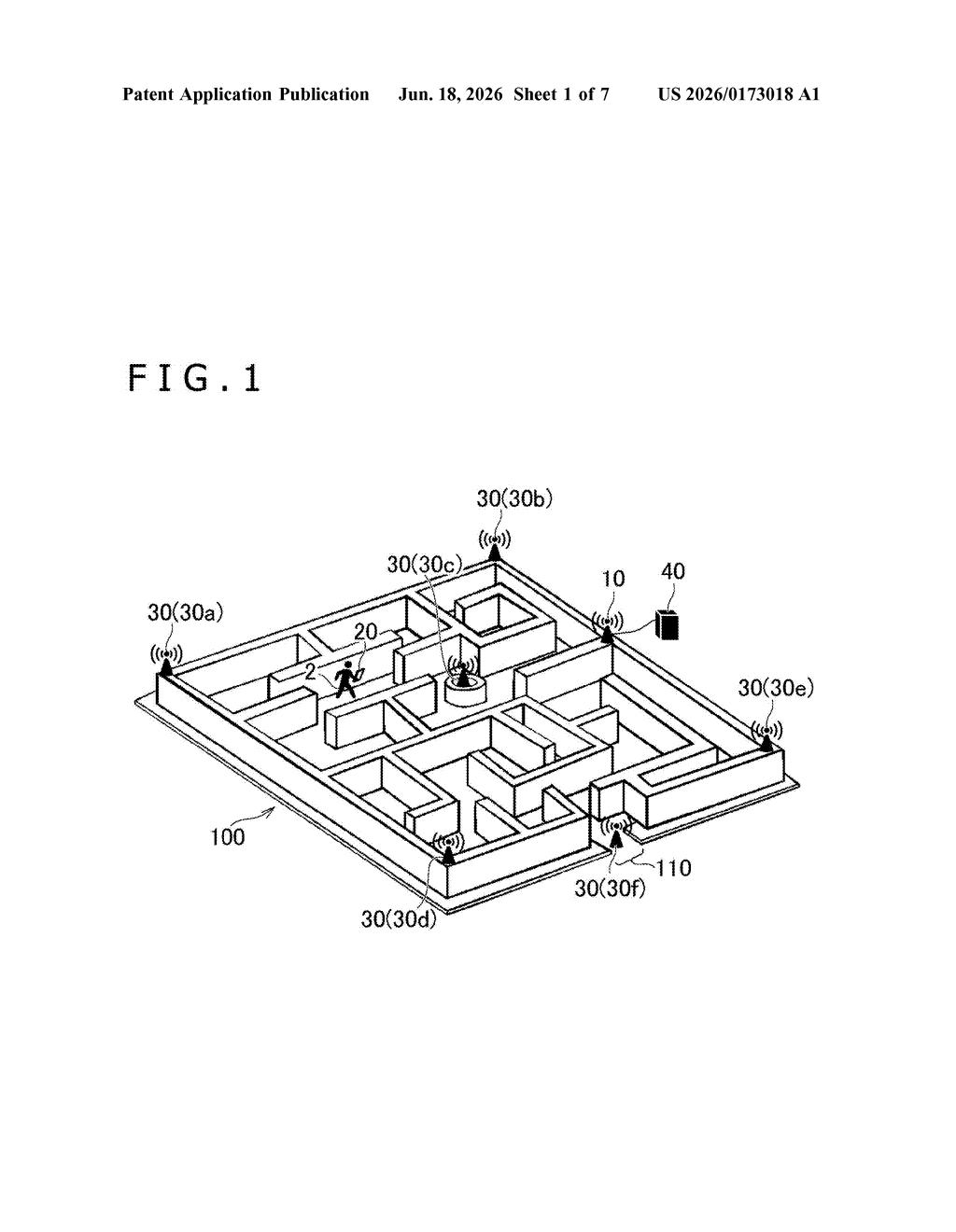
How Sony's relay-based indoor tracking actually works
Imagine you're playing a VR game in your living room and the system needs to know exactly where you're standing — not just roughly, but precisely enough to react in real time. The problem is that a single wireless base station often can't get a clear enough signal from across the room, especially if furniture or walls are in the way.
Sony's idea is to add a middle device — a relay — between the fixed base station and the thing being tracked (say, a headset or controller). The relay sits in a known spot, measures its own distance from the base station, and then measures its distance from you. Those two measurements get combined into one location estimate.
The clever part: the system only trusts that combined estimate when it has already confirmed the relay's own position is solid. If the relay's position measurement looks off or unreliable, the system holds off rather than feeding bad data into the calculation. It's a built-in sanity check.
How the relay position check gates location estimates
The patent describes a three-device chain: a fixed apparatus (a base station anchored in a known spot), a relay apparatus (a secondary wireless node placed somewhere between the base station and the moving target), and a positioning target apparatus (the device being tracked, carried by a person or robot).
Here's how the math flows:
- The system measures the relative position of the relay with respect to the fixed base station using wireless signals between those two devices.
- It then measures the relative position of the target device with respect to the relay.
- Those two relative positions are combined to produce the target's position relative to the fixed base station — and from there, its position in real space.
The key constraint is a prescribed condition check: the system stores the relay-to-base-station measurement and only proceeds with the full location estimate when that stored value passes a quality or stability threshold. This prevents accumulated errors — where a shaky relay measurement makes the final target position even more wrong — from degrading the output.
Wireless positioning (using signal timing or strength to estimate distance) gets less accurate over longer distances and through obstacles. The relay effectively shortens each measurement leg, which typically improves accuracy at both hops.
What this means for PlayStation and location-aware gaming
For Sony Interactive Entertainment, the obvious use case is PlayStation VR and any future location-aware gaming hardware. Tracking a headset or handheld controller accurately inside a room is a core technical problem for immersive gaming, and current solutions often rely on cameras or dedicated sensors. A purely wireless approach that doesn't need line-of-sight cameras would make setup simpler and work in more room configurations.
Beyond gaming, the relay architecture described here could apply to any indoor tracking scenario — warehouse robotics, assistive devices, or location-based theme park experiences (which Sony's entertainment divisions also operate). The conditional quality check built into the design is the detail worth watching: it suggests Sony is thinking about deploying this in environments where relay placement isn't perfectly controlled, and reliability matters more than raw speed.
This is solid, practical engineering rather than a flashy concept — Sony is solving a real accuracy problem in wireless indoor positioning by adding a quality gate before trusting chained measurements. It's most directly relevant to VR tracking, where millimeter-level errors become nauseating, and it's the kind of foundational patent that tends to quietly show up in actual products.
There are more where this came from
We read every patent application Big Tech publishes and send you the ones worth knowing. Plain English, free, every week.
Want this weekly breakdown for a company we don't cover? Patentlyze Pro →