
Sony's New Patent Lets Camera Pixels Share Storage to Capture More Light
Sony is patenting a way to link neighboring pixel circuits in a camera sensor so they can pool their charge-storage capacity — a technique that could improve how well a sensor handles very bright or very dim scenes without losing detail.
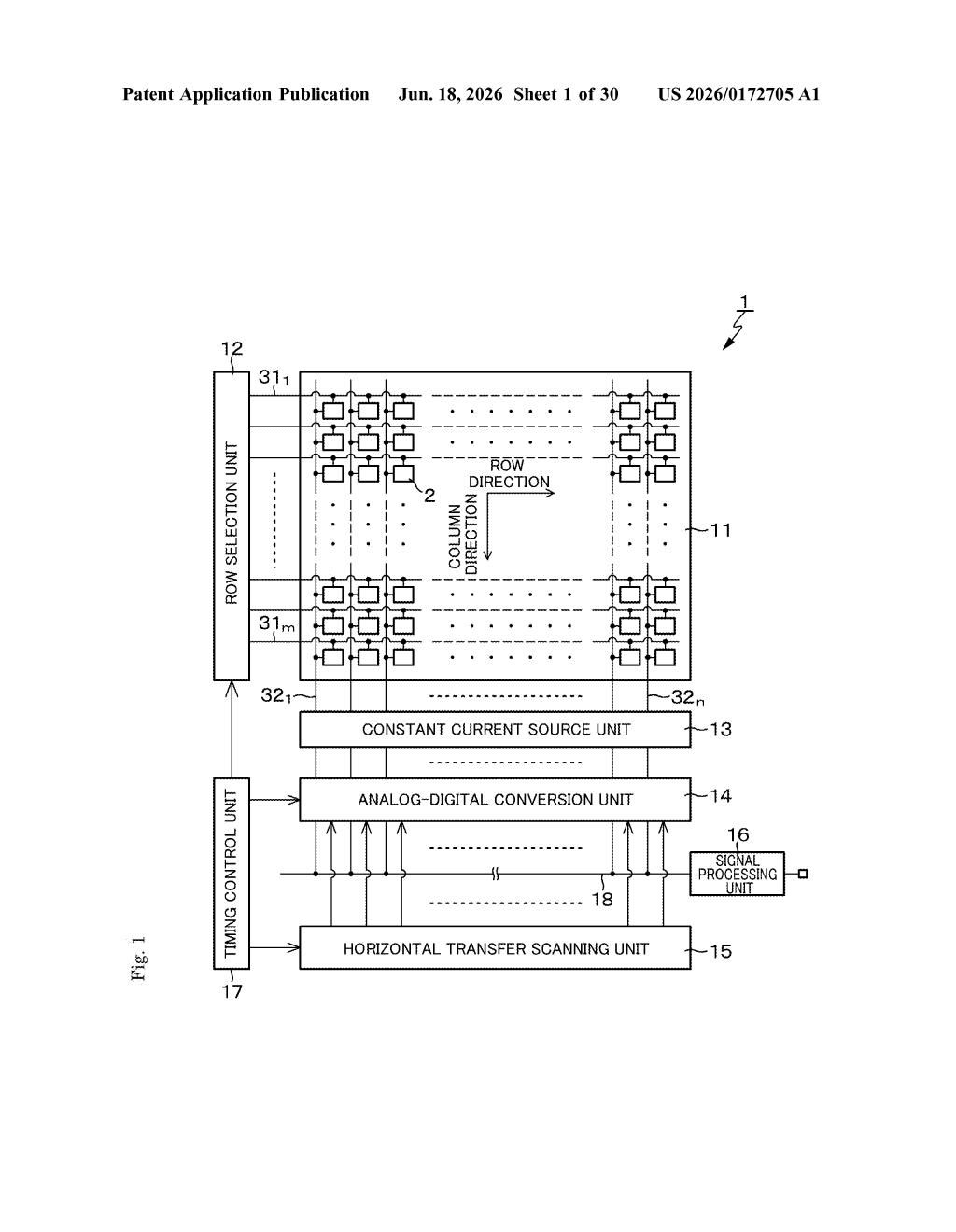
What Sony's linked pixel circuit actually does for your camera
Imagine your camera sensor is a grid of tiny light-collecting buckets. Each bucket can only hold so much light before it overflows — and once it overflows, detail is lost. In bright scenes, that's a real problem.
Sony's patent describes a design where two neighboring pixels can share a bigger, combined storage space. A small extra capacitor (think of it as an overflow tank) can be switched in when needed, so the pixels together can handle a wider range of light without clipping.
The clever part is how the circuit is wired. Rather than giving every single pixel its own overflow tank — which takes up space and costs power — two pixels share one, controlled by a series of tiny switches. It's a space-efficient way to give the sensor more flexibility depending on the lighting conditions you're shooting in.
How the floating diffusion and shared capacitor circuit works
The patent describes a light-detecting device built around two pixel circuits that can electrically cooperate. Each pixel contains a photodiode (the actual light sensor), a floating diffusion (a small node that temporarily stores the electrical charge the photodiode produces), and a set of transistors acting as switches.
The key innovation is a shared wiring path that connects the first floating diffusion to the second floating diffusion through a chain of switch transistors. By opening or closing those transistors, the circuit can merge the charge-storage capacity of both pixels into one larger pool.
A first capacitor sits at the end of this chain, tied to a reference voltage node. When switched in, it acts as an additional charge reservoir. The reset transistor in the first pixel circuit handles clearing the charge between exposures, draining both pixels' shared storage back to a known baseline.
- FD addition: combining two floating diffusion nodes to increase total charge capacity
- Selective capacitor switching: the extra capacitor is only connected when needed, preserving noise performance in normal conditions
- Shared reset path: one reset transistor manages both pixel circuits through the linked wiring
What this means for low-light camera sensors in Sony devices
Camera sensors have always faced a trade-off: bigger pixels hold more light and handle dark scenes better, but larger pixels mean fewer of them fit on a chip, so resolution drops. Sony's approach tries to sidestep that trade-off by letting small pixels act like a bigger pixel when they need to — combining their storage on the fly.
For Sony, which supplies image sensors to Apple, Samsung, and many phone makers, incremental gains in dynamic range (the gap between the darkest and brightest detail a sensor can capture at once) translate directly into competitive advantage. A patent like this is a building block — not a finished product — but it fits a long pattern of Sony pushing sensor architecture forward one circuit trick at a time.
This is a fairly specialized semiconductor circuit patent — the kind of incremental sensor engineering that doesn't make headlines but quietly shows up in flagship phone cameras a generation or two later. Sony's image sensor division files a lot of these, and most do eventually influence real products. Worth tracking if you follow mobile camera hardware, but not a signal of any dramatic product shift.
There are more where this came from
We read every patent application Big Tech publishes and send you the ones worth knowing. Plain English, free, every week.
Want this weekly breakdown for a company we don't cover? Patentlyze Pro →