
Salesforce Patents a Way to Train AI Assistants to Refuse Unanswerable Questions
Most AI assistants will confidently make up an answer rather than admit they don't know — Salesforce is filing a patent for a training system designed to fix exactly that problem.
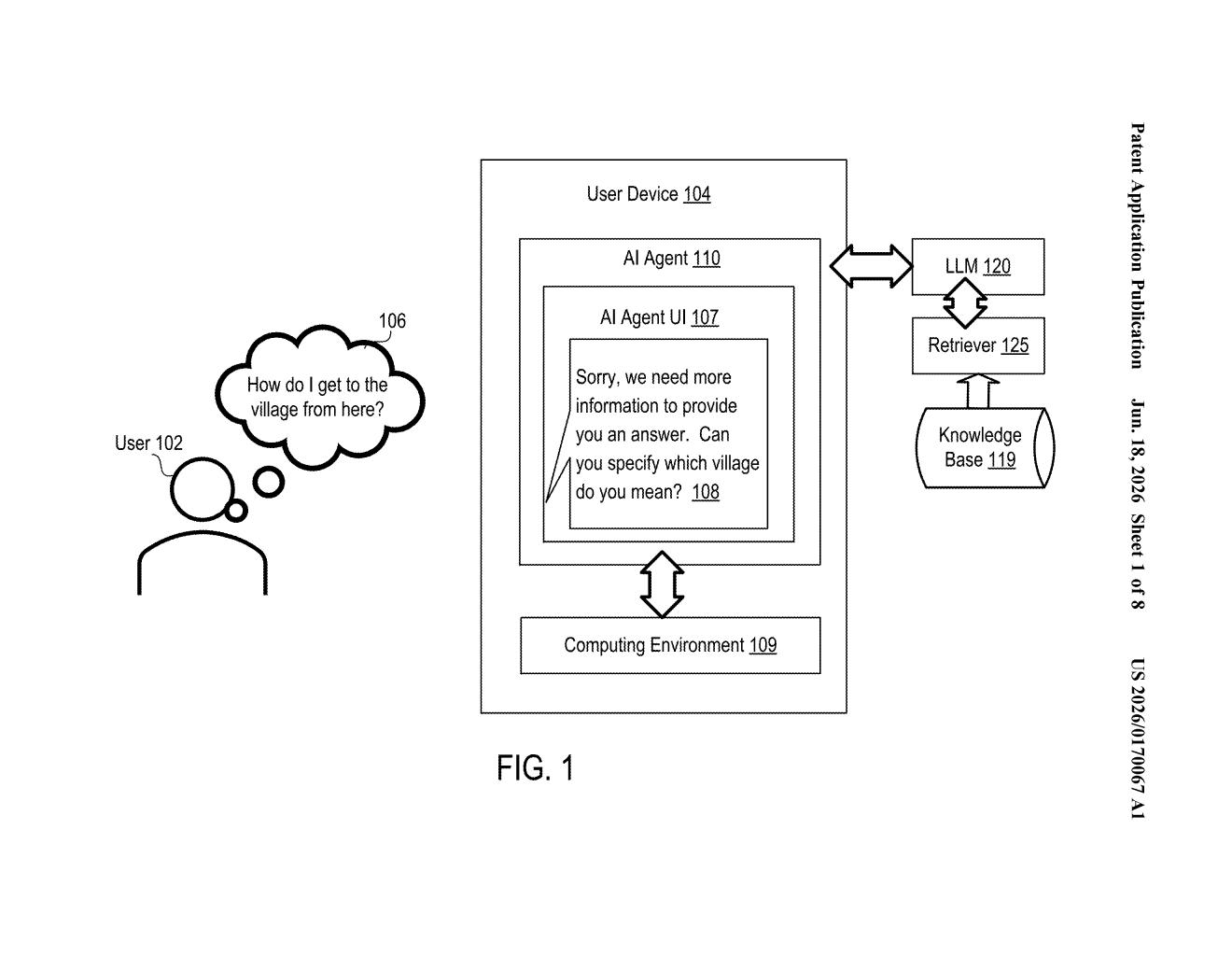
Why Salesforce wants its AI to say 'I don't know'
Imagine asking your company's AI assistant whether a product is covered under a warranty, and it gives you a confident, detailed answer that's completely wrong because it was never in the company's files to begin with. That's a real and expensive problem for businesses using AI today.
Salesforce's patent describes a system that teaches AI to recognize when a question simply cannot be answered from the documents it has access to — and to say so clearly instead of guessing. It's the difference between a helpful colleague who says "I'm not sure, you should check with someone else" and one who confidently makes something up.
The system covers six types of unanswerable questions: ones that are too vague, ones built on false assumptions, ones that don't make logical sense, ones asking for something the AI can't produce (like audio), ones that raise safety concerns, and ones simply outside the AI's knowledge base. Rather than hoping the AI figures this out on its own, Salesforce's approach automatically generates practice questions in each category and uses them to train the AI before it ever talks to a real user.
How the system builds a library of trick questions
The patent describes a retrieval augmented generation (RAG) system — the kind of AI setup where a language model searches a private database of documents before answering a question, rather than relying solely on what it learned during training. RAG is widely used in enterprise tools so AI can answer questions about a company's specific products, policies, or data.
The core problem: how do you train an AI to know when its documents don't contain the answer? Salesforce's solution is to automatically build a large dataset of questions the system can't answer, then train on those. Here's how the pipeline works:
- The system breaks a company's internal document library into small chunks of text.
- It extracts key terms from those chunks and uses a web crawler to find related articles from the broader internet.
- A language model then generates question-and-answer pairs based on those web articles — questions whose correct answers exist online but not in the company's internal database.
- The system confirms the internal documents don't contain the answer, then logs those questions as verified unanswerable examples.
- The RAG system is trained on this labeled dataset so it learns to detect the same pattern at runtime and decline to answer when appropriate.
The six categories of unanswerable questions the system is trained to catch — underspecified, false-presupposition, nonsensical, modality-limited, safety-flagged, and out-of-database — give it a structured vocabulary for knowing what it doesn't know.
What this means for AI in customer service and enterprise tools
For businesses, an AI that hallucinates a confident wrong answer is often worse than no AI at all — it erodes trust and can cause real harm in areas like legal, medical, or financial support tools. This patent addresses a genuine gap in how most enterprise AI systems are evaluated today, which typically measures only whether the AI gets answerable questions right, not whether it handles unanswerable ones correctly.
Salesforce sells AI tools to thousands of enterprise customers through its Einstein and Agentforce platforms. A standardized, automatic way to benchmark and improve AI refusal behavior could become a selling point for regulated industries — think insurance, healthcare, or financial services — where getting a wrong answer is worse than getting no answer at all.
This is one of the more practically useful AI safety patents to come through in a while — not 'safety' in the sci-fi sense, but in the everyday sense of stopping an AI from confidently lying to your customers. The automatic dataset-generation pipeline is the clever part: it means companies don't have to hand-label thousands of bad questions themselves. Whether Salesforce turns this into a marketed capability or quietly bakes it into existing products, the underlying problem it solves is real.
There are more where this came from
We read every patent application Big Tech publishes and send you the ones worth knowing. Plain English, free, every week.
Want this weekly breakdown for a company we don't cover? Patentlyze Pro →