
Disney Patents a System That Projects Live Video onto Moving Ride Cars
Disney has patented a way to turn the ride vehicle itself into a screen — projecting content directly onto moving cars and adjusting the image in real time as the car moves, turns, and changes position relative to other vehicles on the track.
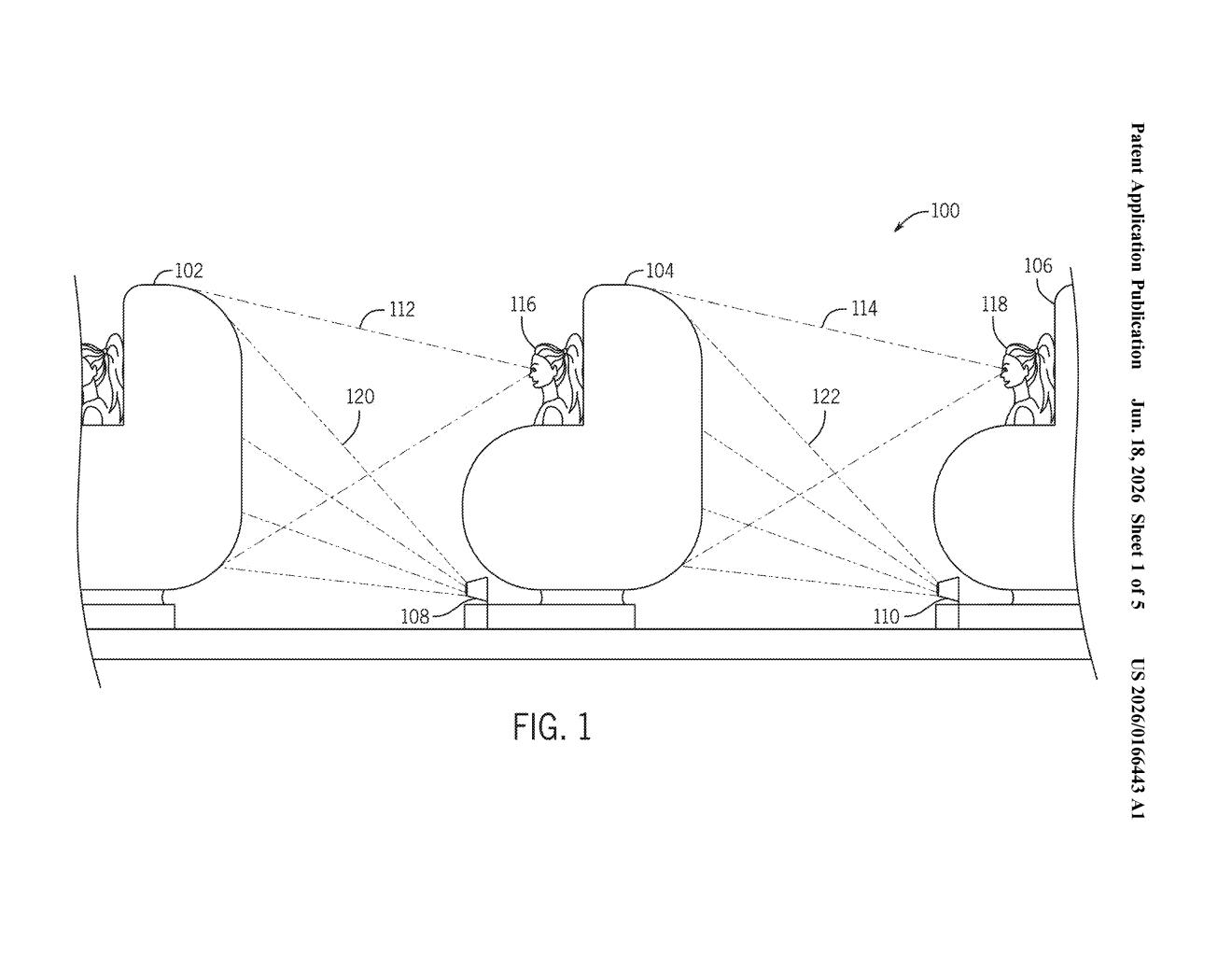
How Disney's moving-projection ride system actually works
Imagine you're sitting in a roller coaster car and, instead of just the scenery around you changing, the car itself lights up with projected images that shift and respond as you move through the ride. That's essentially what Disney is building toward with this patent.
The system uses a projector paired with a tracking setup that always knows exactly where your ride car is — its position on the track and which direction it's facing. Based on that, the system fires the right image onto the car's surface at the right moment, keeping the picture aligned even as the car twists and turns.
It also accounts for other cars nearby. If a second vehicle is too close or in the way, the system can adjust what it projects so the content still looks right. Think of it as a spotlight that's always paying attention.
How the projector tracks position, orientation, and car spacing
The patent describes a three-part system:
- A projector aimed at a ride vehicle — the moving car, boat, or gondola that guests sit in.
- A tracking system that continuously measures both the position (where the car is in the ride space) and the orientation (which way it's pointing) of that vehicle.
- A projector control system — the brains of the operation — that receives the tracking data and decides when and how to activate the projector so the content lands correctly on the vehicle's surface.
The tracking layer is where the real engineering sits. It doesn't just know where one car is — it can determine the relative position between two cars on the same ride. That matters because rides often run multiple vehicles at once, and a projection aimed at car one could accidentally spill onto car two if the system isn't aware of both.
The control system uses that spacing data to decide whether and how to project, effectively making the whole display aware of the live traffic on the track. The result is projected content that stays registered to the vehicle's surface even as it moves, rather than being a static projection that guests ride past.
What this means for the future of Disney theme-park rides
Theme-park attractions have long used projection mapping on walls, floors, and set pieces — but projecting onto the ride vehicle itself adds a layer that moves with the guest. It means the car you're sitting in could become part of the show, covered in flames, slime, or storyline imagery that responds to where you are in the ride.
For Disney, this fits into a broader push to make ride experiences more dynamic without rebuilding physical sets. A projection system that adapts in real time is far cheaper to update than animatronics or painted scenery — and it means the same ride could theoretically tell different stories depending on the day, the season, or even the individual car.
This is a genuinely interesting piece of theme-park engineering. Projecting onto moving objects is hard — doing it in a ride environment with multiple vehicles, variable speeds, and changing orientations is harder still. Disney has been doing location-aware projection in its parks for years, so this feels like a natural next step rather than a moonshot, and it's the kind of patent that has a clear path from filing to attraction.
There are more where this came from
We read every patent application Big Tech publishes and send you the ones worth knowing. Plain English, free, every week.
Want this weekly breakdown for a company we don't cover? Patentlyze Pro →