
Apple Patents a System That Stores 3D Scene Data in Less Memory Without Losing Detail
Ray tracing looks incredible but it's brutally expensive on memory bandwidth. Apple's new patent describes a way to store 3D geometry in a compressed, two-part format that cuts down the data a GPU has to read while still delivering full-precision results when it counts.
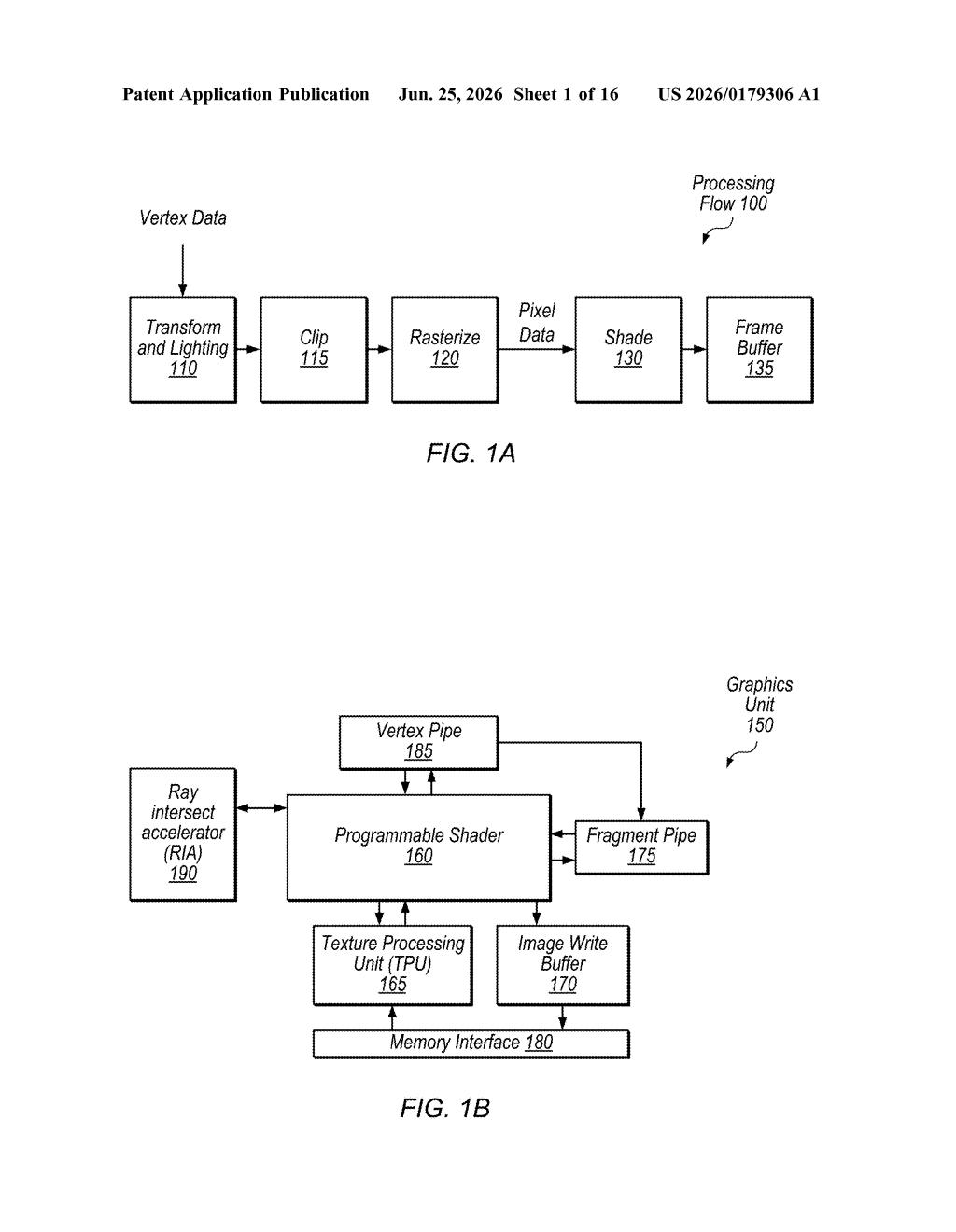
How Apple compresses 3D scene geometry without losing detail
Imagine you're rendering a 3D scene with millions of tiny triangles, and your GPU has to check whether a ray of light hits each one. That means reading a huge amount of geometry data from memory, over and over again. The more data you move, the slower everything gets.
Apple's patent describes a way to store that geometry in two layers inside the data structure the GPU uses to organize the scene. The first layer holds a compressed, lower-precision version of each triangle's corner points. The second layer stores only the leftover detail needed to reconstruct the full, original-precision version. Together, the two layers give you back exactly the data you started with.
The GPU can do quick, rough intersection checks using just the compressed layer, then pull in the residual detail only when it needs to confirm a precise hit. That's less data moving around for the bulk of the work, which is where the performance gains come from.
How the BVH leaf node stores quantized and residual vertex data
The patent centers on a data structure called a bounding volume hierarchy (BVH), which is the standard way GPUs organize geometry for ray tracing. A BVH is essentially a tree of nested boxes: the GPU checks whether a ray hits a big box, then smaller boxes inside it, until it narrows down to actual triangles (called primitives).
At the bottom of that tree are leaf nodes, which hold the actual triangle data. Apple's invention changes what gets stored in those leaf nodes. Instead of storing each triangle vertex at full floating-point precision, the leaf node is split into two parts:
- Quantized primitive information: a compressed, lower-bit representation of each vertex coordinate (quantization means rounding values to fit in fewer bits)
- Vertex residual information: the small difference between the quantized value and the original full-precision value, stored separately
Critically, the two parts together contain exactly enough data to reconstruct the original vertex positions with no loss. The GPU can run fast, approximate ray-triangle intersection tests using just the quantized data, then add the residual back in to confirm precise hits. This is the progressive part of the title: detail is loaded in stages rather than all at once.
What this means for Apple silicon ray tracing performance
Ray tracing is the centerpiece of Apple's Metal 3 and GPU roadmap, and memory bandwidth is one of its biggest bottlenecks, especially on mobile chips where the GPU and CPU share the same pool of memory. A scheme that reduces how much geometry data the GPU has to read per frame directly translates to faster renders, lower power draw, or both.
For Apple silicon devices, from the iPhone to the M-series Macs, tighter geometry compression could let developers pack more detailed scenes into the same memory budget. It also signals that Apple is investing seriously in its own ray tracing pipeline rather than relying entirely on existing industry standards like DirectX Raytracing or Vulkan Ray Tracing, which is worth watching as Apple pushes Metal as its platform-specific graphics stack.
This is solid, focused GPU engineering work. It won't spark consumer headlines, but it addresses a real and well-known problem in real-time ray tracing. The two-tier quantization-plus-residual approach is a clean solution, and if it ships in a future Metal ray tracing API update, developers working on Apple platform games and pro apps will notice the headroom it creates.
There are more where this came from
We read every patent application Big Tech publishes and send you the ones worth knowing. Plain English, free, every week.
Want this weekly breakdown for a company we don't cover? Patentlyze Pro →