
Google Patents Tech to Catch Flat Tires and Shifting Cargo in Self-Driving Trucks
A self-driving truck with a blown tire or shifting cargo can't pull over and call for help the way a human driver can. Waymo is patenting a system that lets the vehicle recognize when something has gone wrong with its own body, before disaster follows.
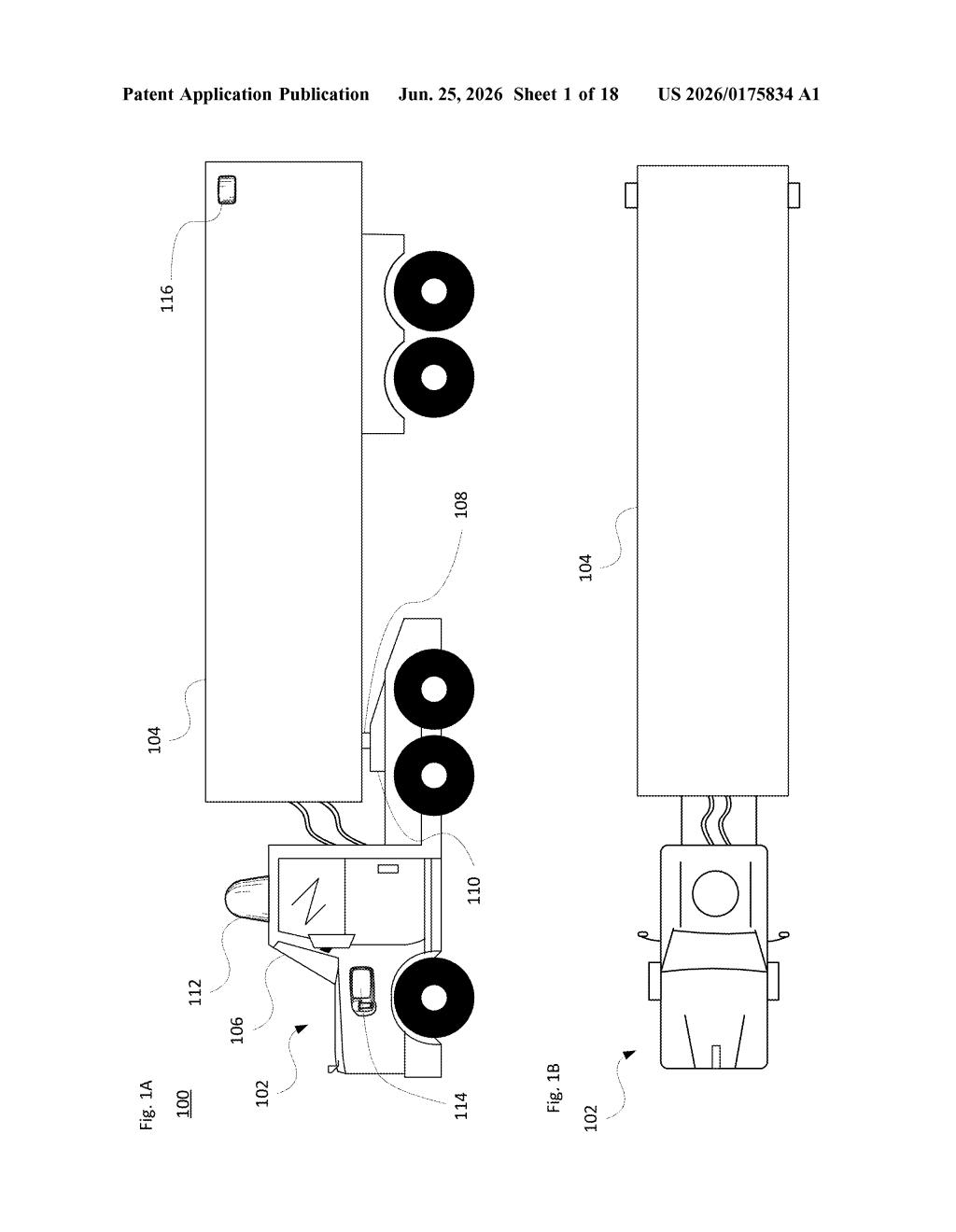
What Waymo's pose-checking system actually detects
Imagine you're driving with a trailer hitched to your truck, and somewhere along the highway the cargo shifts to one side. A human driver might feel the tug, notice the vehicle drifting, or hear something. A self-driving vehicle has no gut feeling to rely on.
Waymo's patent describes a system that gives autonomous vehicles a version of that instinct. The vehicle constantly compares where it actually is and how it's actually oriented to where a mathematical model says it should be, given the steering and acceleration commands it's received. If those two pictures stop matching, something is wrong.
When the mismatch crosses a threshold, the system tries to figure out what went wrong, whether it's a flat tire, a mechanical failure, or shifting freight, and then takes action. That might mean slowing down, pulling over, rerouting, alerting a remote human operator, or even warning nearby vehicles.
How the vehicle model spots a pose discrepancy
The patent covers a control system built into an autonomous vehicle that continuously monitors the vehicle's pose (a technical term for position and orientation combined, essentially where the vehicle is pointing and where it sits in space).
Here's the core loop:
- The vehicle's sensors feed real-time data about its actual pose into the system.
- Separately, a vehicle model (a physics-based simulation of how the vehicle should behave given the commands sent to steering, brakes, and throttle) generates a predicted pose for the same moment in time.
- The system compares the two. A significant gap between actual and predicted is flagged as an anomalous condition.
- The system then analyzes the nature and pattern of the discrepancy to classify the problem: flat tire, cargo loss, mechanical failure, etc.
Once a problem is classified, the driving system responds. The patent lists responses ranging from immediate in-route corrections (adjusting speed or steering) to pulling off the road, notifying a remote operations center, or broadcasting alerts to nearby autonomous vehicles.
The patent specifically calls out trailers, which adds complexity because a trailer's behavior depends on its load, making a good vehicle model harder to build and deviations harder to interpret.
What this means for self-driving freight and safety
Self-driving freight is one of the clearest near-term commercial cases for autonomous vehicles, and Waymo has been testing long-haul trucking. Cargo shifts and blowouts are among the most dangerous failure modes for big rigs, and they're exactly the scenarios where a human driver's physical senses have historically provided an early-warning system that no camera or lidar can directly replicate.
This patent is Waymo's attempt to close that gap with math rather than instinct. If the system works well, your highway becomes safer even if you never set foot in a self-driving vehicle, because a malfunctioning autonomous truck would recognize its own problem and get itself out of traffic before causing an incident.
This is serious, practical safety engineering aimed squarely at one of the most overlooked risks in autonomous trucking. It's not glamorous, but a self-driving vehicle that can notice it has a flat tire before it jackknifes on the interstate is far more valuable than one that can parallel park itself. Waymo filing this now lines up with their expanding freight operations.
There are more where this came from
We read every patent application Big Tech publishes and send you the ones worth knowing. Plain English, free, every week.
Want this weekly breakdown for a company we don't cover? Patentlyze Pro →