
Microsoft Patents a System That Designs Slide Layouts Around Your Content
Building a presentation often means wrestling with blank slides that refuse to cooperate with your existing theme. Microsoft's new patent describes a system that studies your template and invents a matching layout on the fly, then drops your content into it.
What Microsoft's auto slide layout system actually does
Imagine you're halfway through a presentation and you ask an AI assistant to add a new slide. The problem: your deck has a specific look, specific fonts, specific colors, and specific ways it arranges text and images. A generic blank slide won't match, and rebuilding the style from scratch is tedious.
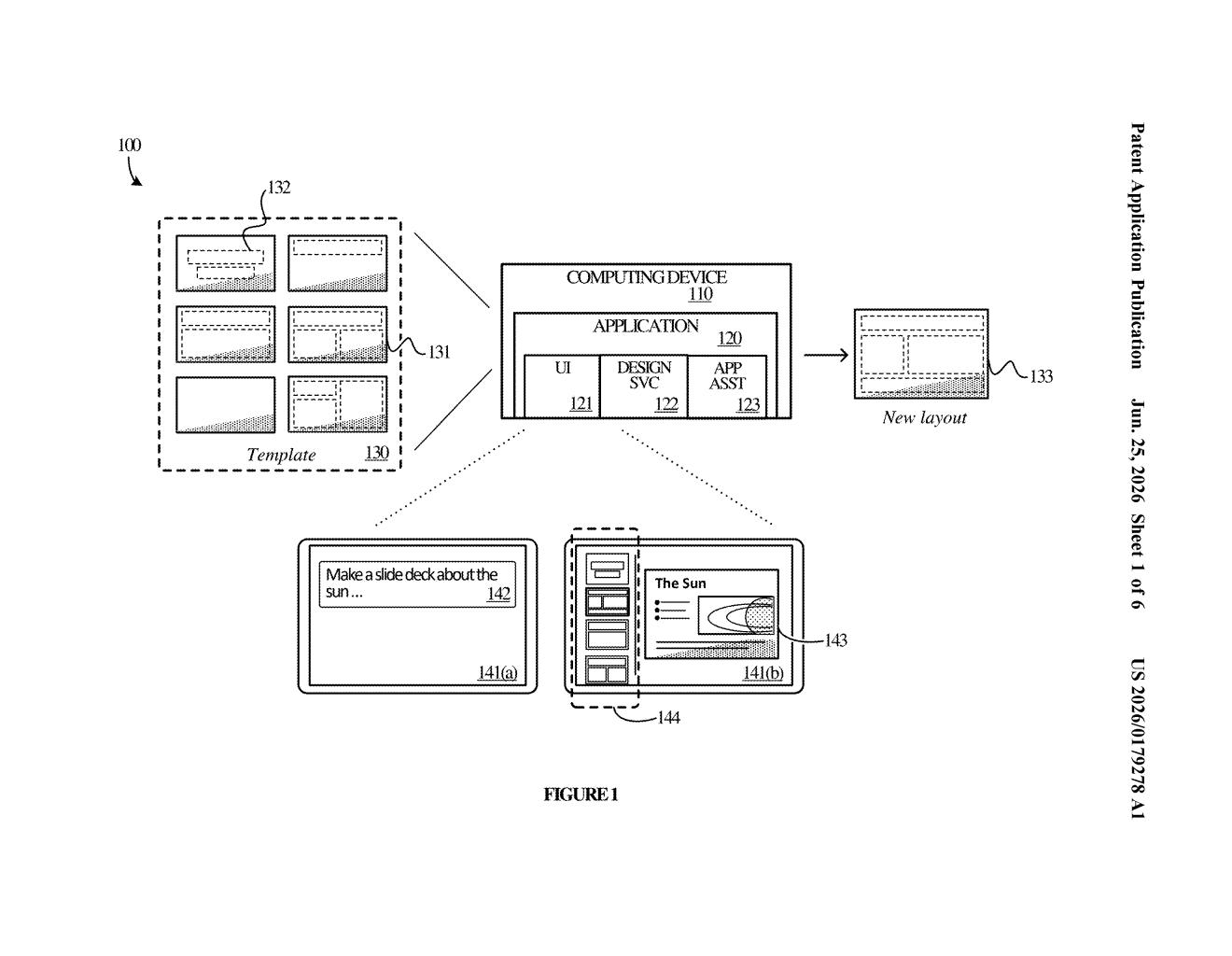
Microsoft's patent describes a system that solves this by reading the existing design rules baked into your presentation's template, then inventing a new layout that fits those rules before placing your content inside it. You supply the content; the system figures out how it should look.
The key idea is that the system doesn't just pick a pre-made layout from a list. It generates a layout tailored to both your content and your theme, then merges the two into a finished slide. That's a step beyond what most current presentation tools offer, which typically force you to pick the closest existing layout and adjust from there.
How the system matches new slides to an existing template
The patent describes three linked steps performed by a computing system, most likely a cloud-based AI service.
- Receive suggested content: The system takes in content intended for a new slide. This could come from a user's prompt, an AI-generated outline, or imported text.
- Generate a new layout: Rather than selecting a layout from a fixed library, the system creates a new layout by studying the existing layouts already defined in the presentation's template. It infers design rules (spacing, typography, element positioning) from those existing layouts and applies them to the new one.
- Merge content and layout: The system combines the generated layout with the supplied content to produce a finished slide that visually belongs in the deck.
The claim is intentionally broad. It covers any computing apparatus running program instructions that follow this receive-generate-merge sequence. The patent doesn't detail the AI model or algorithm doing the layout generation, which keeps the claim wide but also leaves the interesting technical implementation questions open.
What this means for PowerPoint and AI design tools
For everyday PowerPoint users, this kind of system would mean that AI-assisted slide creation actually respects your existing design choices instead of overriding them with something generic. Right now, AI slide tools often produce content that looks fine in isolation but clashes with a custom-branded deck. A system that derives new layouts from your template rather than a default library would close that gap.
For Microsoft, this fits directly into the Copilot push inside Microsoft 365. The company is already shipping AI features inside PowerPoint, and a layout-generation capability would be a natural extension of what Copilot can do when you ask it to add a slide.
This is a straightforward but genuinely useful patent in the AI-productivity space. The core idea, generating a layout from an existing template rather than picking from a preset list, addresses a real friction point that anyone who has used AI slide tools has hit. It's not an engineering marvel, but it's the kind of detail that separates a polished Copilot feature from a frustrating one.
There are more where this came from
We read every patent application Big Tech publishes and send you the ones worth knowing. Plain English, free, every week.
Want this weekly breakdown for a company we don't cover? Patentlyze Pro →