
Qualcomm Patents a Chip Design That Keeps Two Graphics Jobs Processing Simultaneously
Mobile GPUs typically finish one graphics job before starting the next, leaving parts of the chip sitting idle. Qualcomm's new patent describes a way to overlap two rendering jobs so those idle stretches shrink.
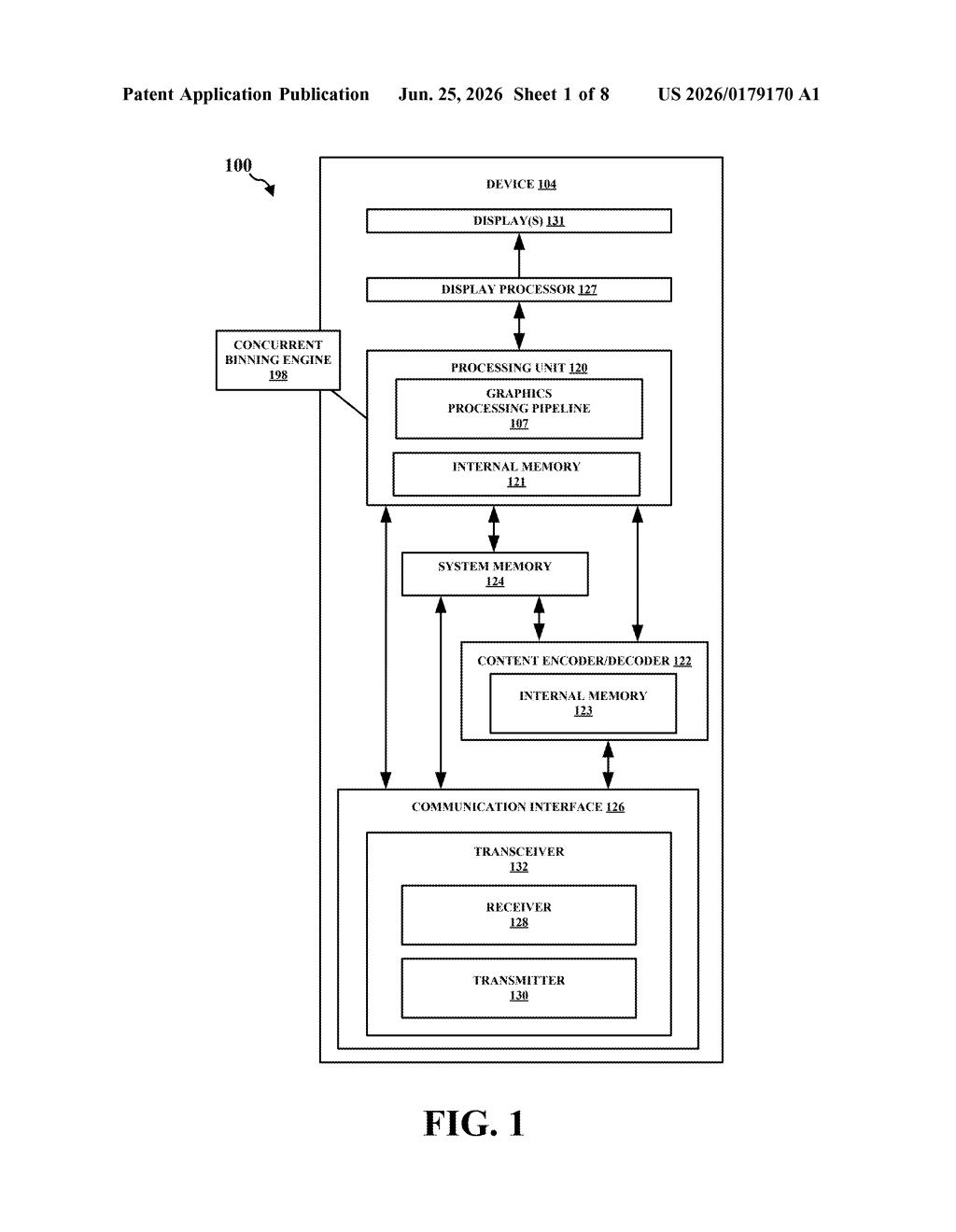
What Qualcomm's overlapping GPU stages actually do
Imagine a restaurant kitchen where the grill cook has to fully plate every dish before the prep cook is allowed to start chopping ingredients for the next order. That's roughly how many mobile GPUs handle back-to-back graphics tasks, and it wastes time.
Qualcomm's patent describes a system that figures out the earliest point at which a second graphics job can safely start, even while the first one is still being finished. The GPU then splits the second job into two parts: the portion that can run in parallel with the end of the first job, and the portion that has to wait. That way, the chip is doing useful work during what would otherwise be dead time.
The practical effect is that more rendering work gets done per second without asking the chip to do anything it wasn't already capable of, just in a smarter order.
How the pipeline splits and sequences the two workloads
Mobile GPUs that use a technique called tile-based rendering (a power-efficient approach where the screen is divided into small tiles processed one at a time) typically run two distinct phases for each frame: a bin visibility pass (figuring out which objects are visible in each tile) and a bin render pass (actually drawing those objects). These phases normally run in strict sequence.
Qualcomm's patent introduces a scheduling layer that analyzes two back-to-back graphics workloads and identifies the exact minimum dependent draw call, the earliest instruction in the second workload that genuinely depends on output from the first workload's render pass. Everything in the second workload before that point can safely run early.
- The GPU processes the first workload's render pass and the first (independent) portion of the second workload's visibility pass at the same time.
- Once the first workload's render pass is done and the dependency is cleared, the GPU handles the remaining portion of the second workload's visibility pass.
- The second workload then proceeds to its own render pass normally.
The key insight is that the system doesn't just blindly parallelize everything; it finds the precise cut point so that ordering constraints are respected while idle time is minimized.
What this means for graphics performance on Snapdragon devices
Tile-based rendering is standard on virtually every mobile GPU, including Qualcomm's Snapdragon Adreno series. Any improvement to how those rendering phases are scheduled has a direct path to shipping devices. Games, high-refresh-rate displays, and augmented-reality applications are the obvious beneficiaries because they generate the densest back-to-back GPU workloads.
For everyday users, this kind of pipeline optimization typically shows up as higher frame rates at the same battery consumption, or the same frame rate at lower power draw. Neither outcome is flashy, but both are the kind of thing you notice when your phone doesn't get warm during a gaming session or your AR app stops dropping frames.
This is exactly the kind of low-level GPU scheduling work that rarely makes headlines but compounds into real-world performance gains. Qualcomm has built a substantial lead in mobile GPU efficiency, and patents like this are part of why: they're not chasing bigger transistor counts, they're extracting more from the architecture that already exists.
There are more where this came from
We read every patent application Big Tech publishes and send you the ones worth knowing. Plain English, free, every week.
Want this weekly breakdown for a company we don't cover? Patentlyze Pro →