
ATI Technologies Patents a Way to Run Motion-Blur Calculations in Reverse
When a GPU renders a fast-moving scene, it tracks how pixels moved forward in time. ATI Technologies is patenting a method to flip that data around so the same information can also describe how pixels arrived from the past.
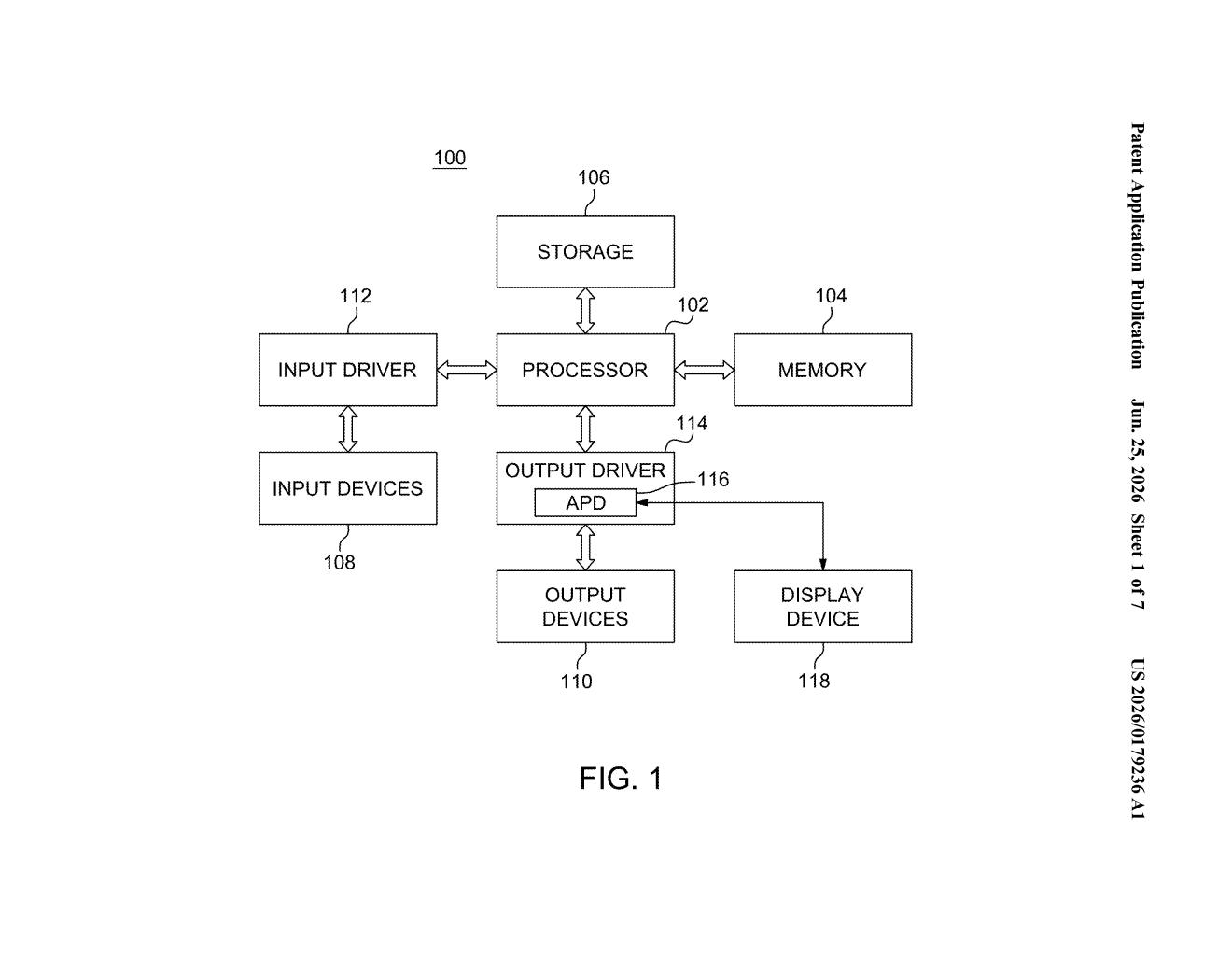
What ATI's reverse motion trick does for your screen
Imagine watching a car race on screen. The GPU draws each frame by figuring out where every dot on screen came from and where it's going. To do that well, it needs to know motion in both directions: forward (where things are headed) and backward (where they came from).
Currently, calculating both directions separately costs extra processing time. ATI's patent describes a shortcut: take the forward motion data the GPU already computed, flip the sign on it (turn a positive number negative), and use that to fill in the backward motion data automatically. No second calculation required.
The result is that the GPU can produce higher-quality images, with better motion blur and smoother upscaling, without doing twice the work. It's a behind-the-scenes efficiency trick that could show up in graphics cards to make fast-moving scenes look cleaner.
How the forward-to-backward velocity conversion works
The patent describes a rendering pipeline step that operates on optical flow data (per-pixel velocity maps that tell the GPU how each point on screen is moving between frames).
Here is the core sequence:
- The GPU reads the forward velocity value for a pixel at a given position in the current (subsequent) frame buffer. That value is essentially a vector: how far and in what direction that pixel moved.
- It negates that vector (multiplies it by -1), which mathematically reverses the direction of motion.
- It uses that negated vector to locate the corresponding position in the previous frame buffer and writes the negated value there as the backward velocity.
- The renderer then uses those backward velocity values when drawing the final image, for effects like motion blur or frame interpolation.
The key insight is that forward and backward optical flow are mathematically related: if pixel A moved to position B going forward, then going backward, position B moved to position A. The patent exploits that symmetry to avoid computing backward flow from scratch.
What this means for GPU-rendered image quality
Optical flow data is increasingly important to GPU rendering. Techniques like temporal upscaling (where the GPU reconstructs a high-resolution image partly by borrowing detail from previous frames) depend on accurate motion vectors in both directions. Getting that data wrong produces visual artifacts like ghosting or smearing around fast-moving objects.
ATI Technologies is a subsidiary of AMD, which makes Radeon GPUs. A more efficient way to generate backward optical flow could make AMD's upscaling technology, FSR (FidelityFX Super Resolution), more accurate without adding meaningful GPU workload. For you as a player or viewer, that could mean fewer visual glitches in fast-action scenes on AMD-powered hardware.
This is a narrow, incremental optimization in the GPU rendering pipeline rather than a major architectural shift. The math is straightforward, which raises the question of whether it's novel enough to survive patent scrutiny. Still, if it ships in driver-level rendering code, it's the kind of quiet improvement that makes upscaling artifacts visibly better without players ever knowing why.
There are more where this came from
We read every patent application Big Tech publishes and send you the ones worth knowing. Plain English, free, every week.
Want this weekly breakdown for a company we don't cover? Patentlyze Pro →