
Samsung Patents a Stovetop That Checks In With Other Home Devices While Idle
Samsung's latest patent describes an induction cooktop that doesn't fully switch off when you're done cooking. Instead, it checks in with other appliances in your kitchen and decides whether to keep its internal fan running based on what those appliances report back.
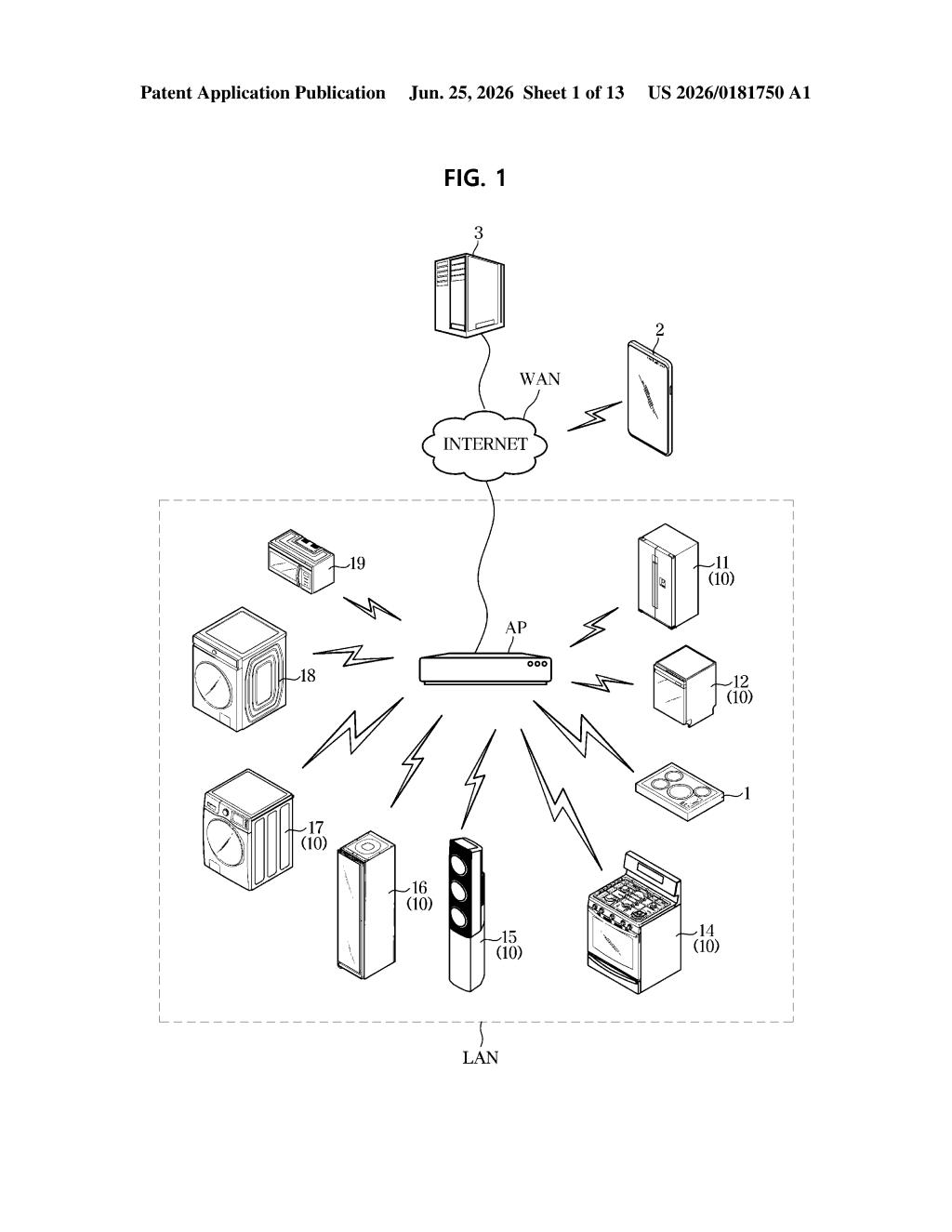
What Samsung's networked cooktop standby mode does
Imagine finishing dinner and turning off your induction cooktop. Normally, the cooktop just goes silent. But what if a nearby appliance, say your oven or hood fan, is still running hot? Samsung's patent describes a cooktop that stays in a low-power listening mode after you switch it off and periodically asks neighboring appliances whether they are still operating.
If another appliance reports that it is active, your cooktop's internal fan can spin up to help manage heat, even though the cooking surface itself is off. This is different from the fan simply cooling down the cooktop's own components. The decision to run the fan is driven by what the rest of the kitchen is doing.
The core idea is that appliances in a connected kitchen share status updates on a regular schedule, letting each device make better decisions about its own power use without any input from you.
How the cooktop polls appliances and controls its fan
The patent covers an induction cooktop with a built-in wireless communicator, a heating coil, an internal cooling fan, and a processor that manages two distinct states: an operation mode (coil powered, actively cooking) and a non-operation mode (coil off).
When the cooktop enters non-operation mode, it does not simply go fully dark. It enters a standby mode in which the communicator periodically pings other home appliances at a set interval (the patent calls this a "reference time interval") to collect their operation information, essentially a status report on whether those devices are running.
The fan control logic then works like this:
- Cooktop switches off and enters standby.
- At regular intervals, the cooktop sends a query to nearby appliances over its wireless link.
- If an appliance responds with active-operation status, the cooktop turns on or keeps running its internal fan.
- If no appliances report active operation, the fan stays off, saving power.
The patent does not specify which wireless protocol the communicator uses, nor does it name which appliances qualify as communication partners. The architecture is general enough to apply to any connected home appliance that can exchange status data.
What this means for Samsung's connected kitchen lineup
For consumers, the practical benefit is better thermal management across a kitchen without any manual action. If your wall oven is still baking after you turn the cooktop off, the cooktop can keep its fan running to help dissipate ambient heat rather than relying solely on the oven's own ventilation. That could translate to longer component life and less heat buildup on the counter.
For Samsung, this patent fits directly into its SmartThings connected-home strategy, where appliances share data and act on each other's state. A cooktop that participates in that network, even while idle, is a concrete example of appliances behaving as a coordinated system rather than independent devices. Whether this ends up in a shipping product is a separate question, but the filing shows Samsung is thinking about standby intelligence as a real engineering problem, not just a marketing angle.
This is a narrow, practical patent, not a headline-grabbing concept. The specific problem it solves (wasted fan energy and poor thermal coordination during standby) is real and worth solving, especially as kitchens fill up with connected appliances. It won't excite anyone who isn't designing kitchen firmware, but it's the kind of unglamorous detail work that makes whole-home appliance ecosystems actually function well.
There are more where this came from
We read every patent application Big Tech publishes and send you the ones worth knowing. Plain English, free, every week.
Want this weekly breakdown for a company we don't cover? Patentlyze Pro →