
ATI Technologies Patents an AI That Picks Its Own Waypoints for Game Characters
Getting a video game character from point A to point B without it walking into a wall, clipping through furniture, or taking a hilariously wrong turn has always been harder than it looks. ATI Technologies (AMD's GPU division) has filed a patent for an AI-driven system that figures out the best intermediate stops along a character's route, on its own.
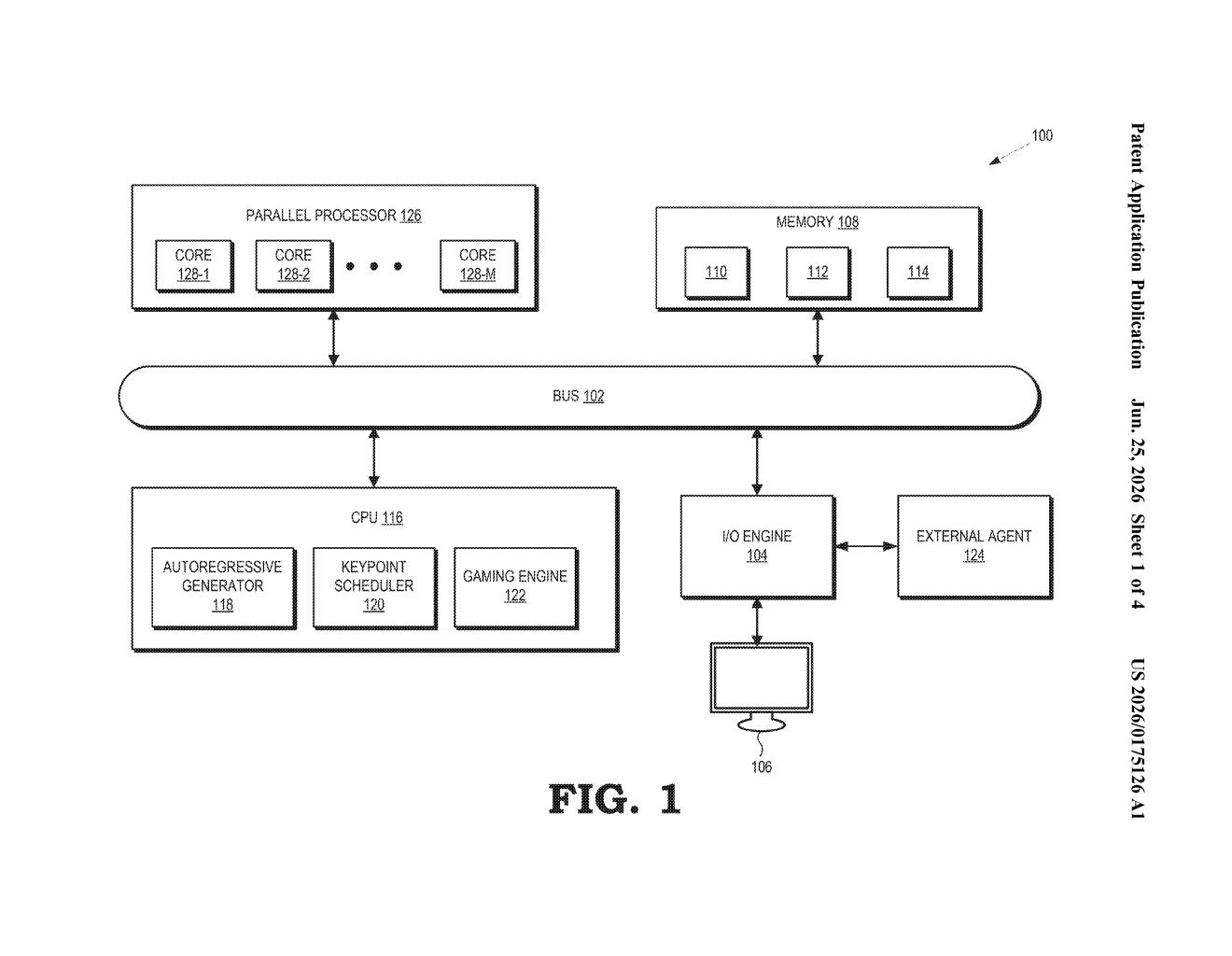
How ATI's system guides game characters through a level
Imagine you're playing a stealth game and an enemy guard has to walk from one end of a warehouse to the other. The game needs to figure out a realistic path for that guard, one that looks natural, avoids obstacles, and matches how a human would actually move through that space.
ATI's patented system studies how a first character (or agent, in the patent's language) typically travels between two points and builds a probability map of which spots it tends to pass through. Then, when a second character needs to make the same trip, the system picks a series of waypoints, call them stepping stones, based on that learned map, each one informed by the ones chosen before it.
The result is a path-planning tool that gets progressively more informed as it lays down each waypoint, rather than just drawing a straight line or relying on a rigid, hand-coded route. That kind of adaptive navigation is hard to do well in real time, which is exactly the kind of problem a GPU company like AMD would want to solve in hardware.
How the autoregressive keypoint selector builds a path
The patent describes a system with two main components working together: autoregressive generator circuitry and keypoint scheduler circuitry.
- Probability distribution storage: The system stores a map of how likely any given location in an environment is to appear on a path between two points. Think of it as a heat map built from watching many prior journeys across the same space.
- Autoregressive keypoint selection: "Autoregressive" means each decision depends on all the ones before it (the way a predictive text model picks the next word based on everything already typed). The system picks waypoint one, then uses that choice to inform waypoint two, and so on.
- Trajectory execution: Once the keypoints are selected, a second agent (a different character, an NPC, a robot) is instructed to follow the resulting path from start to finish.
The key idea is that the system doesn't plan the entire route upfront and then follow it blindly. It builds the path incrementally, using earlier choices to shape later ones. That makes the resulting trajectory more coherent and contextually appropriate than a simple shortest-path calculation.
What this means for game AI and AMD's GPU ambitions
For game developers, the cost of making non-player characters move convincingly is real. Hand-authoring navigation meshes and waypoint graphs for every environment takes time, and the results often look mechanical. A system that learns plausible paths from observed behavior and then applies that knowledge to new characters could reduce that manual work significantly.
ATI Technologies is AMD's Canadian subsidiary and is responsible for a lot of the underlying GPU and compute architecture work. Filing a patent in game navigation AI suggests AMD is thinking about offloading this kind of workload to dedicated circuitry on a GPU or accelerator chip, not just leaving it to game-engine software running on the CPU. That's an interesting direction, especially as consoles and gaming PCs increasingly rely on AMD silicon.
This is a focused, technically specific patent that addresses a real pain point in game AI. The autoregressive waypoint approach is genuinely more sophisticated than traditional nav-mesh methods, and the fact that ATI is describing dedicated hardware circuitry (not just software) suggests AMD is thinking about baking navigation intelligence into future chips. It's not the splashiest filing, but it points toward a concrete product direction.
There are more where this came from
We read every patent application Big Tech publishes and send you the ones worth knowing. Plain English, free, every week.
Want this weekly breakdown for a company we don't cover? Patentlyze Pro →