
New Patent Reveals How Google Trims Web Content for AI
When Google's AI reads a webpage to answer your question, it doesn't need the whole thing. A new patent describes a system that scores each chunk of a page for relevance and only hands the useful parts to the AI.
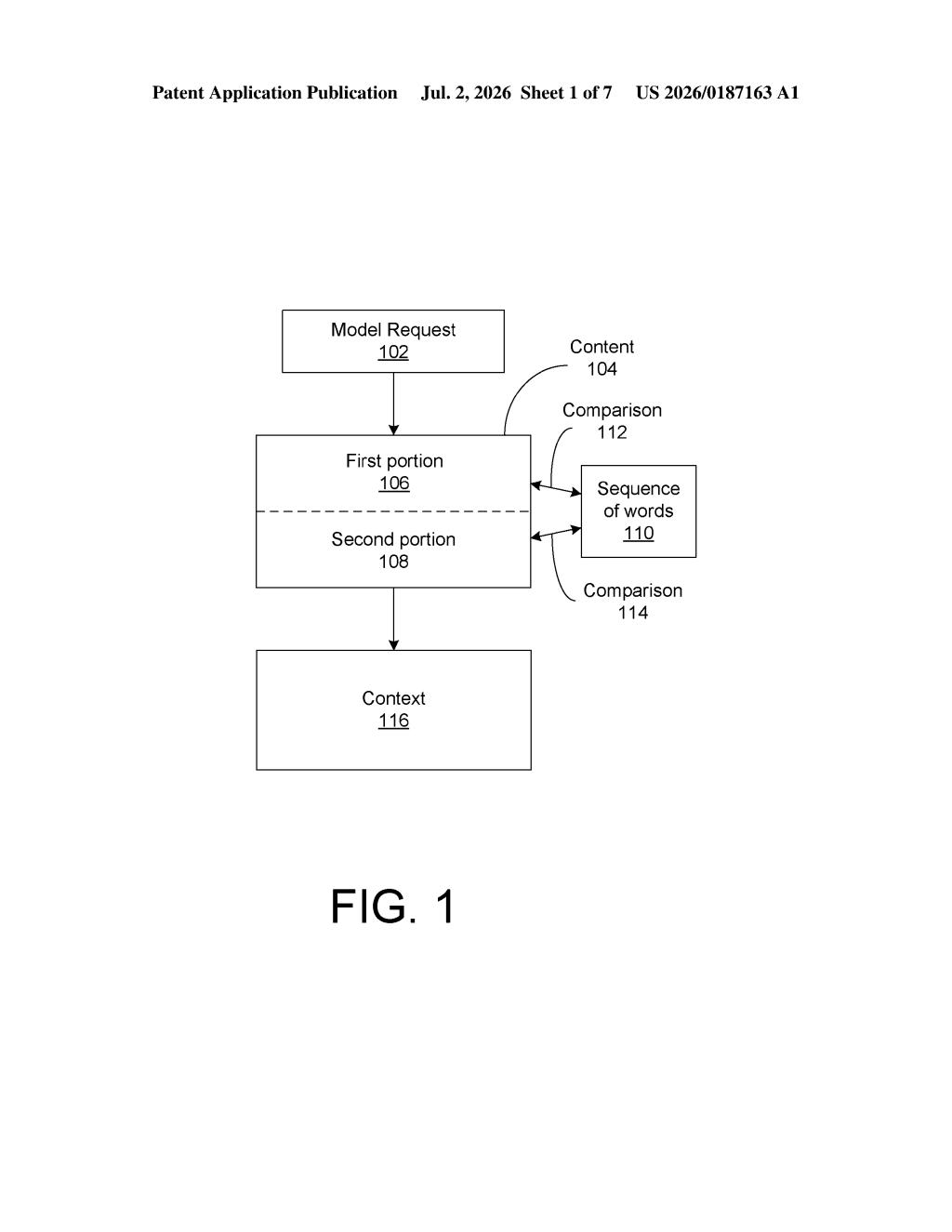
How Google's AI picks only the useful parts of a page
Imagine you ask Google a question and it goes off to read a long webpage to find the answer. That page might have a navigation bar, a footer, cookie notices, unrelated sidebar content, and maybe three paragraphs that actually answer what you asked. Right now, a lot of that noise gets passed along anyway.
Google's patent describes a system that breaks a webpage into sections, compares each section to your question, and scores how relevant each piece is. Sections that score above a certain threshold get passed to the AI. Sections that don't get left out entirely.
The practical effect: the AI that writes your answer only reads the parts of the page that are actually about your question. That can mean more focused responses and less chance of the AI getting distracted by irrelevant content on the same page.
How the relevance scoring trims webpage context
The system takes a user's query (described in the patent as a 'sequence of words') and a webpage that has been pulled up as a potential source of context. It then splits that webpage into portions and runs a similarity comparison between the query and each portion individually.
Each portion gets a similarity value, essentially a relevance score. The system checks each score against a relevance threshold, a cutoff that separates useful content from noise. Portions that clear the threshold are included in the context window (the block of text the AI model actually reads before generating a response). Portions that fall below are excluded.
The patent is agnostic about exactly how similarity is measured, but the setup is consistent with standard semantic similarity techniques, where text is converted into numerical representations and compared mathematically rather than just keyword-matched.
- Query arrives
- Target webpage is split into sections
- Each section is scored for similarity to the query
- Only high-scoring sections enter the AI's context
- The AI generates a response from that trimmed context
What this means for Google's AI search answers
Context windows in AI models are not infinite, and even when they are large, dumping irrelevant text into them can degrade the quality of responses. By pre-filtering webpage content before it reaches the model, Google could make its AI-generated answers more accurate without necessarily needing a bigger or more expensive model.
For Google's AI Overviews (the AI-generated summaries that appear at the top of search results), this kind of filtering is directly relevant. If the system is selecting better source material before the AI drafts its answer, you get responses that are more tightly connected to what a page actually says about your specific question, rather than what else happened to be on that page.
This is quiet infrastructure work, not a flashy AI feature, but it's the kind of thing that makes a measurable difference in answer quality. Better source filtering is one of the most direct ways to reduce the AI hallucination problem without retraining the underlying model. Worth paying attention to.
Get our take in your Top Stories
Liked this breakdown? Add Patentlyze as a preferred source on Google, and our plain-English take shows up more often in your Top Stories the next time Google patent news breaks.
There are more where this came from
We read every patent application Big Tech publishes and send you the ones worth knowing. Plain English, free, every week.
Want this weekly breakdown for a company we don't cover? Patentlyze Pro →