
Google Patents an AI That Pre-Builds Ads, Then Filters Them to Fit Your Preferences
Google is patenting a system where an AI generates a pool of ad candidates before any user request arrives, then narrows that pool using both platform-level rules and individual user preferences before deciding what to actually show.
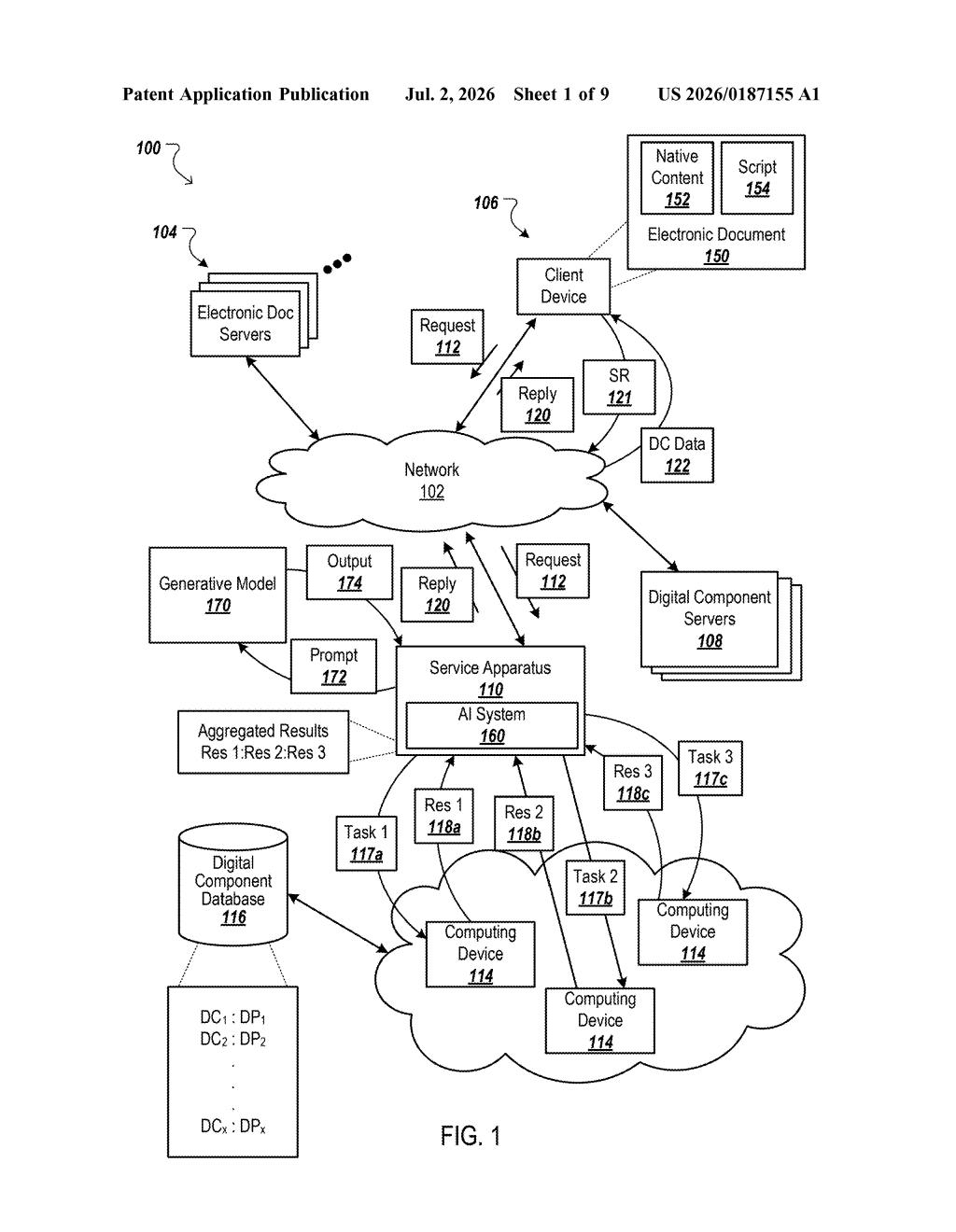
How Google's pre-generated ad filtering actually works
Imagine a restaurant that pre-cooks a dozen dishes every morning, then figures out what to serve you based on your allergies and the daily specials board. That's the rough idea here. Instead of generating an ad from scratch the moment you load a page, Google's system would produce a batch of options ahead of time.
When you actually visit a page or trigger a search, the system cross-references that pre-built pool against two things: rules tied to the specific context (think platform policies or content category restrictions) and your personal preferences, which can block certain types of content you've told the system you don't want to see.
The output is a single ad (or other "digital component," in patent language) that survives both filters. The goal appears to be speed and relevance at the same time, since the heavy generation work is done before your request even arrives.
Inside Google's two-stage candidate and filter pipeline
The patent describes a two-phase approach to generating what it calls digital components (a broad term covering ads, content cards, or similar media units).
- Phase 1 (pre-generation): Before any user query arrives, a machine learning model generates one or more candidate digital components from input data. This front-loads the expensive AI generation step so it doesn't slow down real-time response.
- Phase 2 (filtering): When a query does arrive, the system identifies two constraint sets: digital component regulations tied to the query context (platform rules, content category limits, legal restrictions) and user preference data that blocks certain content types at the individual level.
- Selection and output: The system finds candidates that satisfy both constraint sets and generates a final output component from the surviving candidate(s).
The separation between generation and filtering is the architectural choice worth noticing. Most ad systems do both steps in real time. By splitting them, Google's system can potentially serve more contextually tuned results faster, while still honoring user-level restrictions that were set in advance.
What this means for ad personalization and user control
For everyday users, this patent hints at a system where your stated content preferences (say, opting out of a category of ads) could be enforced at a structural level, not just as a post-hoc filter that sometimes fails. The pre-generation step also means the AI has more time to produce higher-quality candidates instead of rushing one out under time pressure.
For Google's business, the bigger implication is efficiency. Generating AI-driven ad content at scale in real time is expensive. A pre-generation cache that gets filtered per request could reduce that cost significantly, while the two-layer filtering (platform rules plus user preferences) gives the system a defensible answer to regulators asking how it handles restricted content categories.
This is a genuinely interesting infrastructure patent because it separates a problem most ad systems treat as one step into two cleaner stages. The user-preference angle is the part worth watching: if Google actually surfaces this as a user-facing control, it could become a meaningful privacy and consent feature rather than just an engineering optimization.
Get our take in your Top Stories
Liked this breakdown? Add Patentlyze as a preferred source on Google, and our plain-English take shows up more often in your Top Stories the next time Google patent news breaks.
There are more where this came from
We read every patent application Big Tech publishes and send you the ones worth knowing. Plain English, free, every week.
Want this weekly breakdown for a company we don't cover? Patentlyze Pro →