
Google's New Patent Fixes AR Glasses That Go Blank in Bright Sunlight
Anyone who has tried AR glasses outside on a sunny day knows the problem: the virtual overlays just disappear. Google's new patent describes a deliberate fix that accepts a color compromise in exchange for actually being able to see the screen.
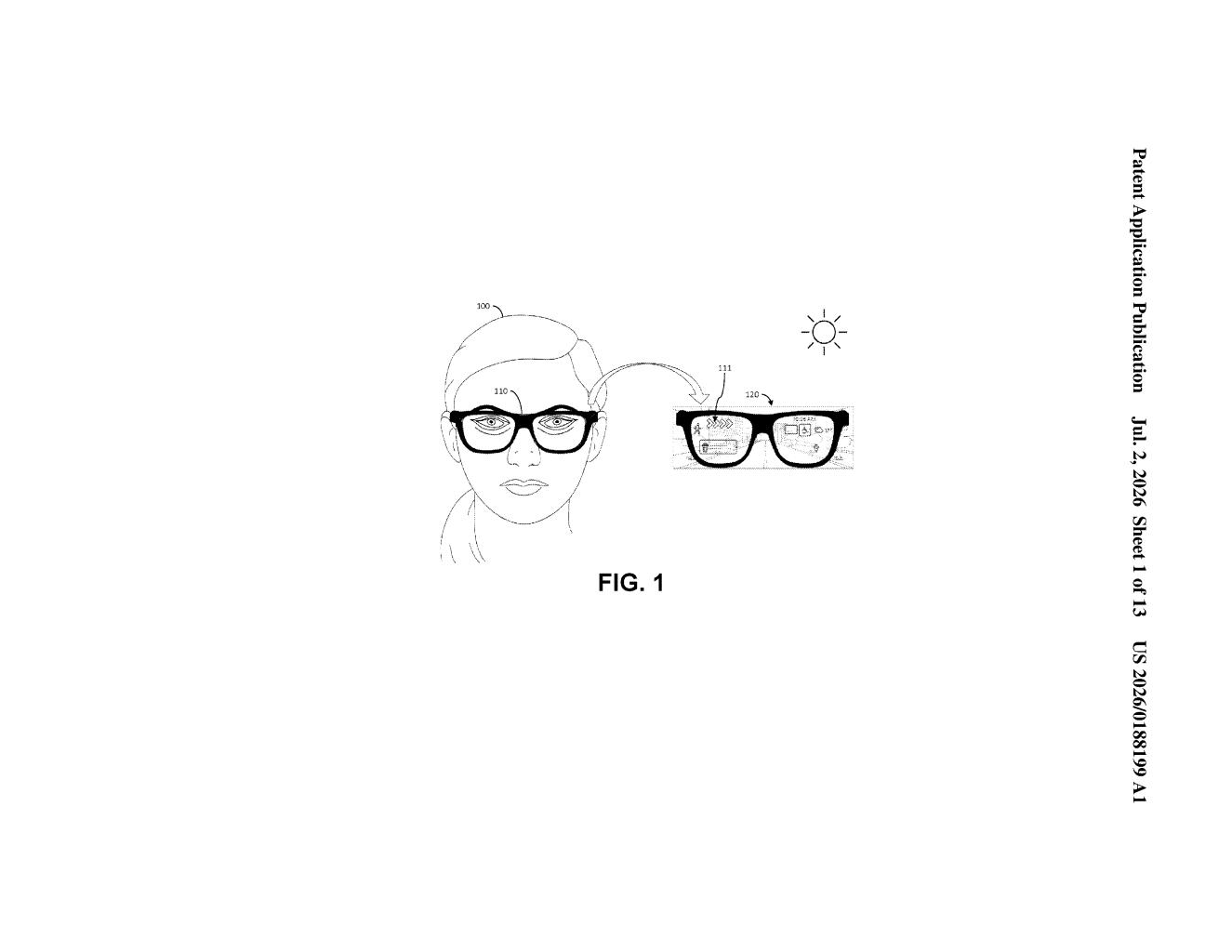
How Google's AR display stays visible in direct sunlight
Imagine wearing AR glasses and stepping out of a coffee shop into bright afternoon sun. The directions floating in your field of view suddenly vanish, washed out by the daylight. That's one of the biggest unsolved annoyances in wearable AR right now.
Google's patent describes a display that fights back. When a sensor detects that ambient light is very bright, the glasses automatically crank up the display's brightness to compete. The catch: pushing the tiny LEDs harder also shifts the colors slightly, so whites might look a little warmer and blues a little different than usual.
Google is betting that slightly off colors you can actually see are far better than perfect colors you can't. The system does this automatically, so you don't have to fiddle with settings every time you walk outside.
How current density shifts wavelengths in micro-LED displays
The display uses a flat grid of micro-LEDs (microscopic light-emitting diodes, far smaller than the pixels in a typical TV). A sensor monitors how bright the surrounding environment is.
In normal indoor conditions, the driver chip runs the micro-LEDs at a modest current density (the amount of electrical current pushed through each emitter). That produces accurate, well-calibrated colors at a comfortable brightness level.
When the sensor detects strong ambient light, the driver switches to a higher current density. More current means more photons, so the display gets brighter. But physics intervenes: at higher current levels, the dominant wavelength each micro-LED emits shifts slightly. In practical terms, this means the color palette changes in a predictable, measurable way.
The key insight in the patent is that this wavelength shift is predictable, not random. Because the engineers know exactly how much the colors will drift at a given current level, they can design the system around that drift rather than fighting it. The result is a display that has two defined operating modes:
- Mode 1 (standard): lower current, accurate colors, normal brightness
- Mode 2 (high-brightness): higher current, shifted colors, much brighter output
What this means for Google's AR glasses ambitions
Outdoor visibility has been a stubborn barrier for consumer AR glasses. Most current devices are essentially unusable in direct sunlight, which limits them to indoor or shaded environments. A hardware-level solution that automatically boosts brightness when needed, even at a small color cost, would make AR glasses genuinely more useful as everyday eyewear.
Google has been building toward consumer AR hardware for years, and this patent sits squarely in that effort. The filing names micro-LEDs specifically, which are widely considered the display technology most likely to power the next generation of compact AR devices. A practical solution to the sunlight problem, even an imperfect one, matters a lot for whether AR glasses can move from a novelty into something you'd actually wear outside.
This is a genuinely pragmatic piece of engineering. Instead of trying to solve the brightness-versus-color-accuracy tension perfectly (which remains very hard), Google's approach acknowledges the trade-off and designs around it deliberately. That kind of 'good enough in context' thinking often leads to products that actually ship.
Get our take in your Top Stories
Liked this breakdown? Add Patentlyze as a preferred source on Google, and our plain-English take shows up more often in your Top Stories the next time Google patent news breaks.
There are more where this came from
We read every patent application Big Tech publishes and send you the ones worth knowing. Plain English, free, every week.
Want this weekly breakdown for a company we don't cover? Patentlyze Pro →