
Waymo Patents Chip That Helps Self-Driving Cars See More Clearly at Distance
Waymo has filed a patent for a custom amplifier circuit that gives its lidar sensors more control over how faint and bright light pulses are handled, which is one of the trickier engineering problems in building a reliable self-driving car sensor.
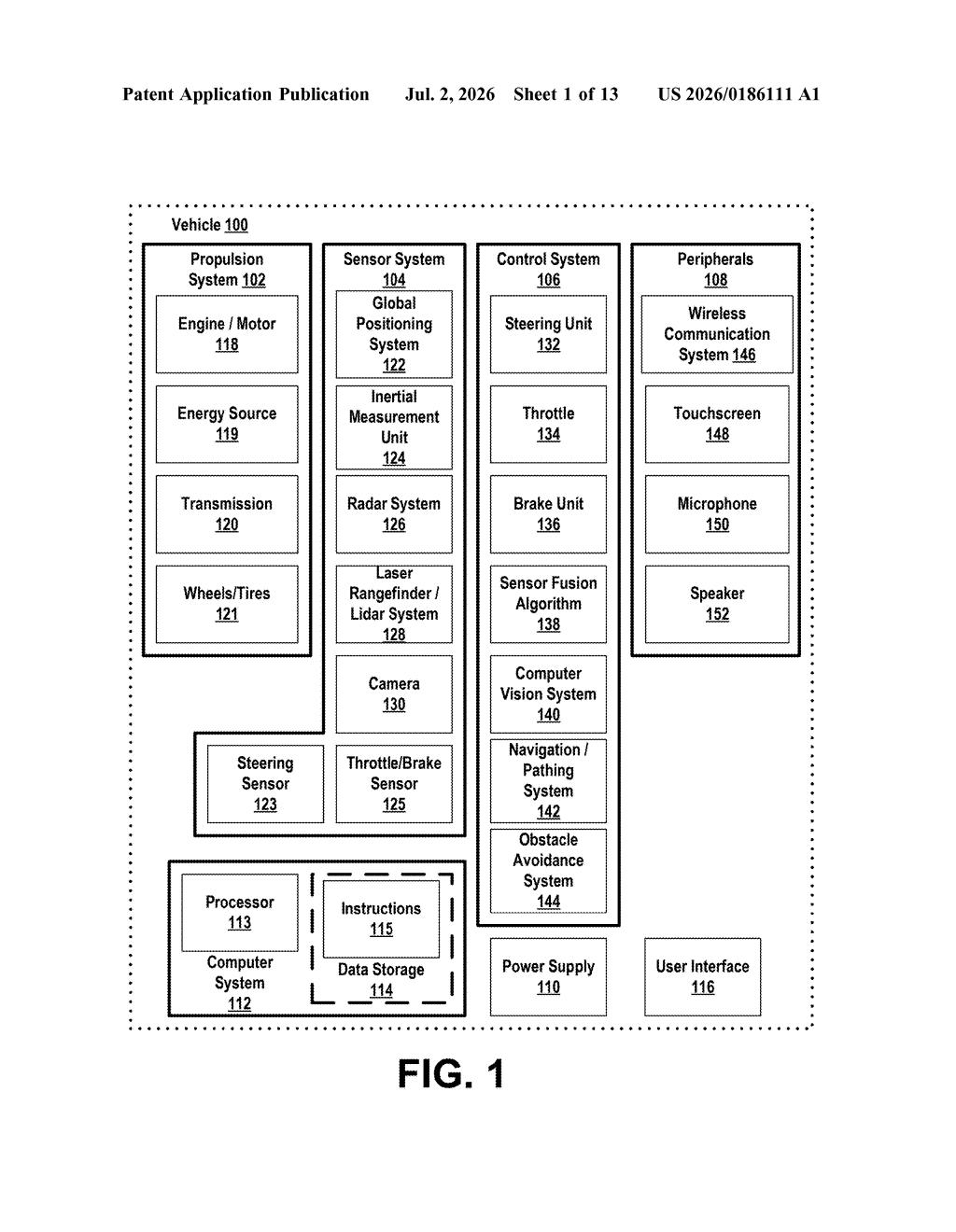
What Waymo's lidar signal trick actually does
Imagine you're taking a photo on a bright day but your subject is standing in deep shade. A basic camera either blows out the highlights or loses the shadows. Lidar sensors face the same problem: a laser pulse bouncing back from a white truck nearby is much stronger than one returning from a dark road surface far away. A single fixed amplifier can't handle both well.
Waymo's patent describes a circuit that applies different amplification levels depending on how strong the incoming light signal is, like having a camera that automatically adjusts exposure for each individual pixel rather than the whole frame. It uses something called a "piecewise linear" approach, which just means the amplifier has a few distinct modes it can shift between rather than trying to handle everything with one blunt setting.
The result is a signal that fits neatly into the digital processing chip that follows, without clipping the loud signals or burying the quiet ones. That gives Waymo's software cleaner data to work with when it's figuring out where objects are around the car.
How the piecewise amplifier chain converts light to data
The patent describes an analog front end (AFE), the circuit layer that sits between a raw sensor and the digital chips that process its output. In lidar systems, a photodetector converts returning laser pulses into tiny electrical currents. The problem is that those currents can vary enormously in strength depending on distance and surface reflectivity.
The core invention is a non-linear gain amplifier (NLGA) built from two stages working together:
- Piecewise linear gain stage: instead of one fixed amplification curve, this stage applies different gain levels across different signal-strength ranges ("piecewise" means stitched together from multiple straight-line segments). Weak signals get boosted more; strong signals get boosted less, preventing them from clipping or saturating.
- DC offset stage: adds a fixed voltage adjustment to the amplified signal to center it correctly for the next stage.
After those two stages, a transimpedance amplifier (TIA) converts the current-based signal into a voltage, and an analog-to-digital converter (ADC) turns that voltage into a clean digital number the processing system can use.
The word "configurable" in the title matters: the gain curve can apparently be tuned, meaning different operating conditions or sensor generations could use different profiles without redesigning the entire circuit.
What this means for Waymo's next-gen sensor hardware
Lidar is the primary sensing technology Waymo relies on to build a 3D picture of everything around its vehicles. The quality of that picture depends directly on how cleanly the analog signal chain handles the raw light data before it ever reaches software. A poorly designed amplifier introduces noise, clips strong returns, or loses weak ones, and each of those errors can cause the system to misread distances or miss objects entirely.
This patent sits deep in hardware, so you won't notice it from the outside. But it's exactly the kind of foundational circuit work that separates a sensor that performs reliably across sunny highways, dark garages, and rain from one that struggles at the edges. Waymo designing and patenting its own custom lidar front-end circuits, rather than relying on off-the-shelf components, also signals continued vertical integration of its sensor stack.
This is unglamorous but genuinely important work. Lidar signal fidelity is a known bottleneck in autonomous vehicle sensing, and a configurable amplifier that handles the full dynamic range of real-world returns is the kind of detail that separates production-grade hardware from prototype hardware. It's not the patent that will make headlines at a product launch, but it's the kind that ends up inside every vehicle Waymo ships.
Get our take in your Top Stories
Liked this breakdown? Add Patentlyze as a preferred source on Google, and our plain-English take shows up more often in your Top Stories the next time Google patent news breaks.
There are more where this came from
We read every patent application Big Tech publishes and send you the ones worth knowing. Plain English, free, every week.
Want this weekly breakdown for a company we don't cover? Patentlyze Pro →