
Google Patent Turns Live Location Data Into Plain-English Travel Summaries
Instead of staring at a moving dot on a map, you'd get a sentence: 'Sarah is on the highway, about 20 minutes from downtown, with moderate traffic ahead.' That's the core idea behind this Google patent.
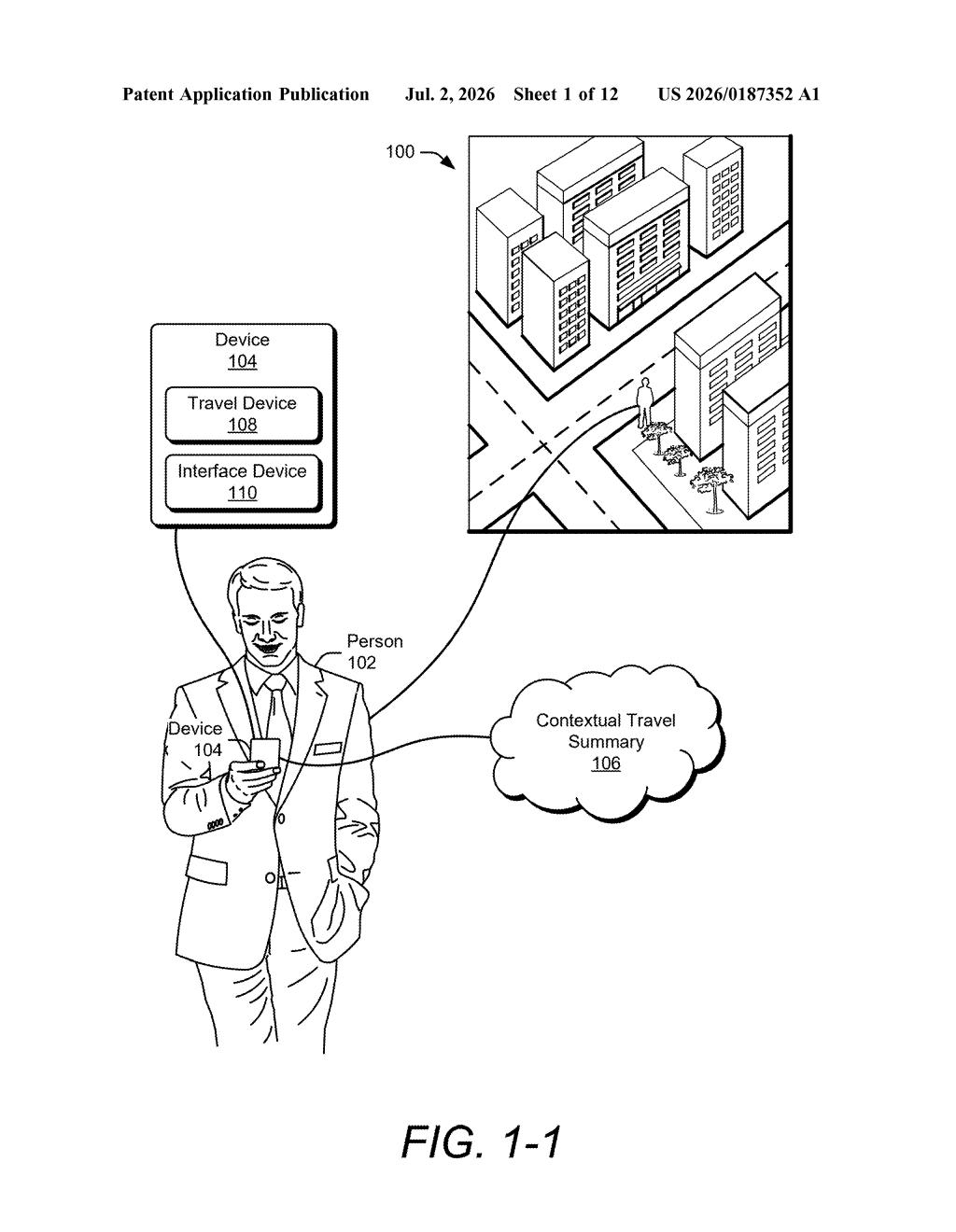
What Google's AI travel summary actually does for you
Imagine a family member is driving to visit you. Right now, if they share their location, you get a pin on a map. You have to mentally translate that into something useful: how far are they, what road are they on, will they hit traffic? Google's patent describes a system that does that translation for you automatically, writing out a short, plain-English description of someone's travel situation.
The summary updates in real time as the trip progresses. You could receive it as a notification, or the person traveling could tap a button to drop it right into a text conversation as a suggested reply. So instead of typing 'just passed the airport, maybe 15 min out,' your phone would write something like that for you.
The system is also designed with safety in mind. A trusted contact, say a parent or a partner, could be set up as an authorized recipient who gets automatic updates while you're on the move, without you having to do anything.
How the system pulls travel data and writes the update
The patent describes a method where a first device (say, your phone or a family member's phone) receives live travel data about a second device being transported, which could be another phone, or implicitly the person carrying it. An AI model then summarizes that raw data into a natural language contextual travel summary, a short, human-readable description of where that device is and what's happening with its journey.
The summary isn't static. It refreshes automatically as conditions change, so a recipient always has a current picture of the situation rather than a snapshot from five minutes ago.
- The summary can be offered as a suggested reply inside a messaging app, so the traveler can share their status with one tap.
- It can be pushed to an authorized recipient as a notification, without requiring any action from the person traveling.
- It's designed to carry richer context than raw coordinates, including things like road conditions, estimated arrival, or mode of transport.
The claim is broad enough to cover the device tracking itself, a person carrying the device, or a completely separate device being transported (think a package or a shared car).
What this means for location sharing and safety apps
Location sharing already exists in Google Maps, Find My, and a handful of messaging apps. But all of them hand you a map and expect you to interpret it. This patent bets that words are more useful than pins for most everyday situations, especially when you're glancing at a notification while doing something else. A sentence lands faster than a map.
The safety angle is where this gets genuinely interesting. The patent explicitly calls out monitoring a person's travel for safety reasons, which positions it as a feature for parents tracking college students, partners sharing commutes, or anyone checking in on a solo traveler. If Google folds this into Messages or Google Maps' location-sharing tools, it could make those features feel a lot less clinical.
This is a modest but well-aimed idea. The gap between 'I can see your dot on a map' and 'I know what's actually happening with your trip' is real, and natural language summaries close it in a way that's genuinely useful for non-power users. It's not a major technical leap, but it's the kind of polish that makes a feature people actually use instead of ignore.
Get our take in your Top Stories
Liked this breakdown? Add Patentlyze as a preferred source on Google, and our plain-English take shows up more often in your Top Stories the next time Google patent news breaks.
There are more where this came from
We read every patent application Big Tech publishes and send you the ones worth knowing. Plain English, free, every week.
Want this weekly breakdown for a company we don't cover? Patentlyze Pro →