
Google Patents Smart Glasses That Filter Surroundings To Show Only Relevant Objects
Imagine pointing your head at a busy city block and instead of being buried in a wall of floating labels for every coffee shop, ATM, and nail salon, your AR glasses show you only the places that actually matter to you right now. That's what Google is working toward.
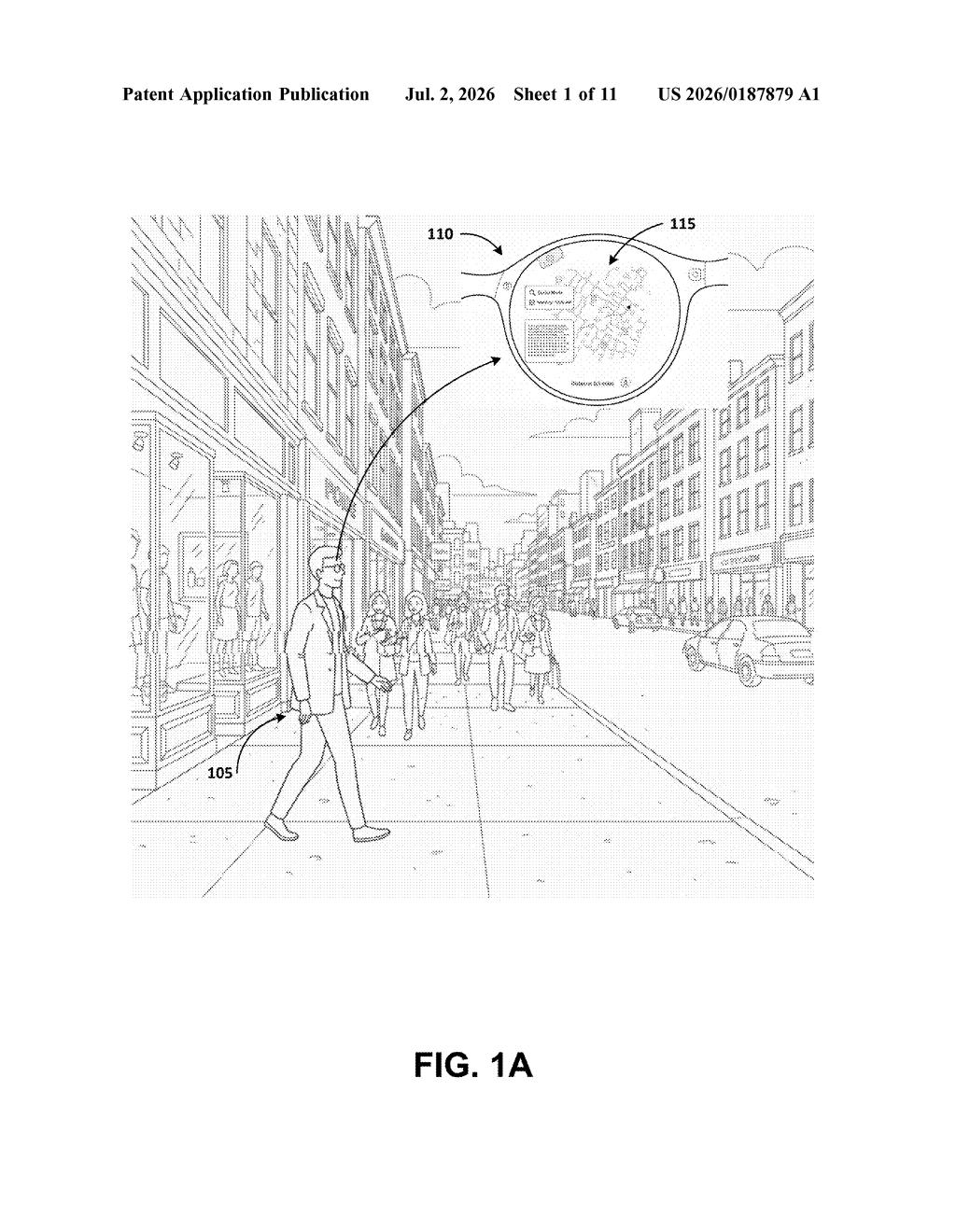
What Google's location-filtering AR display actually does
Picture walking through a crowded downtown area wearing AR glasses. Without any filtering, those glasses could plaster labels over every single business in view, which would be overwhelming fast. Google's patent describes a smarter way to decide what even gets shown.
The idea is that the glasses (or a connected system) look at a location, identify all the relevant places nearby, and then apply filters to narrow that list down to a useful subset before anything gets drawn on your display. The filters could be based on features of those places, things like category, distance, or presumably your own preferences and context.
The result is a display that gives you semantic level of detail, meaning the information shown matches what's actually useful at that moment, rather than dumping everything at once.
How the system picks which nearby places to show
The patent describes a pipeline that starts when a wearable device (like AR glasses) sends a request for information about a location. The system then:
- Identifies all points of interest associated with that location (restaurants, transit stops, landmarks, etc.)
- Applies one or more criteria based on features of those points of interest to narrow them down to a subset
- Renders a user interface on the wearable's display showing only that filtered subset
The phrase "semantic level of detail" in the title is the key concept here. Traditional "level of detail" in graphics means showing a simpler visual model when something is far away to save processing power. Google's version applies the same principle to meaning: show less information when context doesn't call for it, and more when it does.
The "at least one criterion" language in the claim is deliberately broad. It could include distance, category type, user history, time of day, or relevance scores. The patent doesn't lock in a specific algorithm, which is typical for a foundational filing meant to cover a wide range of implementations.
What this means for Google's AR glasses ambitions
Google has been building toward consumer AR glasses for years, and one of the hardest unsolved problems in that space is information overload. If a heads-up display shows you everything all at once, it's useless. This patent describes the filtering logic that would make an AR display feel genuinely helpful rather than cluttered.
The inventors, Jonathon Buckley, Alex Olwal, and Boris Smus, all have backgrounds in AR and wearable interaction research at Google. That pedigree suggests this isn't a speculative shelf filing. If Google ships consumer AR glasses, something very much like this system would need to exist for the product to be usable at all.
This is a foundational UX patent for AR navigation, not a flashy feature announcement. But it's the kind of quiet infrastructure work that determines whether AR glasses feel like a useful product or an annoying gadget. The fact that it's filed under a wearable display context, not a phone or tablet, makes it worth watching as a signal of where Google's hardware roadmap is headed.
Get our take in your Top Stories
Liked this breakdown? Add Patentlyze as a preferred source on Google, and our plain-English take shows up more often in your Top Stories the next time Google patent news breaks.
There are more where this came from
We read every patent application Big Tech publishes and send you the ones worth knowing. Plain English, free, every week.
Want this weekly breakdown for a company we don't cover? Patentlyze Pro →