
Google Patents an AI That Writes Its Own Image Prompts to Build Ads
Google is patenting a system where AI not only generates ad images but also figures out what those images should look like in the first place, by writing its own creative prompts along the way.
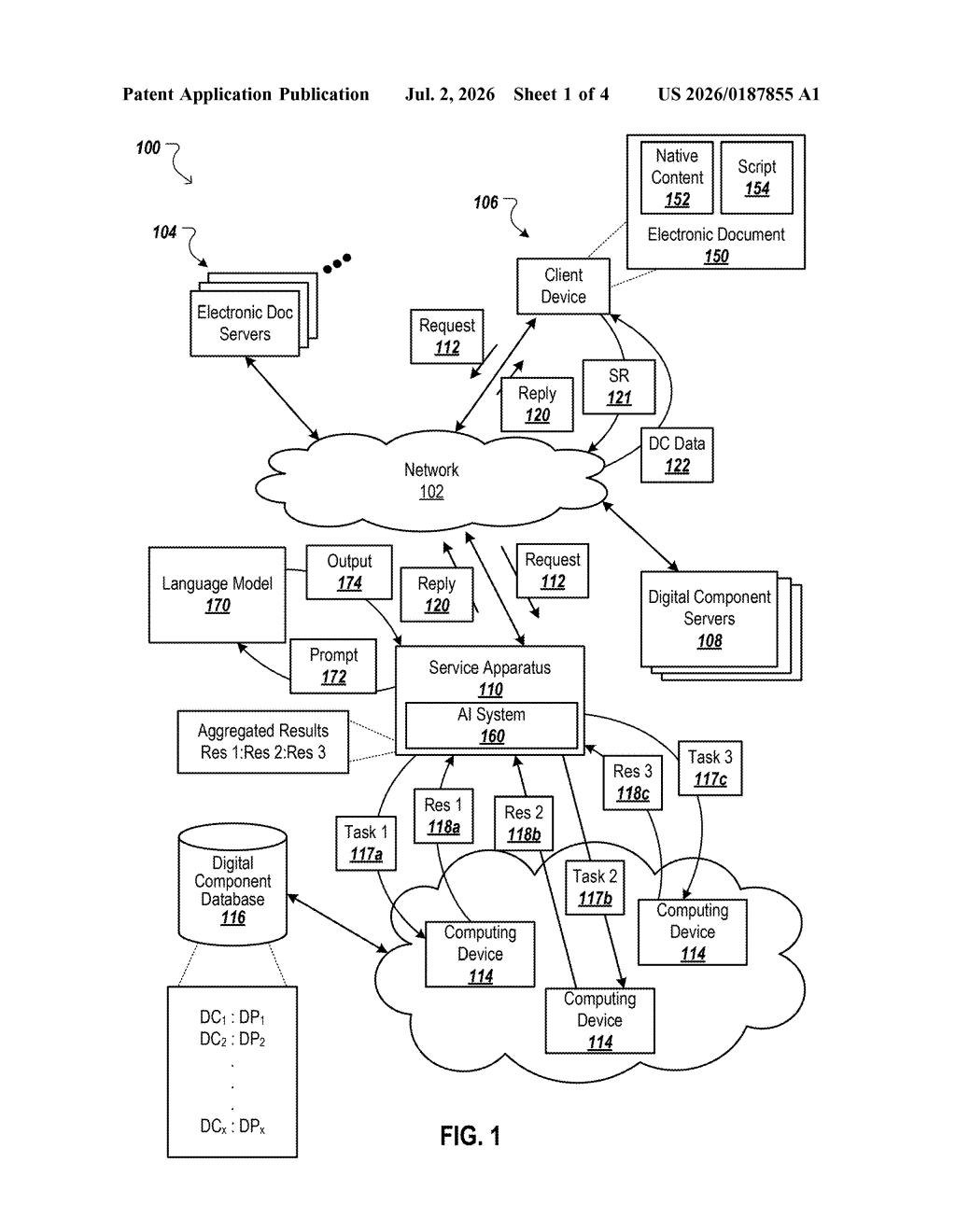
How Google's AI turns a product into ad images automatically
Imagine you sell hiking boots, and instead of hiring a photographer or a designer, you just describe the boots to an AI and it figures out: 'These boots suggest rugged mountain trails at sunrise.' Then it goes off and generates a set of photorealistic images of exactly that scene, with your product's qualities baked into every shot.
That's essentially what Google is patenting here. The system takes a list of a product's features, asks a language model to dream up fitting visual settings, and then hands each of those settings off to a separate image-generation model to produce the actual pictures. The whole process is automatic, no human briefing a designer or writing a single prompt.
At the end, the AI picks one of those images and wraps it into a finished ad ready to deliver to a user's screen. For advertisers running large-scale campaigns with hundreds of products, this could replace a significant chunk of the creative production process.
How the two-step prompt chain generates and selects images
The patent describes a two-stage pipeline Google calls a 'prompt chain.' Rather than asking one AI model to go straight from product description to finished image, the system breaks the job into two handoffs.
Stage one: An AI system takes a set of attributes for an item (think: 'durable, waterproof, lightweight, designed for cold weather') and passes them to a language model (a text-based AI, like a GPT-style system). The language model's job is to output a list of environments that would visually communicate those attributes to a viewer, for example, 'a snowy alpine ridge at dusk' or 'a misty Pacific Northwest forest trail.'
Stage two: For each environment the language model proposes, the system automatically generates a new, more detailed prompt and feeds it to a separate image generation model (an AI that produces pictures, like a Stable Diffusion or Imagen-style system). That model produces one or more images for each setting.
Once the full set of images is ready, the system selects one, wraps it in a digital component (the patent's term for an ad unit or content card), and delivers it to a user's device. The key claim is that no human needs to write the image prompts manually; the AI chain handles that translation from product attributes to visual concept to finished image.
What this means for automated digital advertising
For Google's advertising business, this patent points toward a future where ad creatives are generated on the fly, personalized to a product's specific traits, and produced at a scale that would be impossible with human designers. If you run Google Ads today, this kind of system could eventually mean your campaigns generate their own visuals based on your product feed, skipping the step where you upload images.
For the broader ad industry, it's a signal that the creative layer of digital advertising is increasingly something AI will handle end-to-end. The patent doesn't just cover image generation; it covers the strategic reasoning about what kind of image to generate, which is traditionally a human creative decision. That's the part worth watching.
This is a genuinely consequential patent for anyone in digital advertising, not because the image generation itself is new, but because Google is claiming the automated reasoning step that sits before image generation. Teaching an AI to translate product attributes into creative concepts, then hand those concepts to an image model, is the kind of end-to-end automation that could reshape how performance advertising works at scale.
Get our take in your Top Stories
Liked this breakdown? Add Patentlyze as a preferred source on Google, and our plain-English take shows up more often in your Top Stories the next time Google patent news breaks.
There are more where this came from
We read every patent application Big Tech publishes and send you the ones worth knowing. Plain English, free, every week.
Want this weekly breakdown for a company we don't cover? Patentlyze Pro →