
Microsoft Patents a System That Automatically Assigns Security Fixes to the Right Employee
When a security alert fires inside a large company, someone still has to figure out who owns the affected system and is actually qualified to fix it. Microsoft wants to automate that entire routing step.
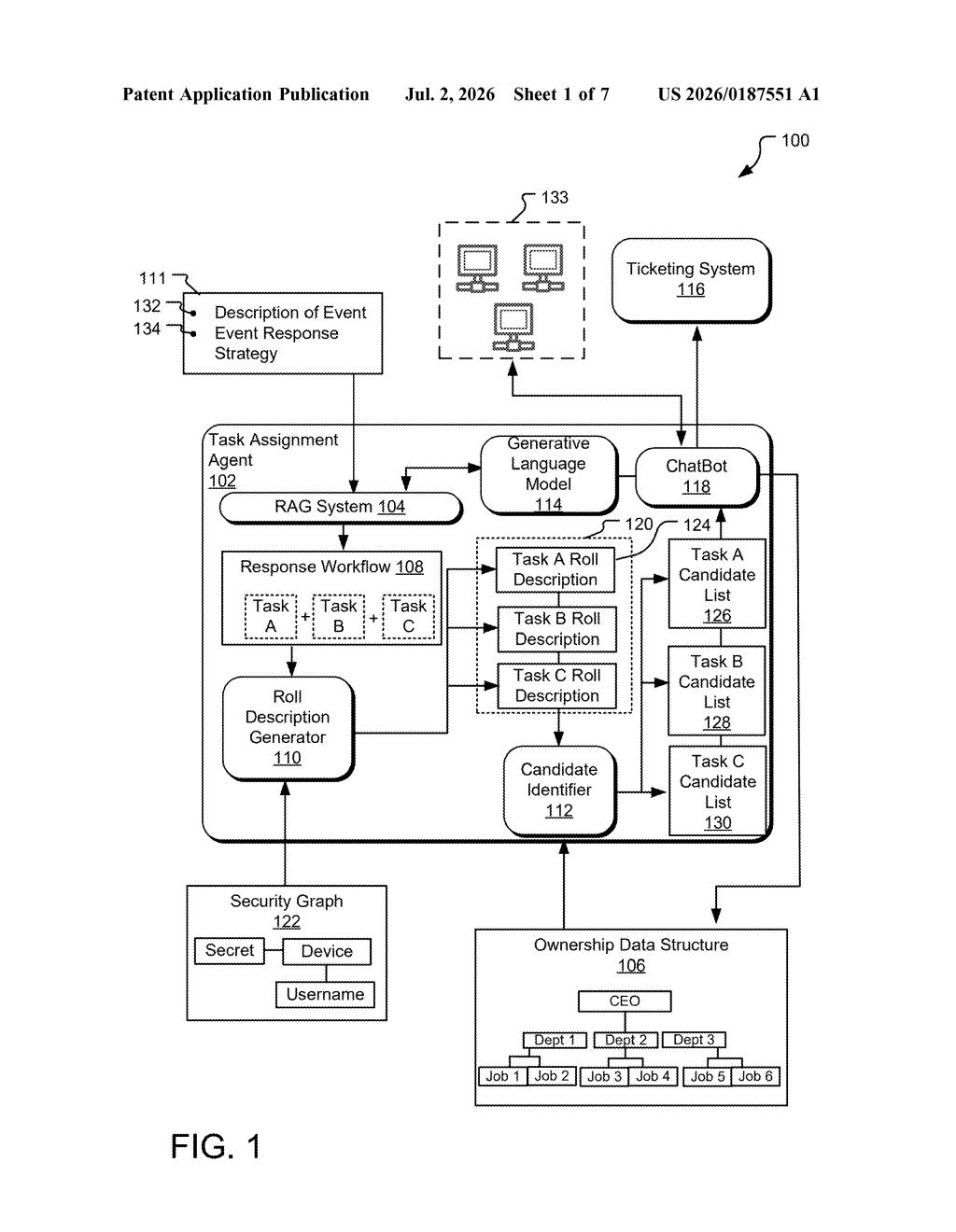
How Microsoft's auto-assignment system picks the right person
Imagine your company's security software detects a problem on a server. Someone has to figure out: which team owns that server? Who on that team has the right skills? How do you get it on their to-do list? Right now, that detective work usually falls on a security analyst, and it eats time.
Microsoft's patent describes a system that does that routing automatically. It reads a map of your company's IT environment to understand which employees have access to which systems, then cross-references job roles stored in a directory to find the best-qualified person. It even reaches out to that person to confirm they can handle the task before creating a formal work ticket.
The key idea is that the system learns your company's ownership structure over time, rather than relying on someone to manually maintain an assignment chart. If responsibilities shift, the system picks that up from the underlying data.
How the security graph and ownership data structure work together
The patent describes a multi-step workflow that kicks in whenever a security action item is broken down into a sequence of tasks.
- Security graph lookup: For each task, the system queries a "security graph" (a database that maps which employees, teams, and projects have access to which IT resources). This tells the system who is connected to the affected system.
- Role description generation: Using that connection data, the system generates a "roll description" (a profile of the skills and organizational attributes someone needs to own the task). Think of it as an auto-written job requirement for a single fix.
- Candidate selection: The system compares that profile against an "ownership data structure" (essentially a company directory enriched with job role descriptions) to find the best-matched individual.
- Confirmation loop: Before assigning anything, the system contacts the candidate and asks them to confirm they can take ownership. Only after they say yes does it create a ticket in the ticketing system (think Jira or ServiceNow).
The patent emphasizes that the ownership directory is learned autonomously over time, meaning it updates itself from real organizational data rather than requiring manual curation.
What this means for enterprise security response times
In large enterprises, the gap between detecting a security problem and getting it assigned to the right person can take hours or days. Every hour a misconfiguration or vulnerability sits unowned is an hour it remains exploitable. A system that can close that gap automatically is a real operational improvement, not just a convenience.
This fits squarely into Microsoft's existing Security Copilot product direction, which aims to bring AI-assisted triage and response into enterprise security operations. If this capability ships, you would likely see it surface inside tools like Microsoft Sentinel or Defender shrinking the time between "alert fired" and "someone is actually working on it."
This is unglamorous but genuinely useful. The hardest part of enterprise security response has never been detecting problems; it's been routing them to the right human fast enough to matter. Microsoft is attacking a real, well-documented bottleneck, and the confirmation-before-assignment step shows they thought about the failure mode where the system picks the wrong person.
There are more where this came from
We read every patent application Big Tech publishes and send you the ones worth knowing. Plain English, free, every week.
Want this weekly breakdown for a company we don't cover? Patentlyze Pro →
Be the first to weigh in