
Microsoft Patents a System That Builds and Destroys VPN Tunnels on Demand
Most VPNs stay open as long as you leave them on. Microsoft is patenting a system that flips that around: a VPN tunnel opens only when a specific software task needs it, and disappears the moment that task is done.
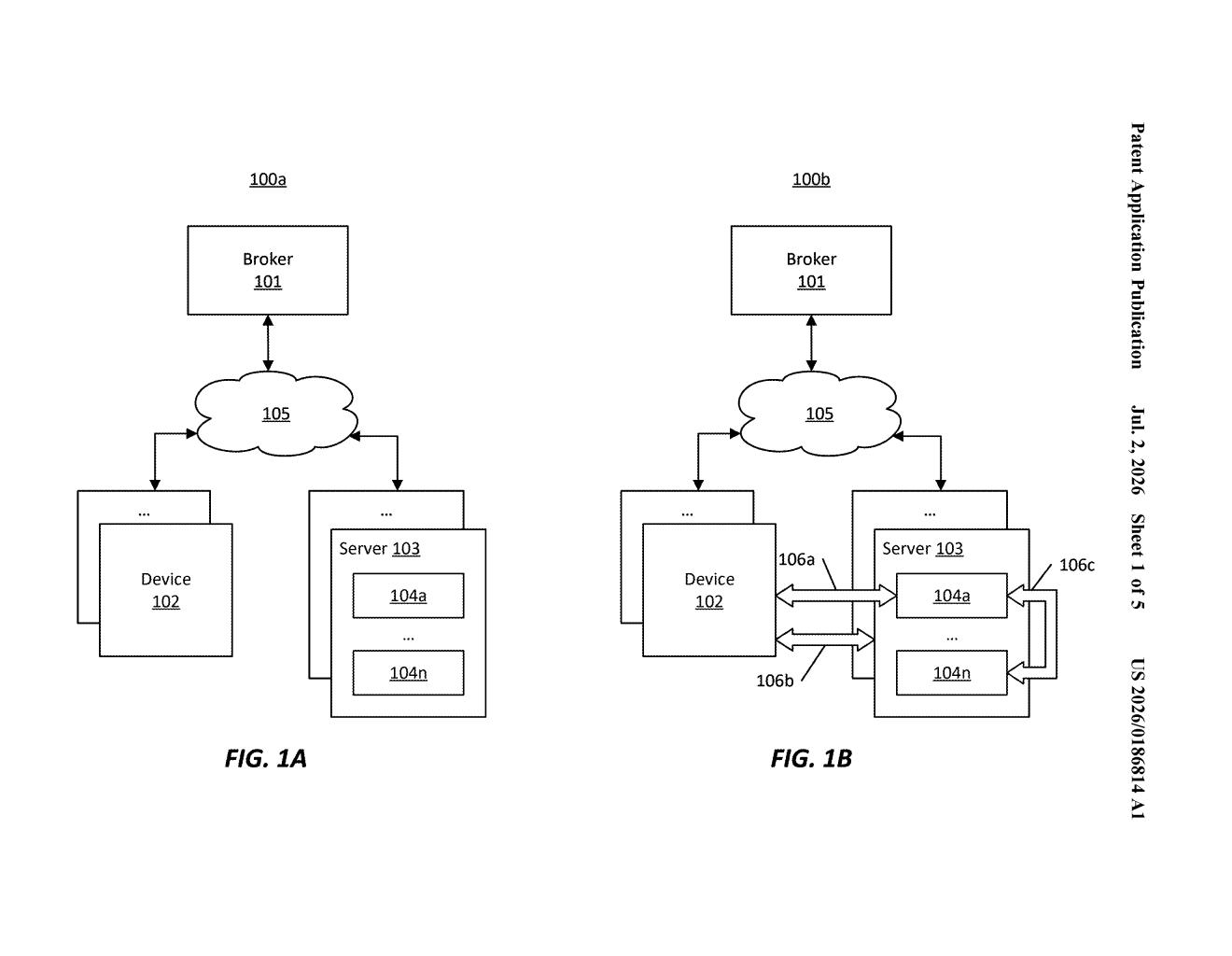
What Microsoft's on-demand VPN brokering actually does
Imagine a secure delivery entrance at an office building. Instead of leaving the door unlocked all day, a guard opens it only when an approved delivery arrives, checks credentials, lets the delivery through, then locks the door again immediately. That's essentially what this patent describes for software running in the cloud.
Right now, many cloud services maintain long-lived VPN connections so different programs can talk to each other securely. The problem is that an open tunnel is an open door, and if something goes wrong on one end, attackers can potentially walk through it.
Microsoft's approach creates temporary, task-specific VPN tunnels. A piece of software proves its identity using a cryptographic credential (think of it like a digital ID badge), gets a connection just long enough to do its job, and then the tunnel is automatically destroyed. No leftover open doors.
How the broker validates, connects, and tears down each tunnel
The patent describes a VPN broker, a middleman system that manages the full lifecycle of a VPN connection on behalf of software workloads.
Here's how the three core steps work:
- Validation: When a software workload (a running program or service on a remote machine) wants a secure connection, it first has to prove it is what it claims to be. It does this by presenting a cryptographic credential, essentially a digitally signed certificate that can't be faked.
- Establishment: Only after that check passes does the broker spin up a VPN tunnel between the requesting workload (the first endpoint) and the destination (the second endpoint). The connection is granted specifically because that validated workload asked for it.
- Destruction: Once the workload's task is complete, the broker tears the VPN connection down. There is no persistent open tunnel sitting around.
The key idea is that the VPN is workload-identity-aware, meaning the connection is tied to a specific running piece of software, not just a machine or a user account. This fits neatly into the zero-trust security model (the principle that nothing on a network should be trusted by default, even if it's already inside the perimeter).
What this means for cloud security and zero-trust networking
Cloud environments today often rely on network-level trust: if two servers are in the same virtual network, they can generally talk to each other. That assumption is exactly what attackers exploit when they move laterally after breaching one service. By tying VPN access to individual software workload identity and destroying the tunnel after use, Microsoft's approach shrinks the window of exposure to near zero.
For enterprise customers running workloads on Azure or hybrid cloud setups, this kind of dynamic brokering could mean fewer persistent attack surfaces without requiring developers to manually manage connection lifecycles. It's the kind of plumbing work that rarely makes headlines but shapes how secure cloud infrastructure gets built.
This is unglamorous but genuinely useful infrastructure work. The idea of ephemeral, identity-verified VPN tunnels is a logical extension of zero-trust principles that the security industry has been talking about for years. Microsoft filing this suggests they're baking the concept directly into their cloud networking stack, which is where it needs to live to actually matter.
There are more where this came from
We read every patent application Big Tech publishes and send you the ones worth knowing. Plain English, free, every week.
Want this weekly breakdown for a company we don't cover? Patentlyze Pro →