
Microsoft Patents a Browser That Suggests Your Next Tab While You Browse
Hover over the new-tab button in your browser and it might soon show you a shortlist of pages worth opening next, based on what you're already reading. That's the idea behind Microsoft's latest Edge-related patent.
What Microsoft's tab-suggestion feature actually does
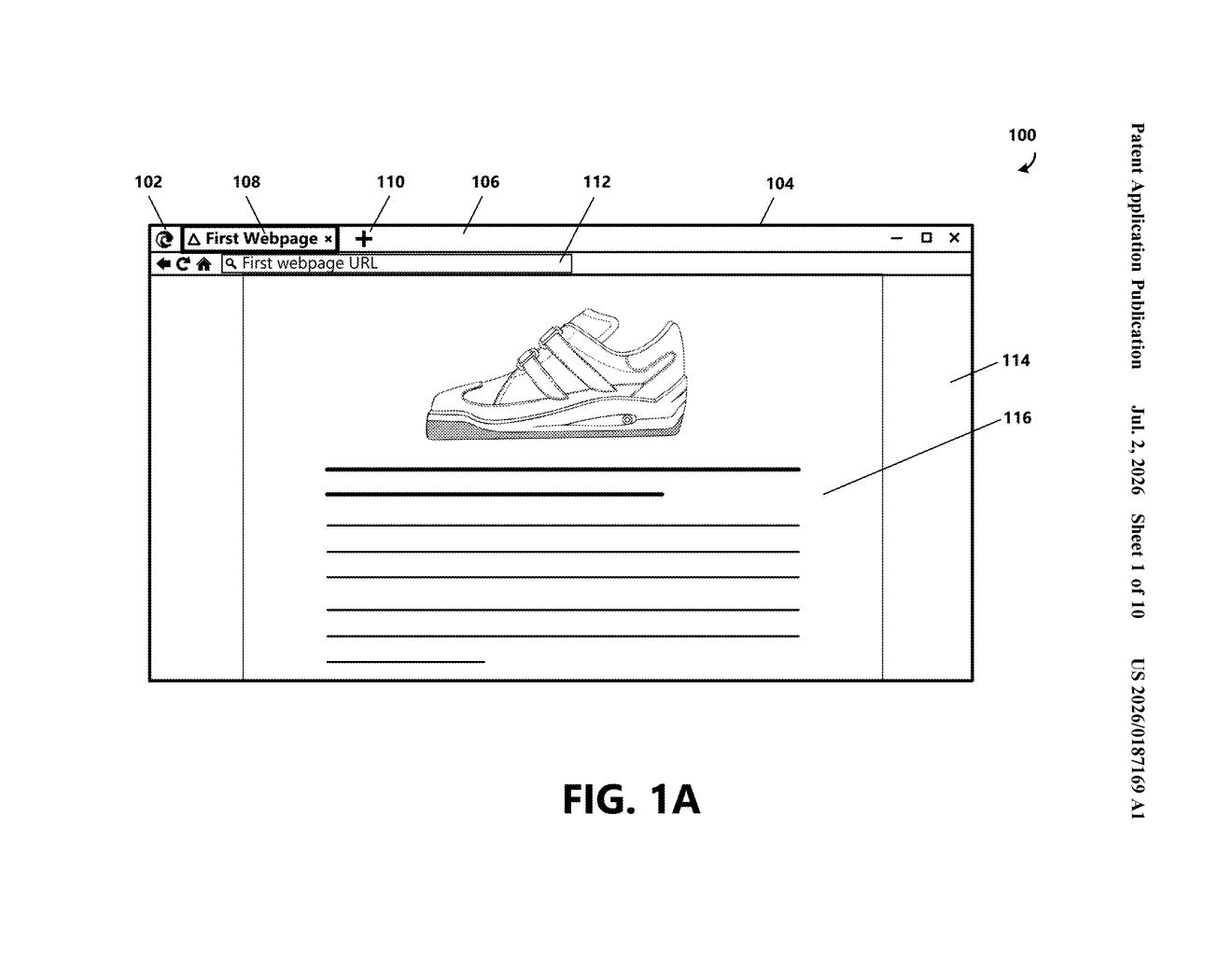
Imagine you're reading a news article about a basketball game. When you go to open a new tab, your browser glances at what you're reading and surfaces a few links you might actually want next, like the team's stats page or the box score. You don't have to search or remember anything. The suggestions just appear.
That's what this Microsoft patent describes. When you hover your cursor over the new-tab button, the browser looks at the content of your current page and shows you shortcut tabs for related web pages it thinks you'll want. Click one, and it opens directly.
The idea is that opening a new tab is usually the start of a search you already have in mind. This feature tries to skip the search step entirely by predicting where you're going before you even type anything.
How the browser reads your current page to pick suggestions
The patent describes a system built into a web browser (almost certainly Microsoft Edge) that watches your active tab for contextual signals, then uses that information to generate recommended web pages shown as clickable tab shortcuts.
Here's how the flow works:
- The browser collects contextual information from whatever page you currently have open, things like the topic, linked URLs, or on-page content.
- When the system detects that you're hovering over the new-tab button, it treats that as a signal of intent: you're about to go somewhere.
- It runs that context through a recommendation layer to pick one or more relevant web pages.
- Those pages appear as browser tab shortcuts near the new-tab interface. One click opens the recommended page in a fresh tab.
The claim specifically says recommendations are designed to "anticipate the next website the user may want to view" or surface other forms of relevance, meaning the system isn't limited to direct follow-up pages. It could suggest thematically related content, frequently co-visited sites, or other personalized signals. The patent doesn't prescribe exactly which AI or ranking model does the predicting, leaving that implementation open.
What this means for Microsoft Edge and daily browsing
For anyone who spends a lot of time in a browser, the tab-opening moment is a small but constant friction point. You finish reading something, open a new tab, and then have to reconstruct what you were going to search for. This feature tries to eliminate that gap by turning the new-tab button into something context-aware rather than a blank slate.
Microsoft Edge already has Copilot integrations and a Bing-powered new-tab page, so this kind of predictive tab suggestion fits neatly into its existing strategy of making the browser do more thinking for you. If it ships, it could give Edge a genuinely differentiated browsing experience, something neither Chrome nor Safari currently offers in this specific form.
This is a small, genuinely useful idea. The hover-to-preview trigger is smart UX design because it intercepts user intent at exactly the right moment without being intrusive. Whether it works well in practice depends entirely on the quality of the underlying recommendation model, but as a concept it's one of the more sensible AI-in-the-browser ideas Microsoft has filed in a while.
There are more where this came from
We read every patent application Big Tech publishes and send you the ones worth knowing. Plain English, free, every week.
Want this weekly breakdown for a company we don't cover? Patentlyze Pro →
Be the first to weigh in