
Samsung Patent Controls Mirror Display Brightness According to Content Region Size
Samsung is patenting a mirror display that watches how much of its screen is actually showing content, then adjusts brightness accordingly. It's a small idea with a practical payoff: your mirror stops blinding you when it's mostly just reflecting your face.
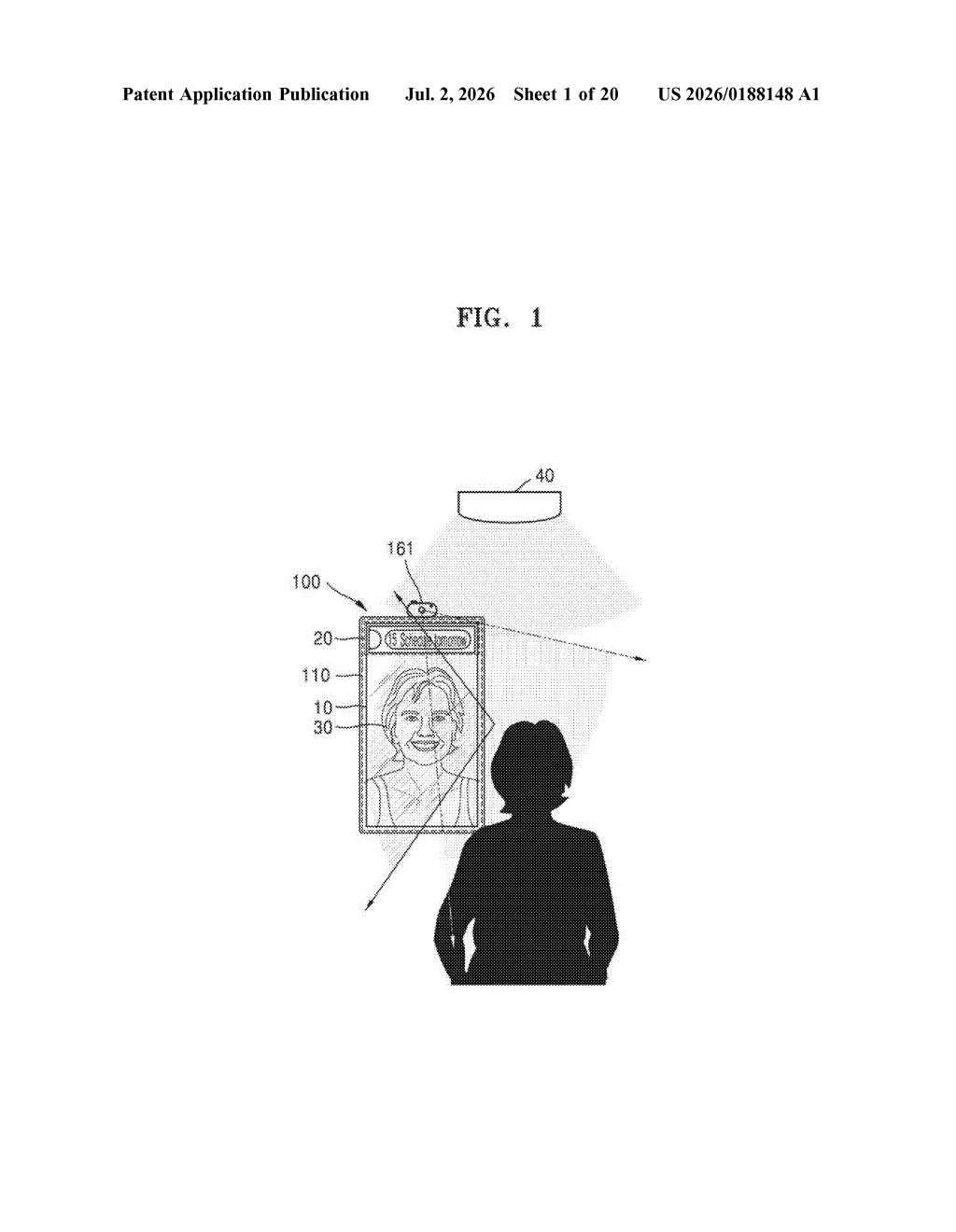
How Samsung's mirror display dims and brightens itself
Imagine a bathroom mirror that also shows your calendar, the weather, and a few notifications in one corner. Right now, most of those smart mirrors treat brightness as a single dial, the same glow whether the screen is showing one small widget or a full-screen video.
Samsung's patent describes a smarter approach. The display constantly measures how much of the screen is taken up by actual content versus the reflective mirror area. The more content is on screen, the more the brightness adjusts to match. The less content there is, the dimmer the active display becomes, so the mirror portion stays comfortable to look at.
The practical benefit is simple: a mirror that mostly reflects your face shouldn't be screaming light at you just because a tiny clock is running in the corner. Samsung wants the brightness to scale with what's actually there.
How the display measures content area to set brightness
The patent describes an electronic device built around a mirror display, a screen that functions as both a traditional reflective mirror and a digital display at the same time. The core idea is a brightness control system tied directly to screen usage.
Here's the basic process:
- The device identifies what portion of the total display area is occupied by a content region (any active video, image, or UI element being shown on screen).
- It calculates that proportion as a ratio or percentage of the full display.
- It then adjusts overall display brightness based on that ratio, so a screen showing a lot of content gets a different brightness than one showing only a sliver.
The patent doesn't lock in a single formula for how the brightness scales. It covers the broader principle: content area drives the brightness decision. This means Samsung could apply linear scaling, stepped levels, or more nuanced curves depending on the product.
The underlying hardware is a mirror display, a category that includes products like smart mirrors for bathrooms, retail fitting rooms, or hotel rooms, where the screen needs to blend into a reflective surface when not in active use.
What this means for smart mirrors in your home
Smart mirrors have been a slow-burn product category for years, and one of the main complaints is that they look awkward when idle. A bright display glowing next to your reflection is distracting, even when it's only showing a clock. Samsung's approach would let the display fade into the background proportionally, making the device feel more like a mirror and less like a TV bolted to the wall.
This also matters for power consumption. A large mirror display running at full brightness to show a small notification widget is wasting energy. By tying brightness to content coverage, Samsung could extend the device's efficiency without a dedicated power-saving mode. If Samsung builds smart mirror hardware into future home products, this kind of automatic calibration would be the kind of detail that makes the product feel polished rather than afterthought.
This is a narrow, focused patent covering what is essentially one behavior: brightness scales with how much of the screen is active. It's not a broad mirror display platform claim, and it's not a reinvention of anything. That said, it's the kind of detail that genuinely separates a good smart mirror from an annoying one, and Samsung filing it suggests they're still actively developing products in this space.
Get our take in your Top Stories
Liked this breakdown? Add Patentlyze as a preferred source on Google, and our plain-English take shows up more often in your Top Stories the next time Samsung patent news breaks.
There are more where this came from
We read every patent application Big Tech publishes and send you the ones worth knowing. Plain English, free, every week.
Want this weekly breakdown for a company we don't cover? Patentlyze Pro →