
Google Patents a Content Moderation System That Looks Up Live Context Before Acting
Most automated content moderation systems make decisions using only what they were trained on months ago. Google's new patent describes a system that pauses, looks things up in real time, and only then decides what to do with a piece of content.
How Google's two-AI moderation pipeline actually works
Imagine a referee who not only knows the rulebook but can also call a timeout to check the news before making a call. That's roughly what Google's patent describes for content moderation.
Instead of one AI that stamps "remove" or "keep" based purely on its training, this system uses two AI models working together. The first acts like a researcher: it figures out what extra information is needed and goes and fetches it from outside sources. The second reads all of that gathered context and then makes the actual call about what to do with the content.
The key idea is that the second AI sees more than just the post itself. It gets relevant background pulled in at decision time, not just whatever the system knew when it was originally trained. That means it can account for breaking news, evolving slang, or newly identified bad actors without waiting for a full model retrain.
How the planner and screener models divide the job
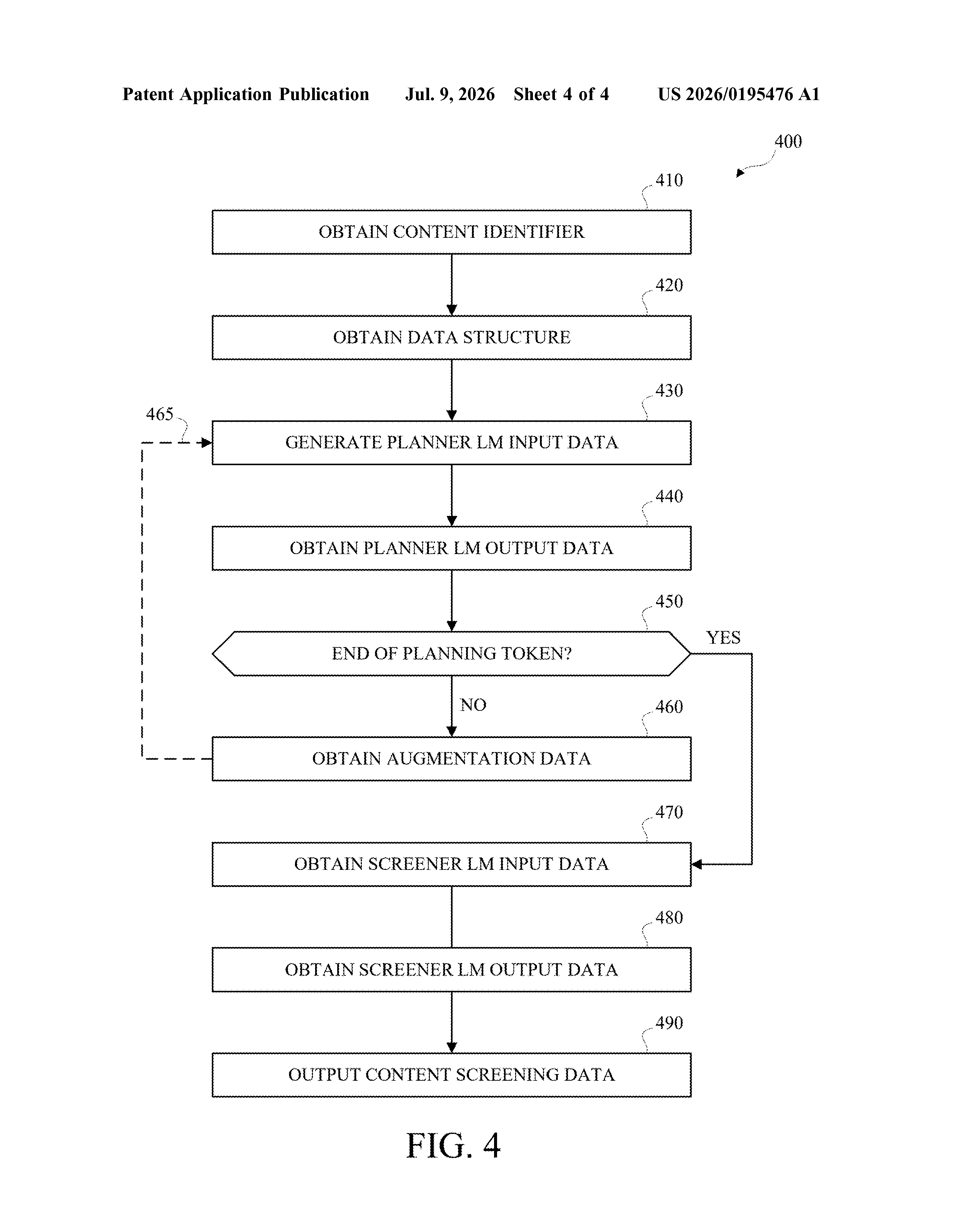
The patent describes a two-model architecture for automated content moderation. Each piece of content gets assigned an identifier, and then a planner language model takes over first.
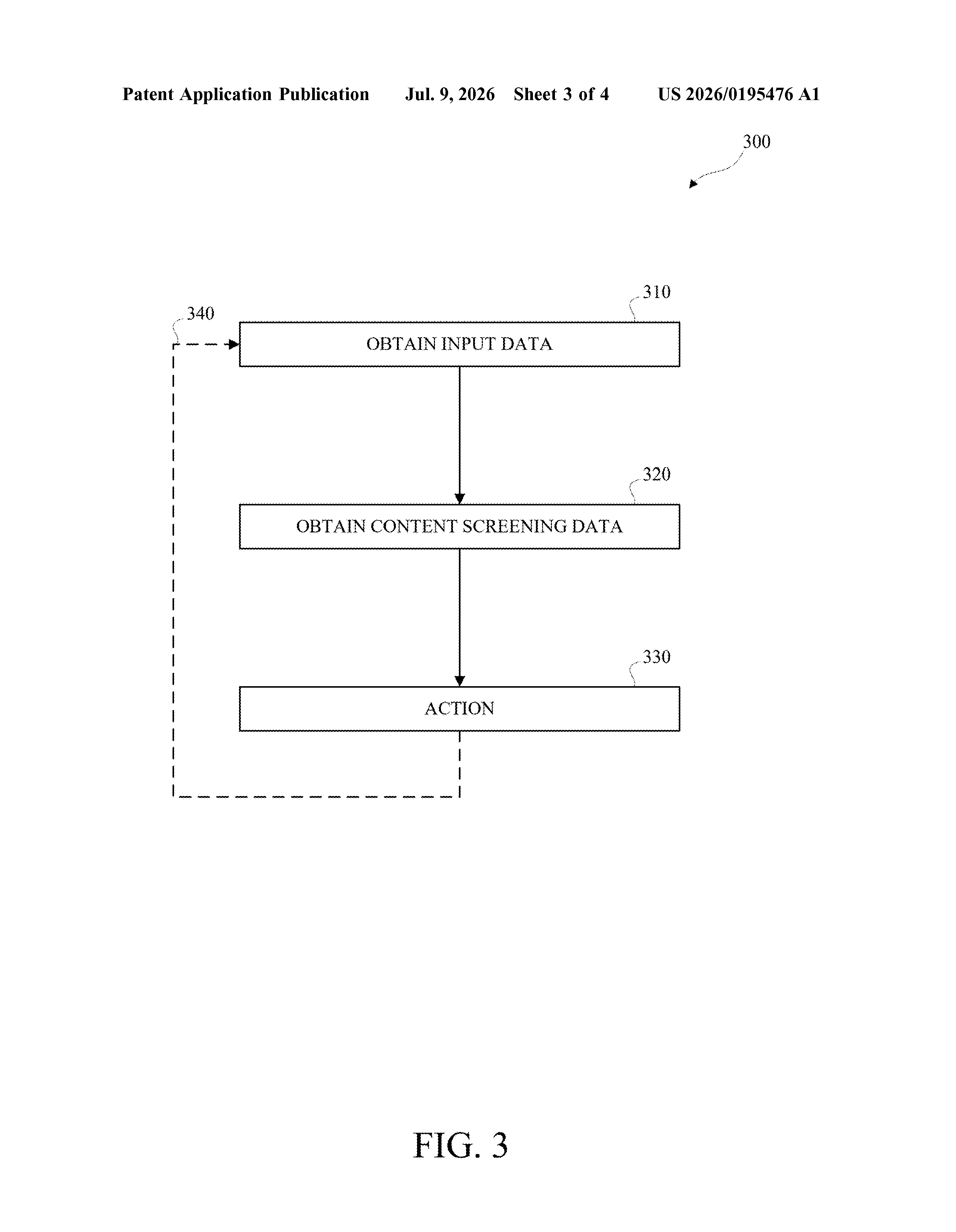
The planner's job is not to judge the content directly. Instead, it figures out what extra information would help make a good decision and queries augmentation data sources (external databases, knowledge bases, or real-time feeds) to gather that context. This can happen in multiple rounds: the planner checks something, reads the result, and decides whether it needs to look something else up before passing the baton.
All of that gathered context gets packaged into a content screening data structure, which is essentially a dossier built around the piece of content. That dossier is then sent to the screener language model, which reads both the content and the collected context and outputs a decision, including a specific action to take (such as remove, demote, or leave alone).
The system is called "retrieval-oriented context augmented" because it is designed around the idea that retrieval of fresh, relevant information should happen before any final judgment. The training data and the live lookup data are kept separate by design, so the screener can act on information that postdates its training.
What this means for content moderation at Google's scale
Content moderation is one of the hardest scaling problems on the internet, and the core tension is always the same: the rules change faster than models can be retrained. A slur becomes a dog-whistle, a meme shifts meaning overnight, a public figure gets newly implicated in something. Systems trained six months ago miss all of it.
By building live lookup into the decision pipeline itself, Google's approach tries to close that gap without requiring constant, expensive model retraining. If this is deployed across YouTube, Search, or Google's ad systems, it could mean moderation decisions that are both faster and more current than what most platforms manage today. For users, that might mean less time that genuinely harmful content stays up while a retrain is being scheduled.
This is a real engineering solution to a real and well-documented problem in platform trust and safety. The two-model split (planner retrieves, screener decides) is a sensible architecture for keeping moderation systems current without burning money on constant retraining. Whether Google actually ships this into production at scale is the only question that matters, and patents don't answer that.
Get our take in your Top Stories
Liked this breakdown? Add Patentlyze as a preferred source on Google, and our plain-English take shows up more often in your Top Stories the next time Google patent news breaks.
There are more where this came from
We read every patent application Big Tech publishes and send you the ones worth knowing. Plain English, free, every week.
The drawings
4 drawing sheets from US 2026/0195476 A1 · click any drawing to enlarge
Want this weekly breakdown for a company we don't cover? Patentlyze Pro →