
Google Files Patent for Phone Cameras That Warn Drivers About Road Hazards
Your phone already knows where you are. Google's new patent wants it to also know what dangerous things are about to appear behind you, and wake up its camera only at the exact moment it needs to look.
What Google's map-triggered hazard alert actually does
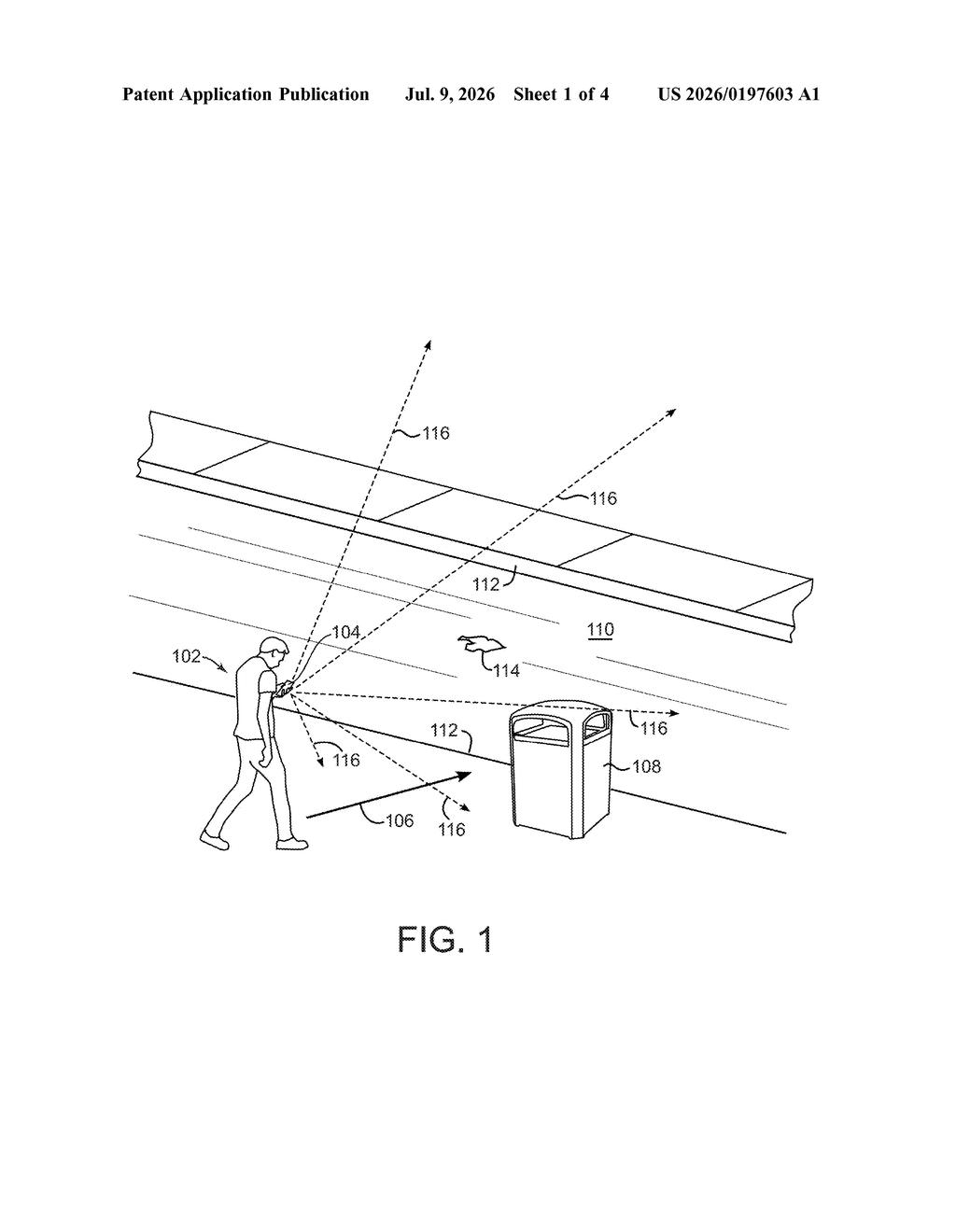
Imagine you're cycling down a street and your phone, tucked in your pocket or mounted on your handlebars figures out from a map that there's a known intersection or hazard zone coming up. Instead of keeping the camera running the whole time and draining your battery, the phone waits until you're actually close to that spot before it switches the camera on.
Once the camera wakes up, it scans what's behind you and uses image recognition to check whether a real hazard object (think an approaching car or road obstacle) is actually within a dangerous distance. If it is, your phone fires off an alert.
The clever part is the two-step filter: maps and GPS do the cheap work first, so the camera and image processing (the battery-hungry parts) only kick in when there's a genuine reason to look. It's the difference between leaving a floodlight on all night and using a motion sensor to turn it on only when someone walks past.
How the GPS-to-camera pipeline decides when to fire
The system works in two stages, which is the key to keeping power consumption low.
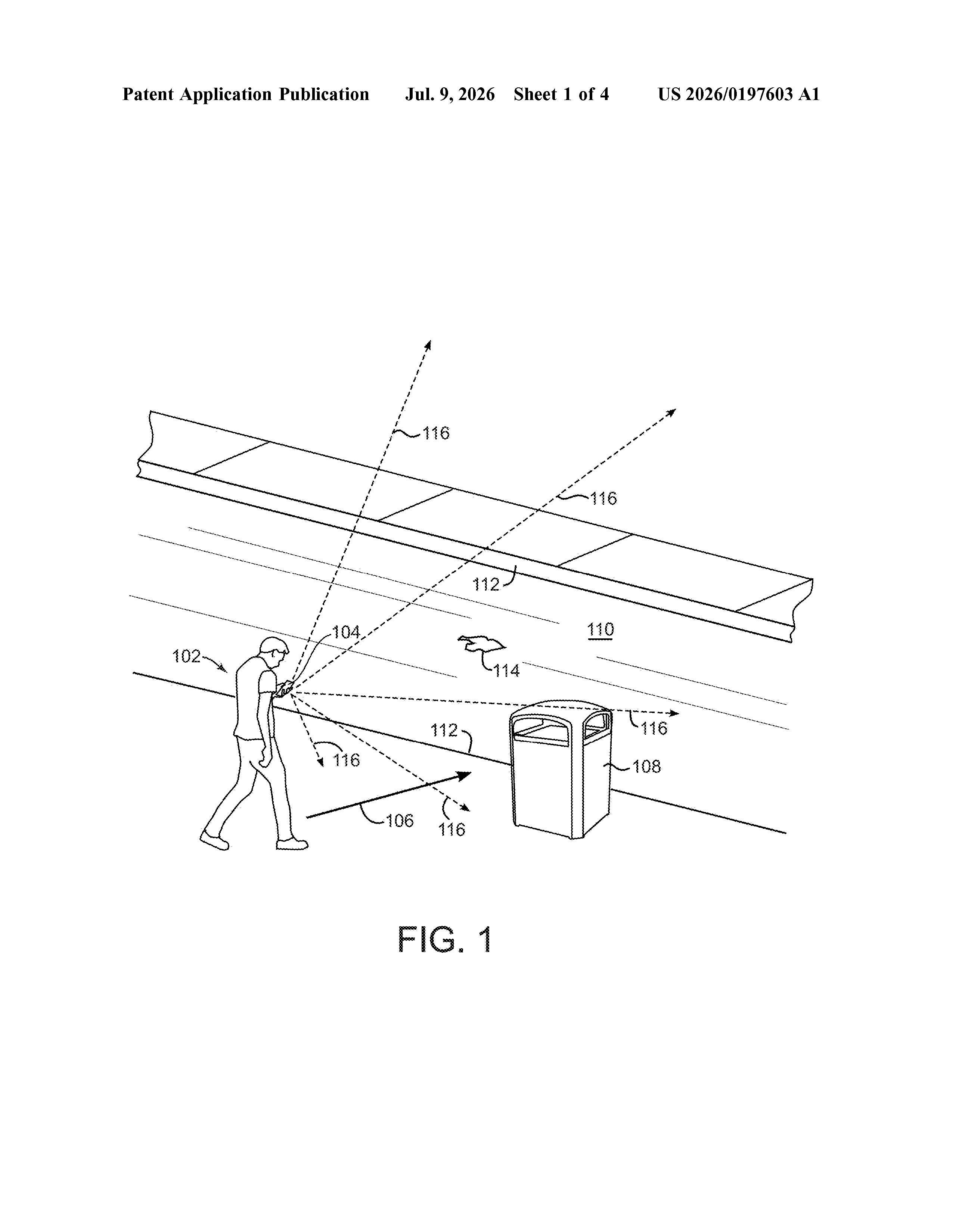
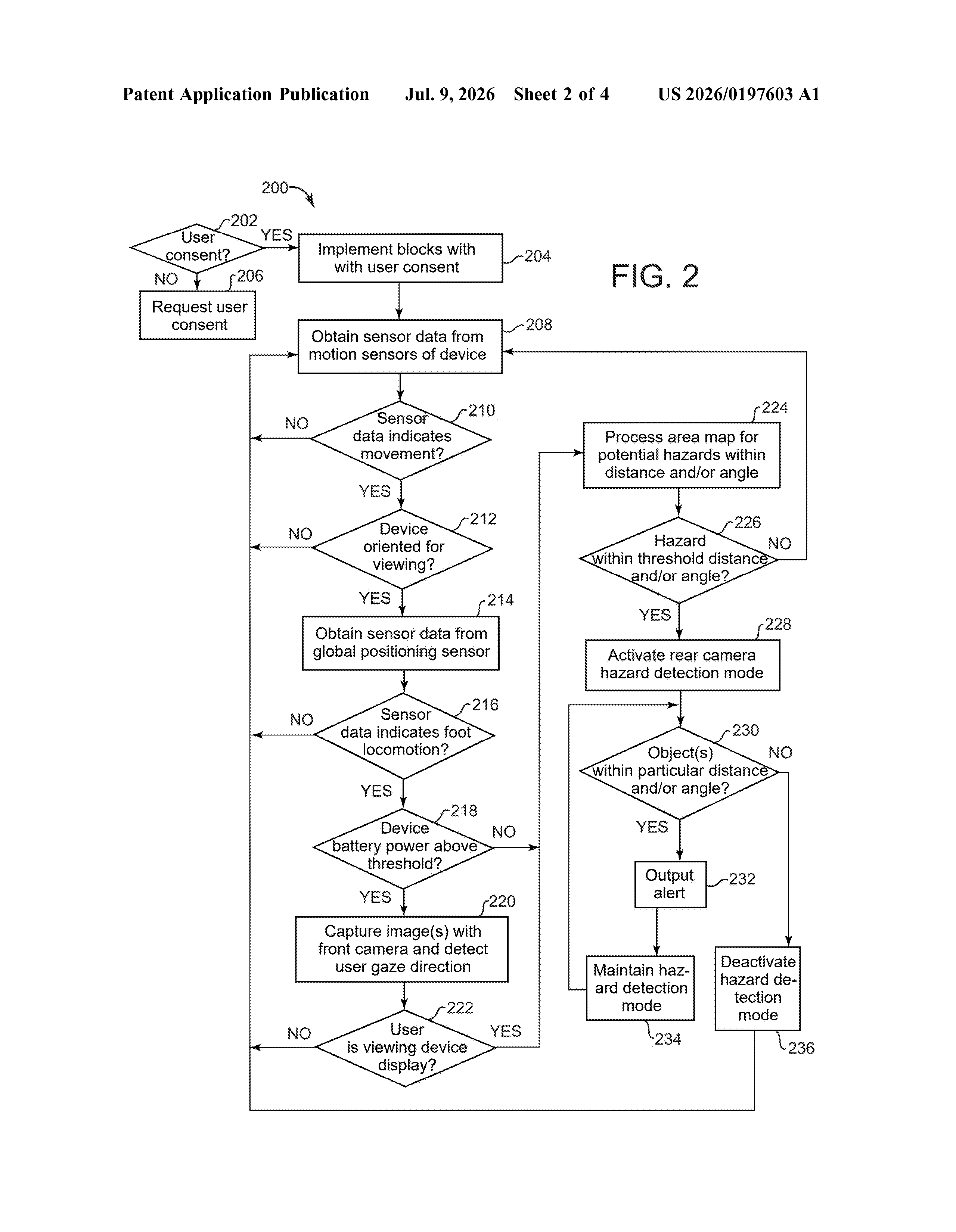
Stage one: map-based pre-screening. The phone continuously reads GPS data and cross-references it against map data that describes features of the surrounding area. Those features likely include things like intersections, crosswalks, known accident-prone zones, or other tagged hazard locations. If the device's location is outside the threshold distance from any of those features, nothing else happens and the camera stays off.
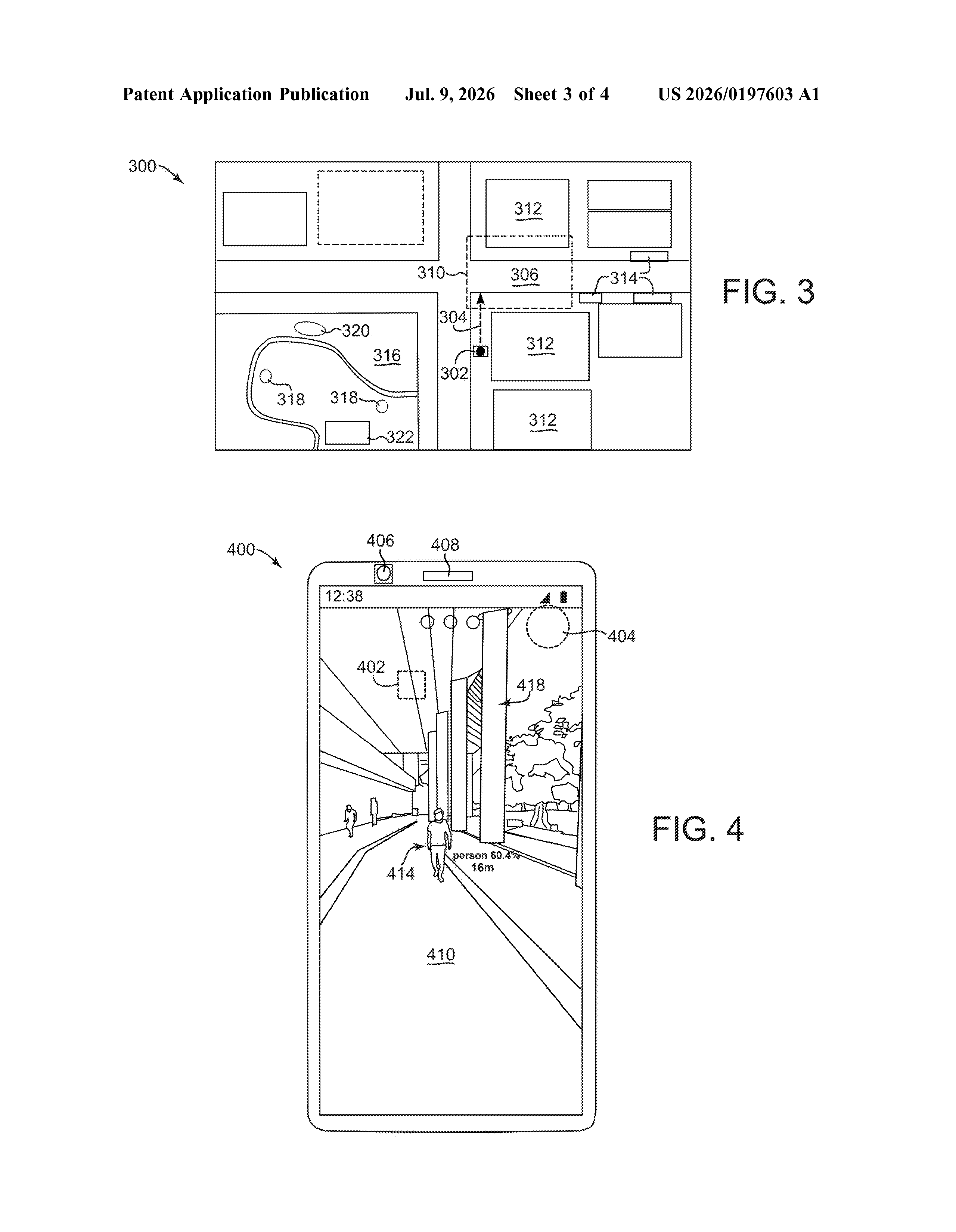
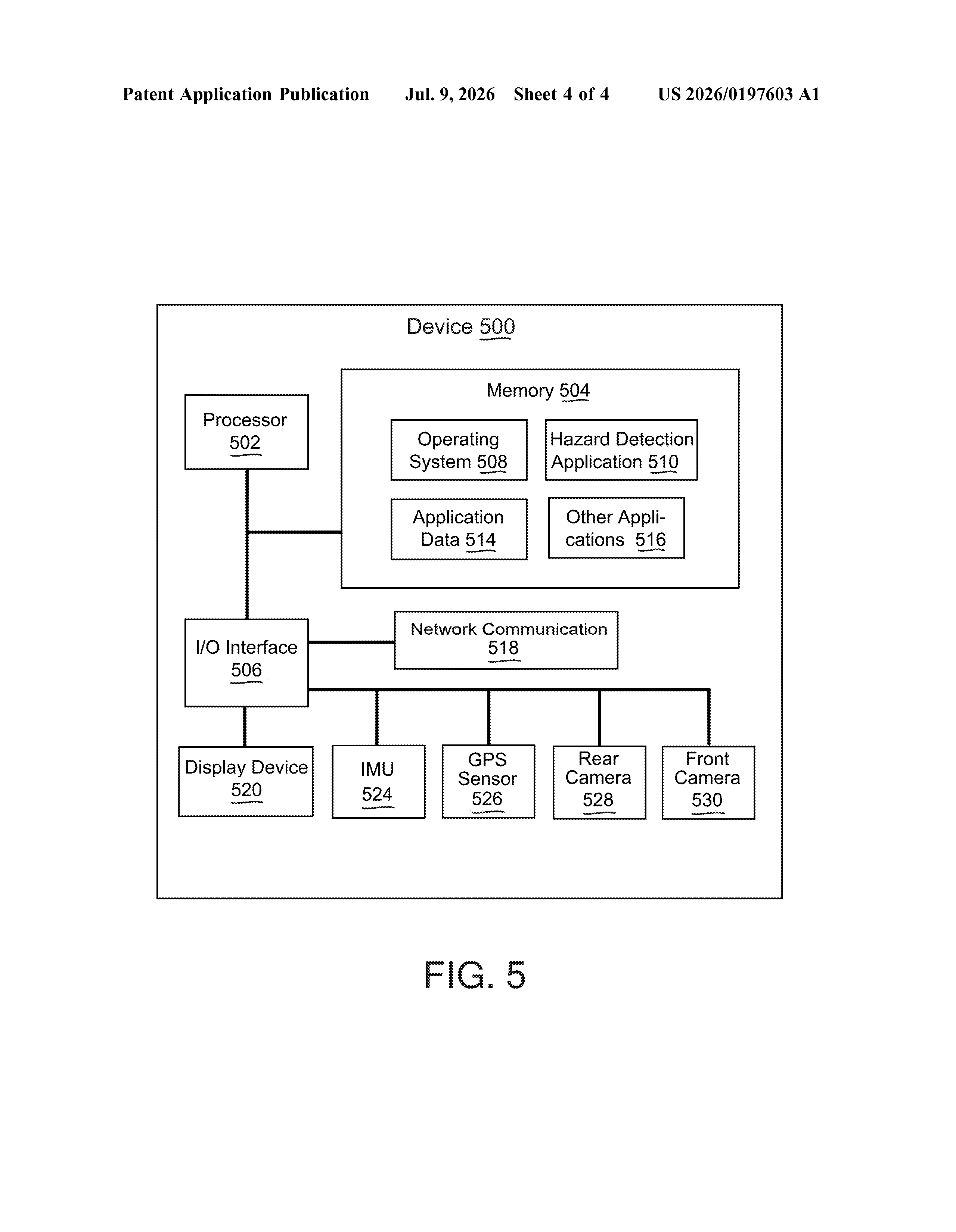
Stage two: camera-based confirmation. Only when the map check flags a potential hazard nearby does the processor activate the rear camera. It then captures images and runs object detection to determine whether a real hazard object (a vehicle, an obstacle, or similar) is within a defined physical distance. If it is, an alert is triggered.
The patent doesn't lock down what counts as a "hazard object" or exactly what alert form is used, leaving room for the system to be tuned for different use cases. The rear camera focus suggests the primary scenario is something like a phone mounted facing backward on a bike or attached to a vehicle, where threats would approach from behind.
What this means for cyclist and pedestrian safety apps
Battery life is the perennial enemy of always-on safety features. By using GPS and maps as a cheap gatekeeper before touching the camera or image recognition, Google's approach makes continuous hazard monitoring realistic on a phone without killing the battery by noon. That's a meaningful engineering trade-off, not a trivial one.
For cycling safety apps, pedestrian navigation, or accessibility tools for people who navigate high-traffic areas, this kind of low-power architecture could make the difference between a feature that ships and one that gets cut. Google already has the maps and the hardware ecosystem to plug this into something like Google Maps or an Android safety API, which makes it less of a research curiosity and more of a plausible near-term feature.
This is a genuinely practical patent. The two-stage filter idea (cheap GPS check first, expensive camera second) is a textbook power-efficiency pattern applied to a real safety problem. It's not flashy, but it's exactly the kind of engineering discipline that turns a cool demo into something that can run on a phone all day. Worth watching for cyclists especially.
Get our take in your Top Stories
Liked this breakdown? Add Patentlyze as a preferred source on Google, and our plain-English take shows up more often in your Top Stories the next time Google patent news breaks.
There are more where this came from
We read every patent application Big Tech publishes and send you the ones worth knowing. Plain English, free, every week.
The drawings
4 drawing sheets from US 2026/0197603 A1 · click any drawing to enlarge
Want this weekly breakdown for a company we don't cover? Patentlyze Pro →