
Sony Patent Uses Ceiling-Reflected Sound to Track Game Controller Position
Sony wants to track where your controller is in a room by listening to how sound bounces off your ceiling. It is an unusual approach to a problem the gaming and VR industries have been wrestling with for years.
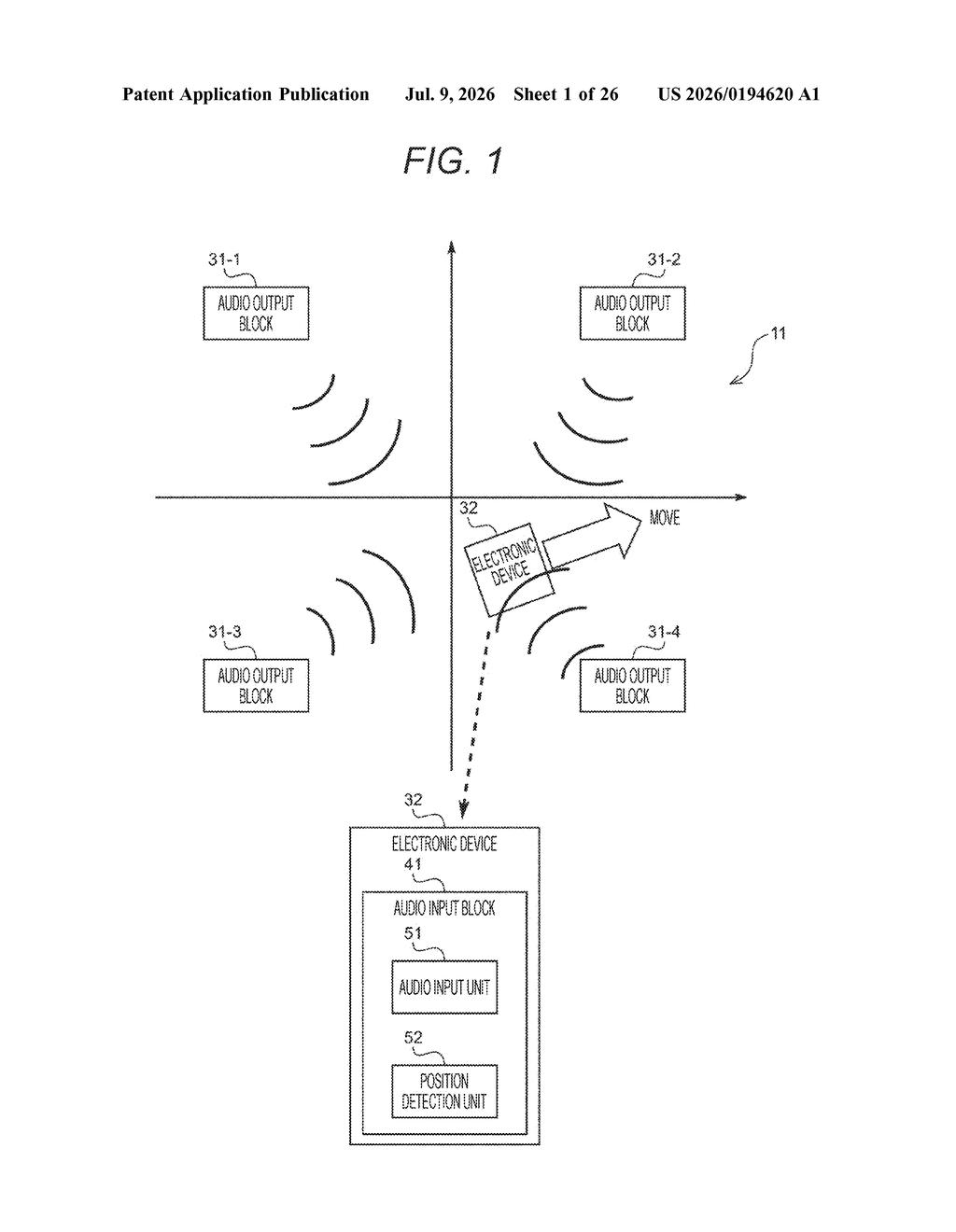
How Sony's ceiling-bounce audio positioning works
Imagine your TV's soundbar could figure out exactly where you are standing in your living room just by emitting a quick audio ping and listening for the echo. That is roughly what Sony is going for here.
The patent describes a system where speakers placed around a room emit specially coded audio signals. A microphone on a game controller or a VR headset picks up two versions of each signal: the one that travels in a straight line from the speaker, and the one that bounced off the ceiling first. By comparing the timing of both arrivals, the system can calculate your precise position in the room, even if the direct-line signal is partially blocked by furniture or your own body.
Sony specifically calls out game controllers and head-mounted displays as intended devices. The idea is to give you a reliable, high-accuracy location fix without relying on cameras or external sensors that need line-of-sight to function.
How direct and reflected audio signals combine for precise location data
The system involves two types of components: ranging signal output blocks (essentially speakers at known fixed positions) and a ranging signal receiving unit (a microphone on a mobile device like a controller or headset).
Each speaker broadcasts an audio signal encoded with a spreading code (a technique borrowed from GPS and cellular radio, where a signal is spread across a wide frequency band to make it easier to identify and harder to jam or confuse). The speaker fires the signal in two directions simultaneously: horizontally toward the listener as a direct wave, and upward toward the ceiling so it bounces back down as a reflected wave.
The receiving microphone picks up both versions. Because sound takes time to travel, the reflected wave always arrives slightly later than the direct wave. The system measures those propagation times (the elapsed travel time for each path) and uses them to calculate two distance figures from a single speaker. With multiple speakers doing this at once, the position calculation unit can solve a set of simultaneous equations to pin down exactly where the microphone is in three-dimensional space.
This dual-path approach is the key insight: getting two independent distance measurements from one speaker essentially doubles the geometric data available, which improves accuracy without adding more hardware.
What this means for PlayStation and VR tracking
Camera-based tracking, the dominant approach in current VR and gaming systems, has a well-known weakness: it breaks when the device moves out of the camera's view, or when another object gets in the way. A sound-based system that uses ceiling reflections does not care about line-of-sight in the same way, because the ceiling bounce creates a second path that may be clear even when the direct path is not.
For PlayStation VR and future Sony gaming hardware, this could mean more reliable tracking in untidy real-world living rooms without requiring users to mount cameras or sensors in specific spots. The patent also fits neatly into Sony's broader interest in making VR and spatial computing feel less fussy to set up.
This is a genuinely clever piece of engineering. Borrowing spread-spectrum coding from radio and using ceiling reflections to multiply the geometric information from each speaker is the kind of problem-solving that could end up in consumer hardware. It is not a flashy concept, but the application to VR headsets and controllers is concrete and the underlying math is sound.
Get our take in your Top Stories
Liked this breakdown? Add Patentlyze as a preferred source on Google, and our plain-English take shows up more often in your Top Stories the next time Sony patent news breaks.
There are more where this came from
We read every patent application Big Tech publishes and send you the ones worth knowing. Plain English, free, every week.
Want this weekly breakdown for a company we don't cover? Patentlyze Pro →