
Intel Patents AI Chip Math That Swaps Multiplications for Pre-Calculated Answer Sheets
Instead of doing the actual math that neural networks require millions of times per second, Intel wants chips to look up pre-computed answers in a table, the same way a dictionary gives you a definition without making you derive it from scratch.
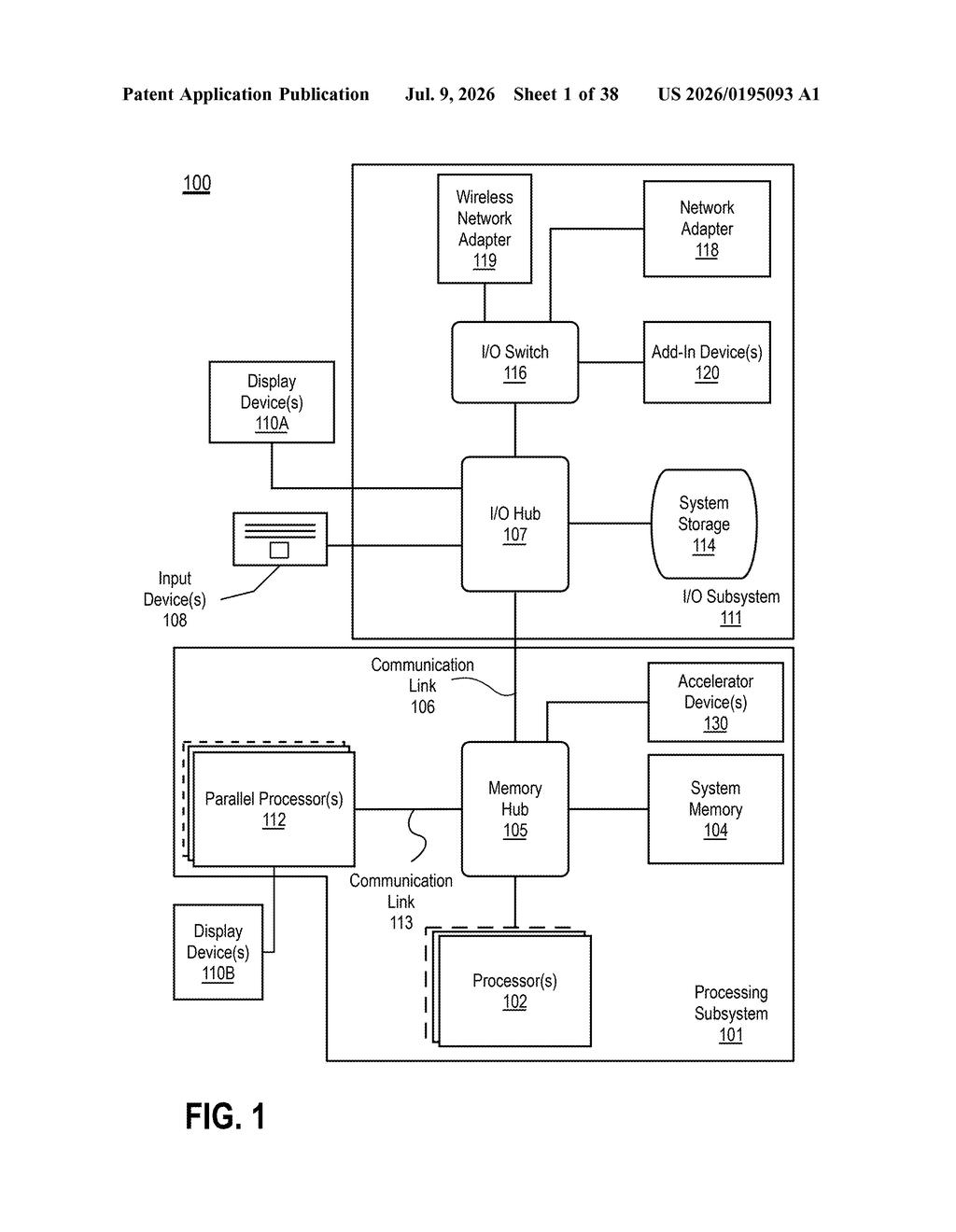
How Intel wants to shortcut neural network arithmetic
When an AI model runs on a chip, it constantly does arithmetic: multiplying numbers together, adding results, transforming values. That math adds up fast, and doing it the traditional way takes both time and energy.
Intel's patent describes a different approach: pre-compute all the possible answers and store them in a small table. When the chip needs a result, it just looks it up rather than doing the calculation. It's the same idea behind those multiplication tables you memorized in grade school, except the chip loads a fresh table for each AI model it runs.
The trick is that AI weights (the numbers that define how a model behaves) can be compressed into very small formats, like 4-bit numbers, which means the lookup table stays small enough to be practical. A 4-bit input has only 16 possible values, so you only need 16 table entries to cover every case. That keeps the hardware light and the lookups fast.
How the lookup table swaps math for memory reads
The patent describes programmable lookup tables built into processor circuitry. When a neural network is loaded, its weights are used to pre-populate these tables. From that point on, instead of running an actual multiplication or activation function, the chip reads the answer directly out of the table, which is far faster than computing it.
The system is designed around low-bit-width AI formats. A 4-bit input (meaning a number that can only take 16 distinct values) maps to an 8-bit output (256 possible values) through a 16-entry lookup table. The wider output preserves accuracy that the compressed input alone couldn't carry.
For multiplication specifically, two 4-bit numbers have at most 256 possible input combinations, so a single 256-entry table can cover every possible product without any actual multiplier circuit. Intel's patent notes this can handle flexible numeric formats, which matters because AI researchers frequently experiment with non-standard number representations to get more performance per watt.
The core idea is that the table itself encodes the model's behavior. Swapping to a different neural network means reprogramming the table, not redesigning the chip.
What this means for AI chip efficiency
AI inference (running a trained model to get answers) is increasingly happening on-device, in phones, laptops, and edge hardware where power budgets are tight. Replacing multiply-and-add circuits with table lookups can shrink both the silicon area needed and the energy consumed per operation. For you, that could eventually mean faster AI features that drain your battery less.
Intel is also clearly trying to stay competitive as AI workloads shift away from pure GPU muscle toward specialized, leaner inference silicon. This patent sits in that same territory as what Qualcomm and Apple have been doing with their on-chip AI engines, suggesting Intel wants a hardware answer for the edge AI market, not just the data center.
This is a solid, focused engineering patent with a clear practical purpose: making AI inference cheaper to run on constrained hardware. It's not flashy, but lookup-table-based arithmetic is a well-understood optimization in signal processing that genuinely transfers to low-bit AI workloads. Whether Intel turns this into shipping silicon is the real question.
Get our take in your Top Stories
Liked this breakdown? Add Patentlyze as a preferred source on Google, and our plain-English take shows up more often in your Top Stories the next time Intel patent news breaks.
There are more where this came from
We read every patent application Big Tech publishes and send you the ones worth knowing. Plain English, free, every week.
Want this weekly breakdown for a company we don't cover? Patentlyze Pro →