
Intel Patents a Way to Move Data Between Chips on Beams of Light
Intel is patenting a way to send data between chips using beams of light instead of electrical signals, and the trick is doing it in parallel across many tiny light sources rather than through one power-hungry converter.
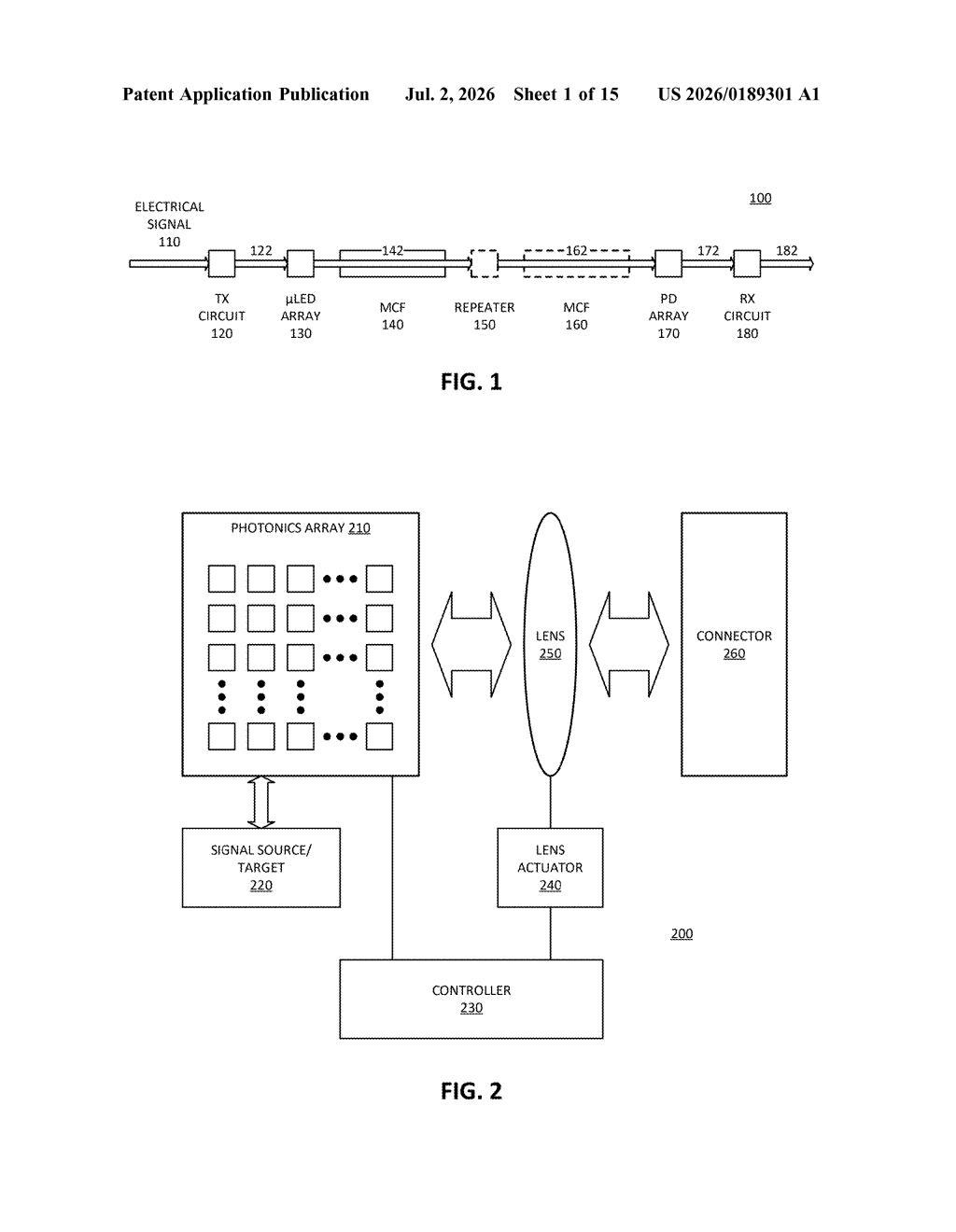
How Intel's light-based chip links work in plain English
Imagine trying to move a crowd of people through a single revolving door versus opening a whole wall of regular doors at once. Today's chips mostly use the single-door approach when sending data between themselves: a dedicated circuit squishes all the data into one fast electrical stream, blasts it down a wire, and then another circuit unpacks it on the other side. That unpacking circuit, called a SERDES, uses a surprising amount of power.
Intel's patent describes swapping that approach for something closer to the wall-of-doors idea. Instead of one high-speed electrical-to-optical converter, you get an array of tiny light sources, each carrying a smaller slice of the data simultaneously. Because each source runs slower and more gently, the whole system uses less power.
This is fundamentally about moving data inside a computer system, not between your laptop and the internet. But as chips get faster and more tightly packed, the connections between them have become a bottleneck, and light is increasingly seen as the answer.
How the optical source array replaces the SERDES chip
The patent describes a micro-photonics parallel data transmission fabric, which is a mouthful for a system that converts electrical signals into light at the source and sends them over optical channels in parallel.
The key component is an array of optical sources, think of them as a row of tiny laser or LED emitters, each assigned a portion of the overall data stream. Rather than first serializing (combining and speeding up) all the data into one fast signal and then converting it to light, the system converts multiple slower electrical signals directly into light, skipping the serializer step entirely.
The specific chip being replaced is the SERDES (serializer/deserializer), a circuit that today handles the job of bundling data for high-speed transmission and then unbundling it at the destination. SERDES circuits are fast but power-hungry, and they become a bigger problem as data rates climb.
By distributing the load across many parallel optical sources:
- Each individual source operates at a lower frequency (slower clock speed), reducing power draw
- The SERDES circuit can be reduced in size or removed entirely
- The combined throughput of all the parallel channels still matches or exceeds what a single high-speed link would deliver
What this means for data center power and chip design
Data centers and AI accelerator clusters are hitting real limits on how fast chips can talk to each other over copper wires. The SERDES circuits that make today's fast links possible consume significant power, and that cost compounds across thousands of interconnected chips. Intel's parallel optical approach targets that specific bottleneck, trading one complex high-speed circuit for many simpler, lower-power ones.
For everyday users, this is invisible plumbing. But the chips that run cloud services, train AI models, and process streaming video all depend on fast, efficient chip-to-chip communication. If optical interconnects can cut the power cost of those links, it has direct implications for how many chips fit in a rack and how much energy a data center consumes.
This is serious infrastructure-level work, not a flashy consumer feature. Intel has been investing heavily in silicon photonics for years, and this patent fits that long-term bet: as electrical interconnects approach their physical limits, light becomes the practical alternative. The fact that all independent claims were canceled before publication is a procedural flag worth noting, it may signal the application was narrowed or is being refiled, which limits what we can read into it.
Get our take in your Top Stories
Liked this breakdown? Add Patentlyze as a preferred source on Google, and our plain-English take shows up more often in your Top Stories the next time Intel patent news breaks.
There are more where this came from
We read every patent application Big Tech publishes and send you the ones worth knowing. Plain English, free, every week.
Want this weekly breakdown for a company we don't cover? Patentlyze Pro →