
Apple Patents a Camera That Bounces Light Twice to Zoom Without Bulk
Getting a powerful zoom camera into a thin smartphone is an engineering puzzle. Apple's latest patent describes a system that bends light twice, letting a long telephoto lens hide inside a phone body without making the device thicker.
How Apple shrinks a telephoto lens into an iPhone
Imagine trying to fit a pair of binoculars inside a book. The lenses need a certain length to create a powerful zoom, but a flat book simply doesn't have that depth. Smartphone makers face the exact same problem every time they try to improve zoom cameras.
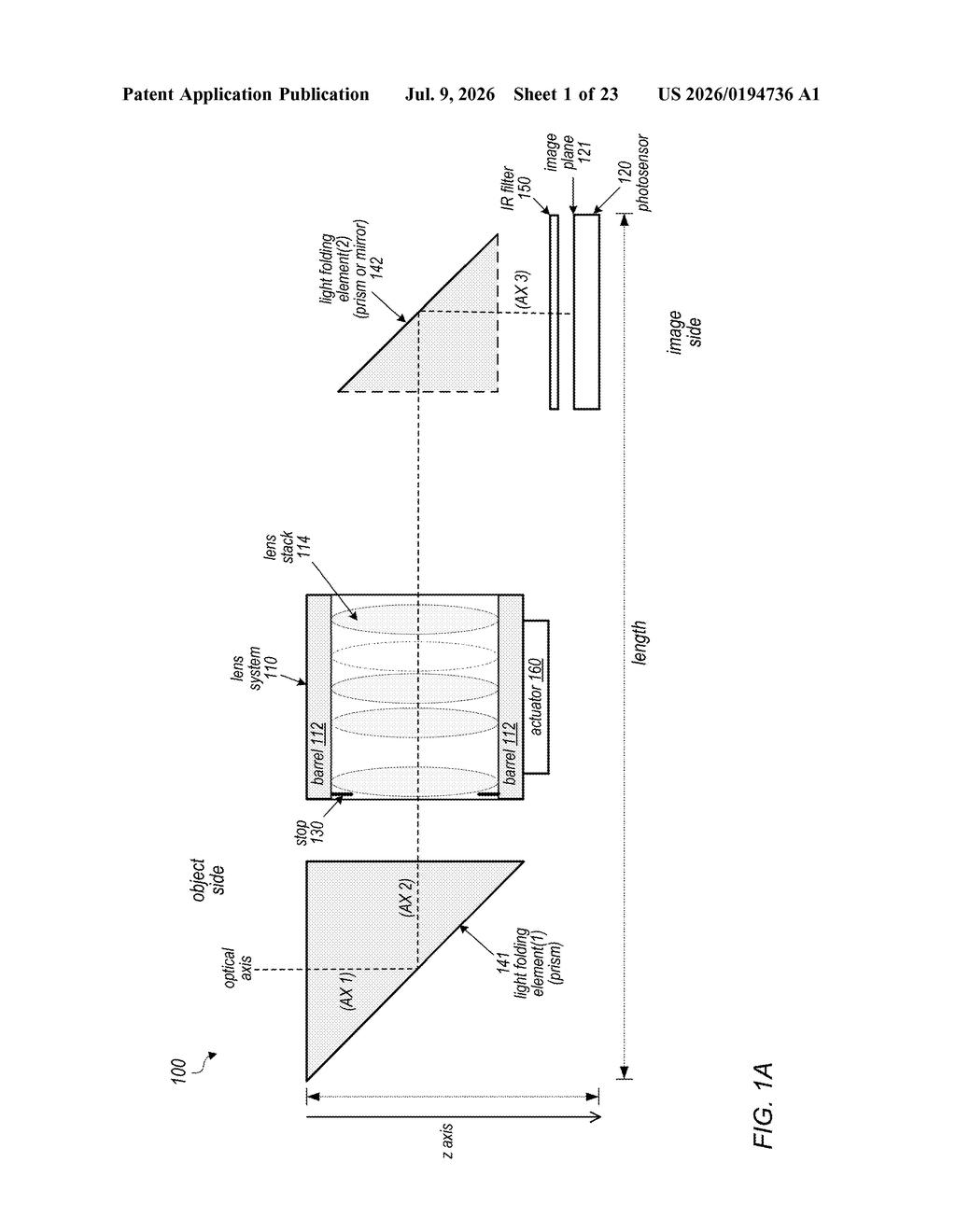
Apple's patent describes a solution that uses two light-bending prisms, one at each end of the lens system. Light enters from the scene, gets bent sideways by the first prism, travels horizontally through a stack of four or five lenses, then gets bent again by a second prism before landing on the camera sensor. That "Z" or "S" shaped path lets the whole optical system fold up inside the phone's slim body.
The result is a camera that Apple says could handle focal lengths equivalent to an 85mm to 160mm lens on a traditional full-sized camera, the range used for portraits and moderate telephoto shots, without requiring a thick camera bump.
How two prisms fold light into a compact optical path
The patent describes an optical system with two light-folding elements (prisms or mirrors) positioned on either side of a central lens stack.
- First prism: Intercepts incoming light traveling on one axis and redirects it 90 degrees onto a second axis running horizontally through the phone's body.
- Lens stack: Four or five refractive lens elements (lenses that bend light by changing its speed) do the actual focusing work while the light travels along that horizontal path.
- Second prism: Redirects light again, this time from the horizontal path down onto a third axis where the image sensor sits.
The total path the light travels can be much longer than the phone is thick, because it zigzags through the device rather than going straight through. Apple specifies a 35mm-equivalent focal length of 85 to 160mm, which covers the portrait and short telephoto range that camera enthusiasts prize for low-distortion, flattering images.
The independent claims were canceled in this publication, which is common during patent prosecution, meaning the exact scope of protection is still being negotiated with the patent office.
What this means for iPhone telephoto cameras
Telephoto cameras on phones have gotten better largely because of periscope-style folded optics, a design that bends light once to run a long lens horizontally through the phone. Apple's two-prism approach adds a second bend, giving engineers more flexibility in where they place the sensor and how they route the optical path inside an increasingly crowded phone interior.
For you as a user, a well-executed version of this system could mean sharper portrait shots and more reach without a larger camera bump. The 85-160mm target range also overlaps with what portrait photographers use on professional cameras, so image quality at that focal length is the real prize here, not just raw zoom numbers.
Folded-optic telephoto cameras are already in iPhones, so this isn't Apple entering new territory. What's interesting is the two-bend architecture, which gives optical designers more room to work with and could allow longer effective focal lengths or a flatter profile in future models. It's incremental engineering, but it's the kind of incremental work that actually shows up in your next phone's camera specs.
Get our take in your Top Stories
Liked this breakdown? Add Patentlyze as a preferred source on Google, and our plain-English take shows up more often in your Top Stories the next time Apple patent news breaks.
There are more where this came from
We read every patent application Big Tech publishes and send you the ones worth knowing. Plain English, free, every week.
Want this weekly breakdown for a company we don't cover? Patentlyze Pro →