
Sony's New Patent Hides the Seams Between Panels in Giant Video Walls
Tiling multiple display panels together almost always leaves a visible seam. Sony's latest patent describes a way to offset those panels so the gaps between them are harder to see.
What Sony's staggered display blocks actually do
Imagine a giant video wall at a concert or a sports arena. It's built by bolting many smaller panels together, and if you look closely, you can often see thin lines where one panel ends and the next begins. Those seams break up the picture.
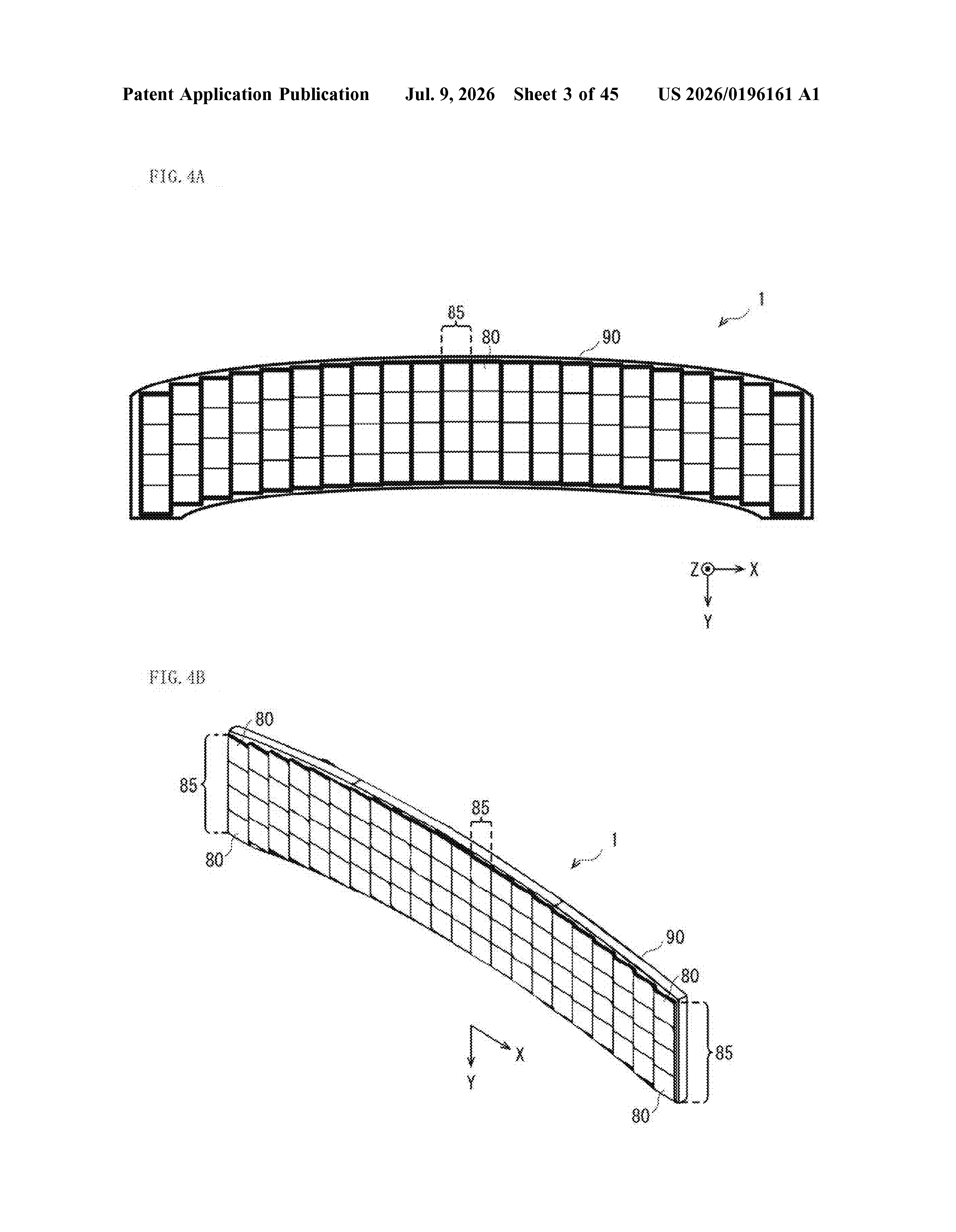
Sony's patent describes a way to arrange those panels so they don't line up edge-to-edge in a simple grid. Instead, each panel is shifted slightly in one direction relative to its neighbor, the same basic idea as how bricks are laid in a wall. That offset means the physical gap between panels falls in a different spot for each row.
The goal is a display that, to your eye, reads as one continuous surface rather than a collection of tiles. It's a structural idea, applied to screens made of individual light-emitting elements.
How the offset layout positions each light-emitting block
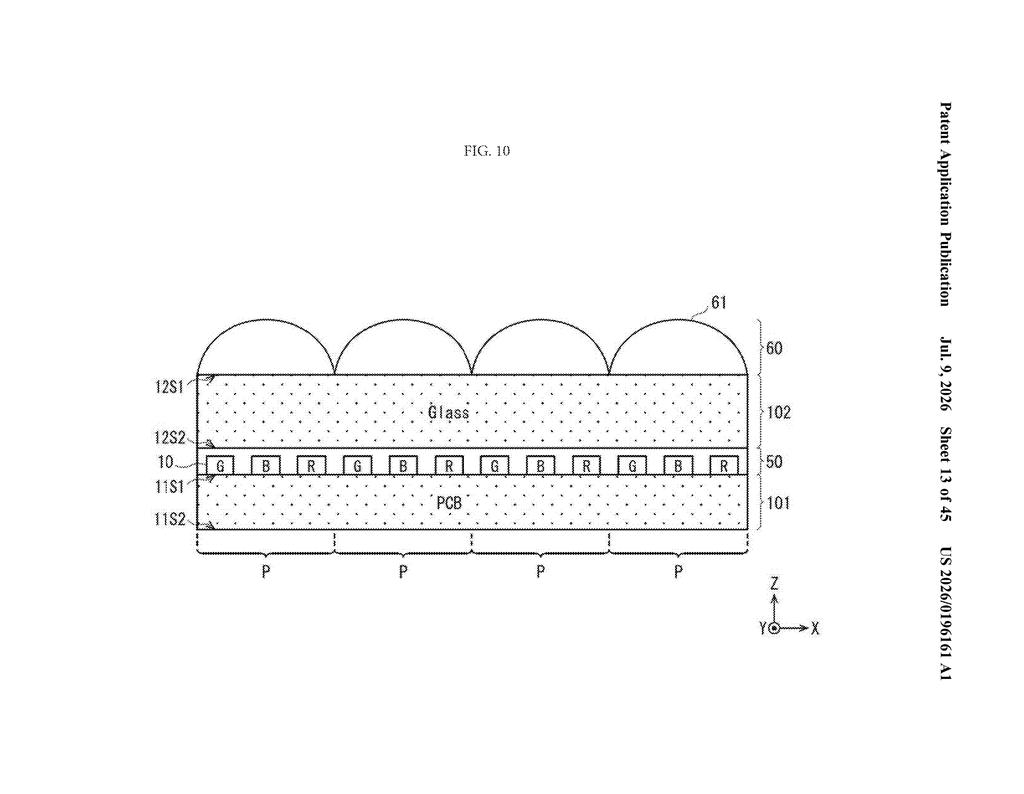
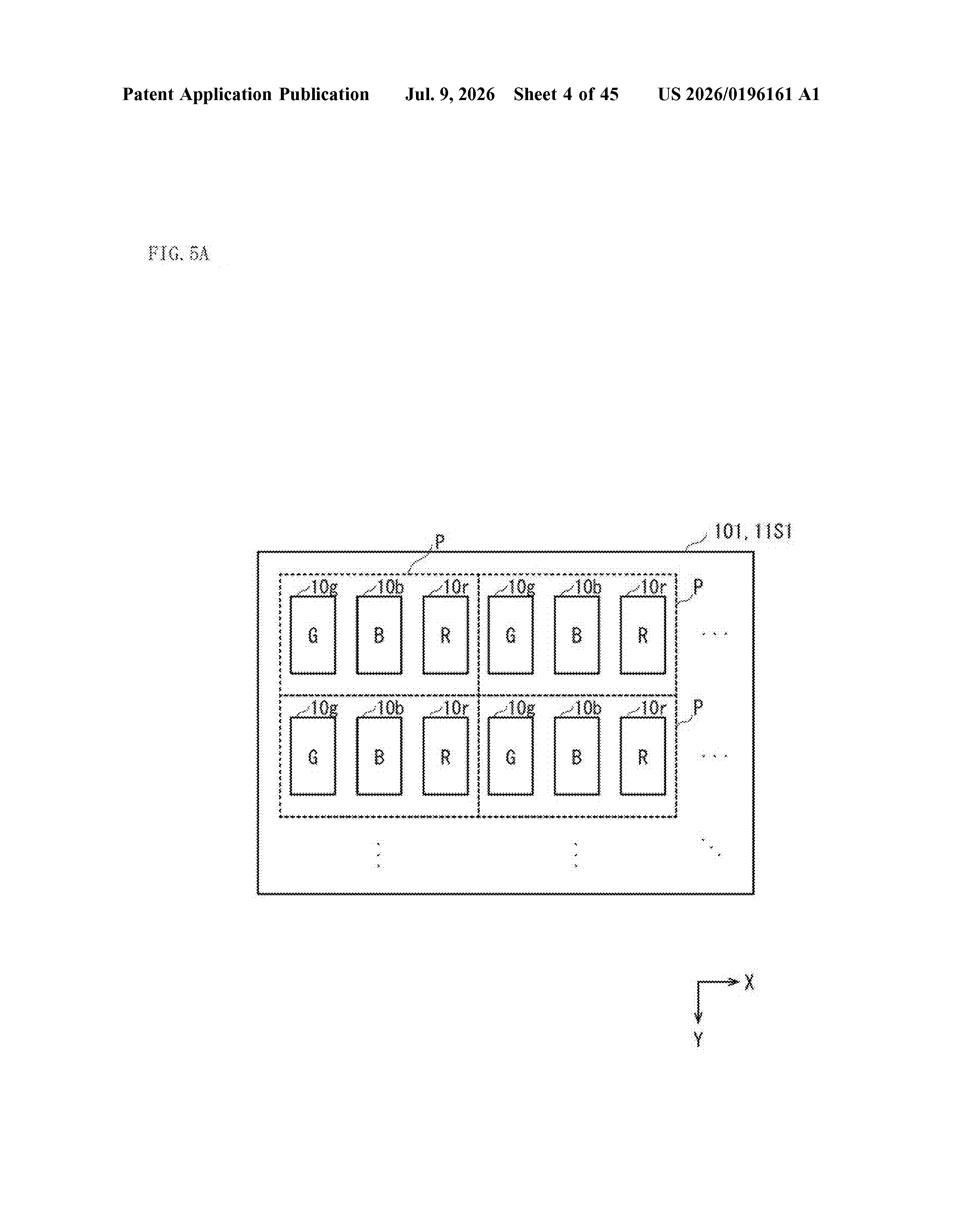
The patent describes a display apparatus built from at least two rectangular blocks, each packed with a grid of light-emitting elements (think LEDs or micro-LEDs arranged in rows and columns).
The key claim is about how those blocks are placed relative to each other:
- The two blocks sit next to each other along one axis (call it horizontal, left to right).
- Along the perpendicular axis (vertical), they are deliberately shifted by a set amount, rather than aligned flush at their edges.
That vertical shift is the whole point. In a standard tiled display, every panel corner meets at the same point, which creates a cross-shaped gap in the image. By staggering the blocks like bricks, Sony breaks up that cross pattern. Each seam runs in only one direction at any given point, making it visually less disruptive.
The patent covers the physical arrangement itself, not a specific pixel-blending algorithm or image-processing trick. The fix is mechanical: put the blocks in the right place and the optical problem is reduced before any software gets involved.
What this means for large LED walls and modular displays
Large-format LED displays are increasingly common in TV studios, live events, control rooms, and high-end home theaters. The persistent problem for all of them is that visible seams limit how close a viewer can sit before the tiled construction becomes obvious. A structural solution that reduces seam visibility without adding image-processing overhead is genuinely useful for display manufacturers.
For Sony, which makes professional video equipment and has a stake in the high-end display market, this kind of patent covers foundational screen architecture. If the staggered-block approach works at scale, it could improve the picture quality of any modular display Sony produces, from broadcast monitors to large venue installations, without the viewer ever knowing why it looks better.
This is a focused, practical engineering patent rather than a flashy AI announcement. The staggered-block idea is simple enough that it's worth asking whether it's truly novel, and the scope of the claim is narrow. Still, for anyone building or buying large LED video walls, the underlying problem is real and annoying, so a structural fix is worth paying attention to.
Get our take in your Top Stories
Liked this breakdown? Add Patentlyze as a preferred source on Google, and our plain-English take shows up more often in your Top Stories the next time Sony patent news breaks.
There are more where this came from
We read every patent application Big Tech publishes and send you the ones worth knowing. Plain English, free, every week.
The drawings
45 drawing sheets from US 2026/0196161 A1 · click any drawing to enlarge
Want this weekly breakdown for a company we don't cover? Patentlyze Pro →