
Samsung Patents a Projector Robot You Control by Moving Your Foot
Samsung is working on a device that projects a menu onto your floor and watches your feet to figure out what you want to pick. No touchscreen, no voice command, just a nudge of your foot.
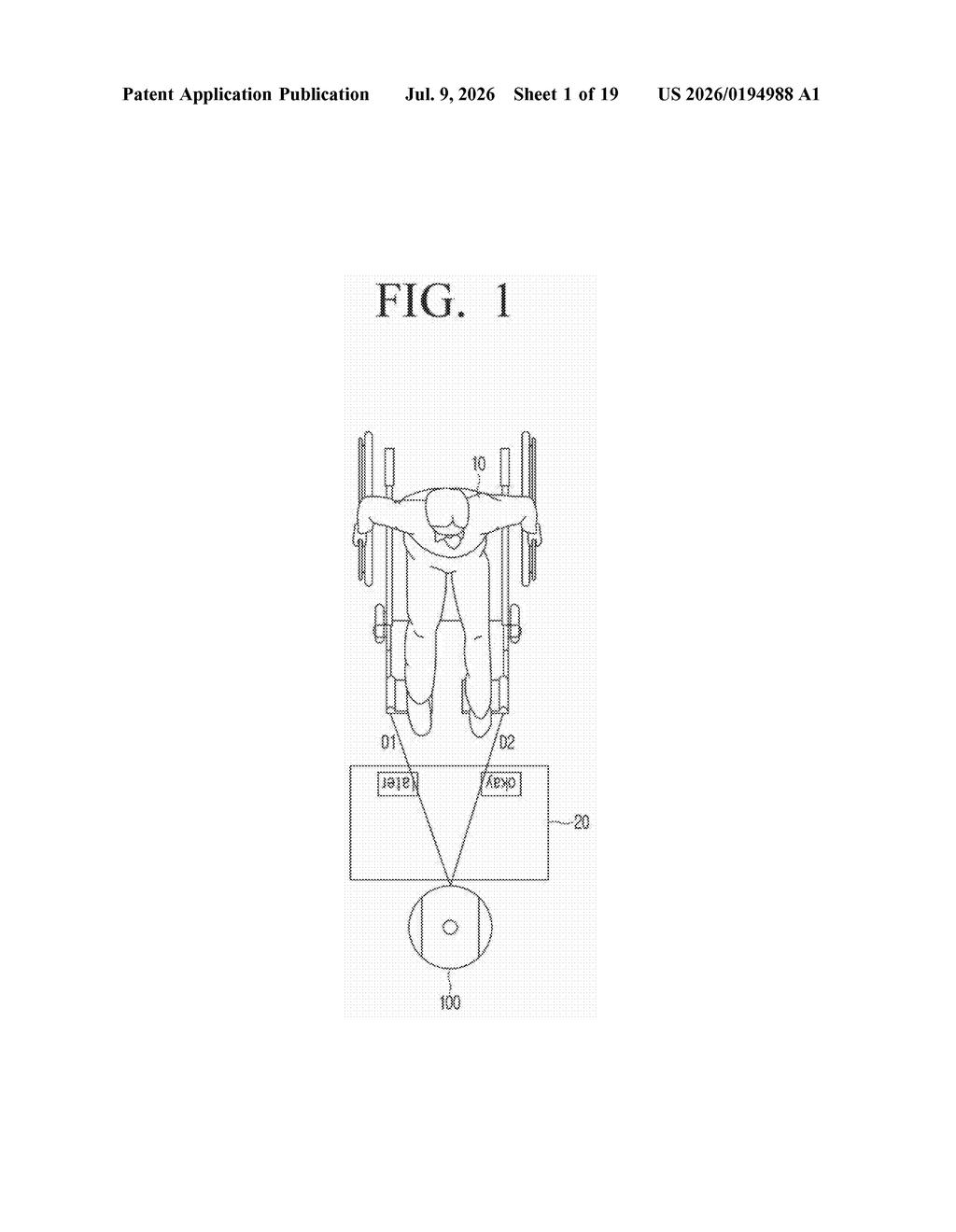
How Samsung's floor-projected menu actually works
Imagine a small robot rolls into your living room, throws a menu onto the floor like a tiny projector, and waits for you to tap your foot toward whichever option you want. That's the core idea in this Samsung patent.
The device uses a camera to watch your feet and measures how close your foot gets to the projected buttons on the floor. When you step or scoot toward one, it registers that as your selection. The robot can also move around on its own, so the projected menu can follow you or reposition itself.
This kind of interaction is designed for situations where your hands are full, you're across the room, or touching a screen just isn't practical. Think of it as a floor-based remote control that you operate without picking anything up.
How the camera measures foot distance to register a selection
The patent describes a self-moving electronic device with three key components working together: a projection unit that casts a user interface onto any flat surface (your floor, a wall, a table), a camera that watches the scene for user movement, and a driving unit that lets the device reposition itself.
The camera captures images of the user's foot or feet and measures the distance between a tracked feature region (a specific point on the foot the system locks onto) and the device itself. As you move your foot closer to a projected button, the system uses that closing distance as an input signal. When the distance crosses a threshold, it counts as a selection.
Key elements from the claim:
- The UI is made up of multiple projected elements, like a menu with several options
- The camera reads foot movement, not just position, as the selection cue
- The system extracts distance data from the image rather than relying on a separate sensor like infrared or lidar
- The device can move under its own power, meaning it can reorient the projection or follow the user
The approach is vision-based (camera-only) rather than pressure-based, so the floor surface itself doesn't need any special hardware.
What this hints at for Samsung's rolling home robot lineup
Samsung has already shipped the Ballie, a rolling home robot with a built-in projector, and this patent fits squarely into that product line. If you own a device like that, foot-based control would let you interact with it when your hands are occupied, cooking, carrying groceries, holding a baby. It's a genuinely practical input method for a robot that's meant to float around your home.
More broadly, this reflects a real design problem: projector-based interfaces are useless if you can't interact with them without bending down or finding a remote. Solving the input problem is what makes projected UIs actually livable. Whether foot tracking is precise enough in a real home environment, with pets, kids, and dim lighting, is the open question.
This is one of the more grounded projector-interface patents out there because it solves a real problem: how do you click on a menu you can't touch? Foot tracking is an unconventional answer, but it makes sense for a floor-level robot. The execution details, how well the camera handles socks, poor lighting, or a dog walking through the frame, will determine whether this is a useful feature or a party trick.
Get our take in your Top Stories
Liked this breakdown? Add Patentlyze as a preferred source on Google, and our plain-English take shows up more often in your Top Stories the next time Samsung patent news breaks.
There are more where this came from
We read every patent application Big Tech publishes and send you the ones worth knowing. Plain English, free, every week.
Want this weekly breakdown for a company we don't cover? Patentlyze Pro →