
Samsung Patents a Power Circuit That Shuts Itself Off Before It Overheats
A voltage converter that can't stop itself from overcooking its own components is a common failure point in storage devices. Samsung's new patent describes a circuit that watches for exactly that problem and pulls the plug before damage occurs.
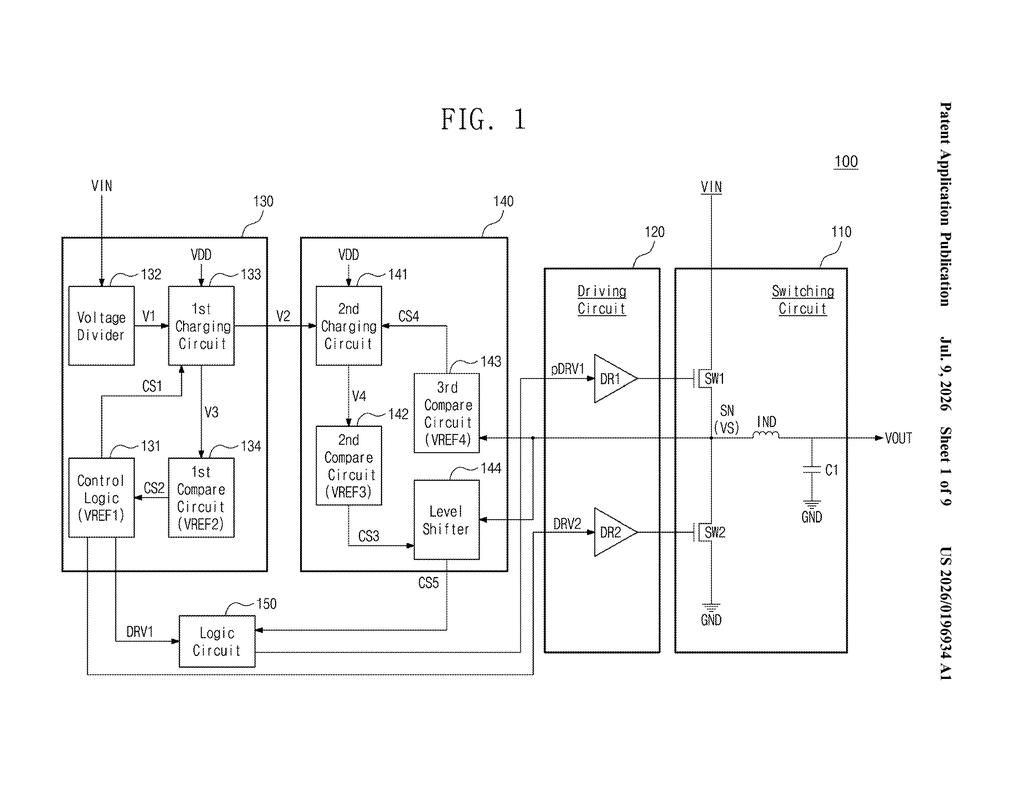
What Samsung's self-protecting power circuit actually does
Imagine a faucet that's supposed to open for only half a second but gets stuck open. If nobody notices, you flood the room. Something similar can happen inside the power circuits of storage devices: a tiny switch is supposed to flick on and off rapidly to deliver a steady, lower voltage to the chip, but if it stays on too long, things get hot and components can fail.
Samsung's patent describes a voltage converter with a built-in watchdog. If the switch that connects incoming power to the rest of the circuit stays on longer than it should, a protection circuit steps in and turns it off automatically, no external command needed.
This kind of design is aimed at the power management chips inside storage devices like SSDs. Getting the voltage right, and catching problems before they cause damage, is one of those invisible engineering jobs that keeps your drive running reliably for years.
How the protection circuit times the switch and cuts power
The patent describes a buck converter (a circuit that steps a higher voltage down to a lower one) built into a power management integrated circuit, or PMIC, for storage devices.
The core components are:
- A first switch (called a high-side switch) that connects the incoming high voltage to the rest of the circuit
- A second switch (the low-side switch) that connects to ground
- An inductor and capacitor that smooth out the pulsing current into a steady output voltage
Normally, a control circuit toggles both switches on and off at high speed to regulate the output. The ratio of on-time to off-time controls how much the voltage is stepped down. This is called pulse-width modulation.
The new piece is a protection circuit that independently monitors how long the high-side switch has been on. If the switch exceeds a defined maximum on-time, the protection circuit overrides the control circuit and forces the switch off. This prevents the switch from conducting too much current for too long, which can cause overheating or permanent damage to the transistor.
What this means for Samsung's storage chips and SSDs
Power management chips inside SSDs and other storage devices work hard under variable loads, and a stuck or misbehaving switch is one of the failure modes that can shorten a drive's life. Adding a hardware-level timer that acts independently of the main control loop means the circuit can protect itself even if the controller software misbehaves or the chip is pushed into an unexpected operating state.
For Samsung, this fits neatly into its PMIC work for its own storage products. It's the kind of low-level reliability feature that never shows up in a spec sheet but does show up in long-term durability. If you own a Samsung SSD, circuits like this are part of why it keeps working.
This is a focused, practical patent covering a protection mechanism for a well-understood circuit topology. It's not a broad AI or consumer-experience play, but reliable power delivery is genuinely important in storage devices, and a hardware override that doesn't depend on firmware getting it right is a sensible engineering choice. Don't expect headlines, but do expect this kind of design to ship inside Samsung PMIC silicon.
Get our take in your Top Stories
Liked this breakdown? Add Patentlyze as a preferred source on Google, and our plain-English take shows up more often in your Top Stories the next time Samsung patent news breaks.
There are more where this came from
We read every patent application Big Tech publishes and send you the ones worth knowing. Plain English, free, every week.
Want this weekly breakdown for a company we don't cover? Patentlyze Pro →