
Apple Patents a Wearable That Monitors Your Breathing Using Light Sensors
Apple is exploring a new way to track your breathing without a chest strap or microphone — just light bouncing off your face. The patent describes a wearable packed with multidirectional sensors that can watch different parts of your face at once to figure out when and how deeply you're breathing.
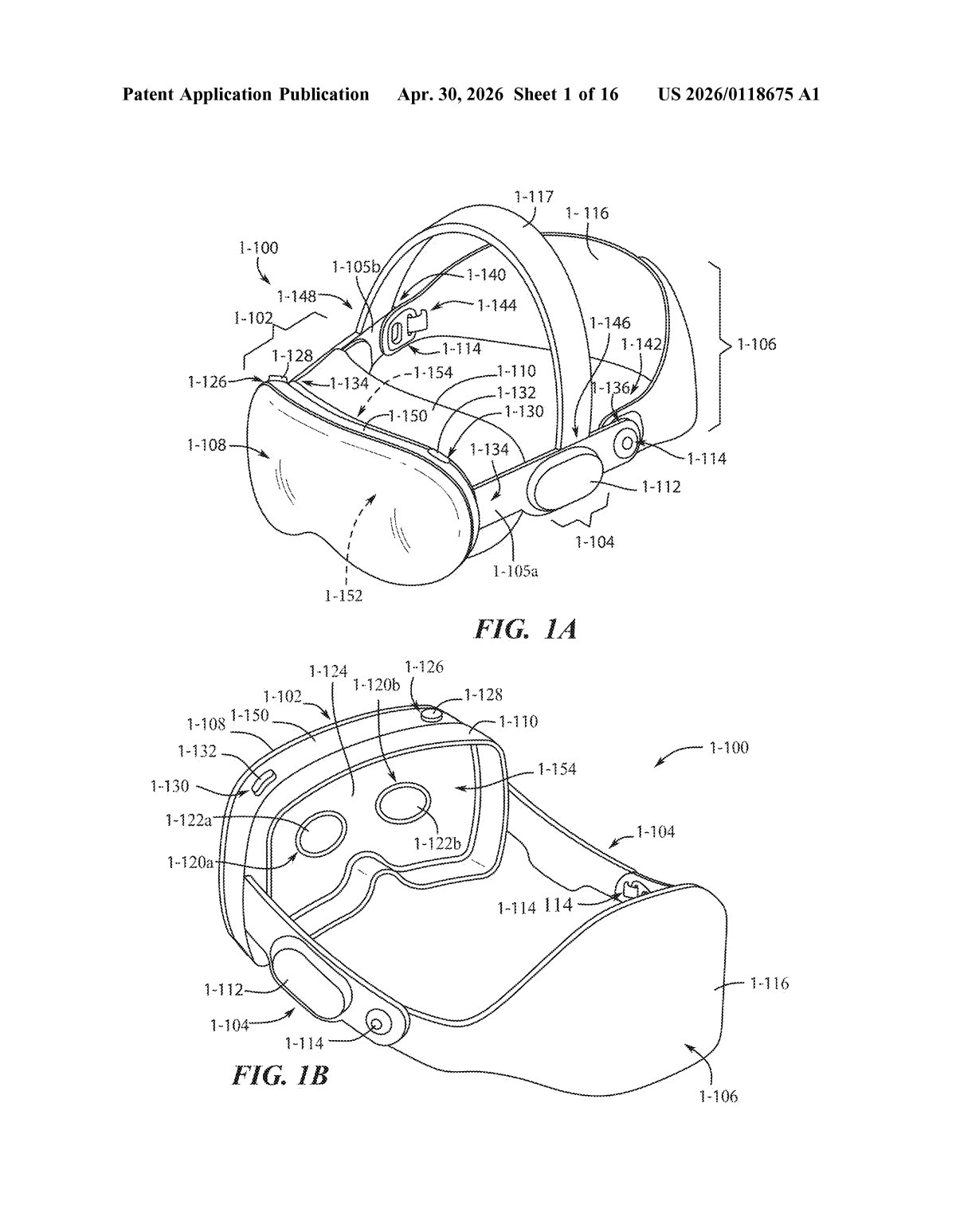
What Apple's light-based breath tracker actually does
Imagine your smartwatch could tell how deeply you were breathing just by shining a little light at your face and watching how it reflects back. That's essentially what Apple is patenting here.
The idea is a wearable device — likely worn near the face, like glasses or a headset — that uses tiny light sensors to monitor multiple zones of your face simultaneously. Different parts of your face move slightly as you breathe, and by tracking those subtle shifts across several regions at once, the device can generate a continuous breathing signal in real time.
You don't have to do anything special — no breathing into a sensor, no chest belt, no app to start manually. The system is designed to work passively, running quietly in the background while you go about your day.
How the multidirectional lens captures facial breathing data
At the core of this patent is a sensor design Apple calls a multidirectional sensor — a single imaging unit capable of receiving light from two or more distinct fields of view at the same time. Think of it like a camera that can look in two directions at once without needing two separate cameras.
A shared integrated lens focuses the incoming light signals from these different facial subsections onto one or more pixels below it. The lens does the optical heavy lifting of separating and directing light from different angles onto the detector array without the system needing multiple bulky sensor modules.
The processor then takes all of that raw light data — from different parts of the face, captured simultaneously — and uses it to compute a breathing signal. The logic is that breathing causes small, rhythmic movements and changes in light reflectance across the face. By comparing signals from multiple subsections, the system can isolate the breathing pattern from noise and other motion artifacts.
Key components described in the claim include:
- One or more multidirectional sensors covering at least two distinct facial subsections
- A shared lens to focus and direct incoming light signals
- A pixel array positioned below the lens to detect the focused light
- An onboard processor that synthesizes the signals into a real-time breathing output
What this means for Apple Watch and health wearables
Breathing rate is a surprisingly powerful health signal — it's tied to stress, sleep quality, cardiovascular fitness, and early signs of illness. Most consumer wearables today either skip it entirely or only estimate it indirectly from heart rate data. A dedicated, passive, real-time breath monitor built into something you wear on your face could meaningfully close that gap.
The form factor Apple describes — a wearable with sensors oriented toward the face — aligns naturally with Apple Vision Pro or future AR/VR headsets, where the device already sits close to your face and has sensors aimed inward. If Apple can make breathing monitoring accurate and passive enough to run continuously, it becomes another layer in the health-tracking story that threads through Apple Watch, AirPods, and beyond. For you as a user, that could mean richer sleep data, real-time stress feedback, or earlier detection of respiratory issues — all without any extra effort.
This is a genuinely clever piece of sensor engineering. Rather than adding more sensors, Apple is getting more out of fewer by pointing one multidirectional unit at multiple facial regions simultaneously. The health applications are real and underserved by current wearables, and the face-facing geometry makes Vision Pro or a future headset the obvious home for this tech.
There are more where this came from
We read every patent application Big Tech publishes and send you the ones worth knowing. Plain English, free, every week.
Want this weekly breakdown for a company we don't cover? Patentlyze Pro →