
Tesla Patent: Pinpointing Antenna Signal Origins to Improve Autonomous Vehicle Safety
Every radar on a Tesla needs to know exactly where its signal is 'coming from' to place objects accurately in space. This patent describes an automated way to figure that out using the radar's own raw data.
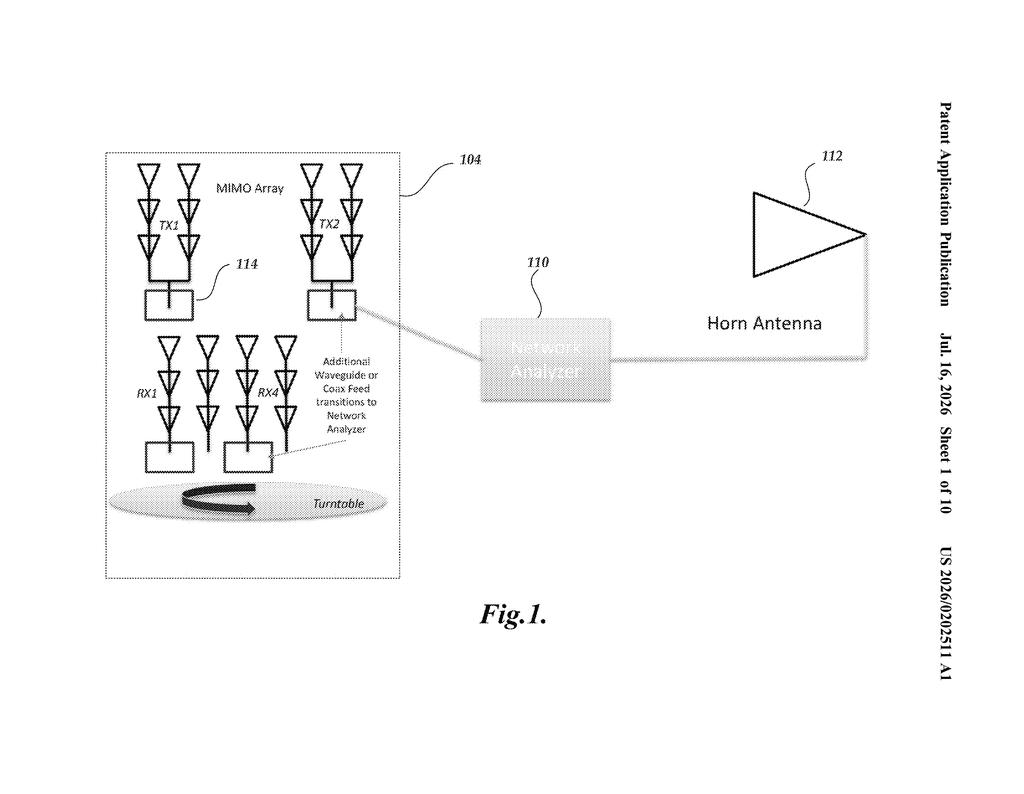
What Tesla's radar calibration patent actually does
Imagine you're trying to figure out where a sound is coming from in a concert hall. If you measure from the wrong spot on the speaker cabinet, your triangulation is off and you'll point at the wrong seat. Radar antennas have the same problem: they have a specific point called the phase center from which their signal effectively originates, and if your software uses the wrong location, every distance and angle calculation is slightly wrong.
Tesla's patent describes a method that lets the radar's own signal data reveal where that origin point actually is. The system looks at how the radar's response changes as it sweeps across different angles, and searches for the one reference point where those responses stay consistent regardless of angle. That consistency is the telltale sign of the true phase center.
For a self-driving car, getting this right matters a lot. A small error in the assumed phase center compounds into larger errors when the car is trying to judge how far away a pedestrian is or how fast another vehicle is moving.
How the phase-center calculation works step by step
The patent covers a calibration method for the MIMO (multiple-input, multiple-output) radar arrays Tesla mounts on its vehicles. MIMO radar uses several transmitter and receiver antennas working together to build a more detailed picture of the surroundings than a single antenna could manage.
The process works roughly like this:
- The system collects the complex baseband response (the raw in-phase and quadrature signal data, which captures both amplitude and timing) for each transmitter-receiver pair in the array.
- That response is mapped as a vector field (think of each measurement as an arrow with both a size and a direction) as a function of angle.
- The system then tests a range of candidate offset positions. For each candidate, it asks: does the response pattern stay stable, or does it shift when the angle changes?
- The offset where the pattern is most stable is declared the phase center, the effective origin point of the antenna's signal.
Crucially, this is done using the radar's own baseband data rather than requiring external measurement equipment or a specialized test chamber, which makes it practical to run on production vehicles or during field calibration.
What this means for Autopilot and self-driving accuracy
For Autopilot and Full Self-Driving, radar is one of the primary sensors used to track other vehicles, pedestrians, and obstacles. If the assumed phase center of a radar antenna is even a few centimeters off, the geometric calculations that place objects in 3D space accumulate errors. At highway speeds, a small positional error can translate into a misjudged closing distance. Tighter calibration directly feeds into safer, more confident decision-making by the vehicle's software stack.
Beyond safety, this method matters because it can be applied without pulling a vehicle off the road and into a specialized lab. If Tesla can run this calibration automatically using data the radar already collects, that means antennas can be re-verified after a collision repair or a sensor replacement, using your car's own hardware as the measuring instrument.
This is the kind of quiet engineering patent that rarely makes headlines but directly affects how well a self-driving system works. Getting the phase center right is table stakes for accurate radar-based sensing, and automating the process with the radar's own data is a practical, real-world improvement. It's not a vision paper about some future capability; it describes a concrete calibration procedure that could ship in a software update.
There are more where this came from
We read every patent application Big Tech publishes and send you the ones worth knowing. Plain English, free, every week.
Want this weekly breakdown for a company we don't cover? Patentlyze Pro →