
Qualcomm Patents a Way to Process Phone Calls While the Modem Sleeps
Your phone's modem doesn't stay fully awake the whole time you're on a call. Qualcomm wants to use those tiny sleep windows to do useful work instead of wasting them.
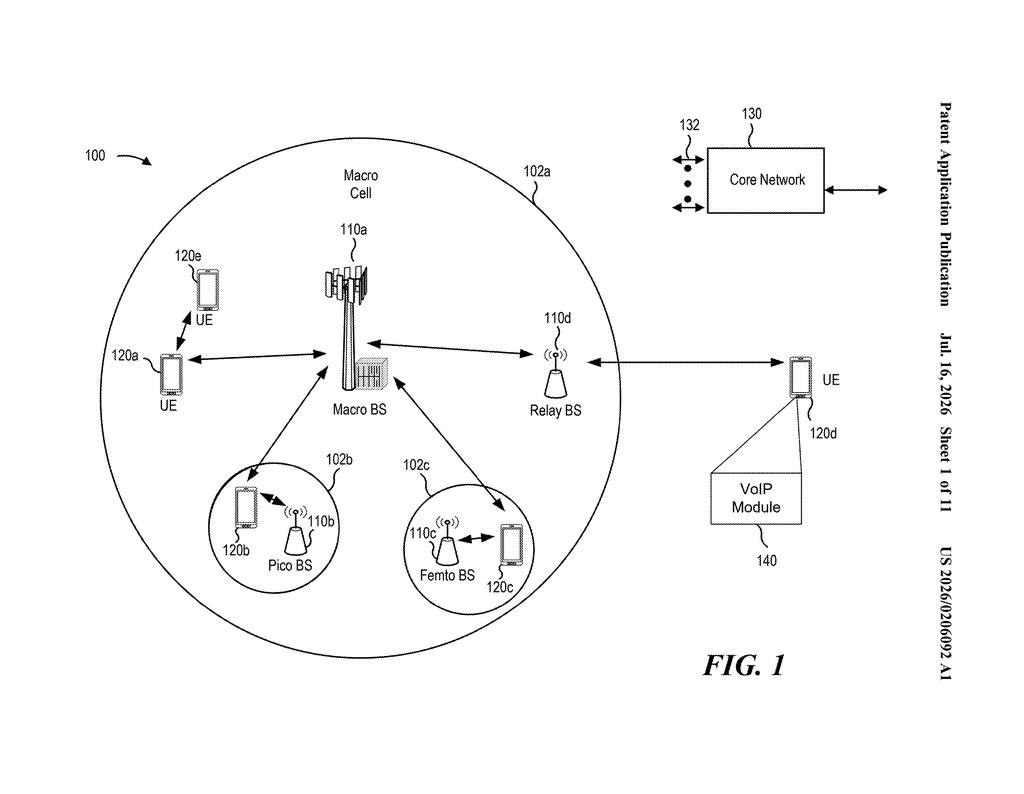
How Qualcomm keeps VoIP calls smooth during modem naps
Imagine your phone's radio as someone who blinks constantly while listening to you speak. Each blink is a tiny moment where the radio goes quiet to save battery. Right now, the audio your phone needs to send just waits around during those blinks, doing nothing.
Qualcomm's patent describes a system that fills those idle moments with useful work. Instead of waiting for the radio to fully wake back up before processing your voice, the phone starts encoding your audio during the ramp-down and ramp-up periods on either side of each sleep window. By the time the radio is ready to transmit, the audio packets are already prepared.
The result is that your voice call gets processed more efficiently without adding extra strain on the battery. The modem's sleep schedule stays intact, which is what keeps power consumption low, but the pauses are no longer wasted.
How CDRX sleep windows become audio encoding slots
Modern 5G and LTE chips use a power-saving feature called Connected Mode Discontinuous Reception (CDRX). Think of it as a programmed blinking pattern: the modem switches on for a short burst (the ON duration), then powers down briefly, then wakes again. This cycle repeats dozens of times per second, and the savings add up meaningfully over a long call.
The problem is that VoIP audio encoding (converting your voice into compressed data packets ready for internet transmission) typically happens in sync with when the modem is awake and ready to send. That timing assumption wastes the ramp-down and ramp-up windows on either side of each sleep period, because those transition phases are neither full sleep nor full transmit.
Qualcomm's patent shifts the encoding work into exactly those transition windows. Specifically:
- Audio packets are encoded after the prior ON duration ends, during the modem's ramp-down phase.
- Alternatively, encoding happens during the ramp-up phase before the next ON duration begins.
- The completed packets are then transmitted during the next active ON window.
By front-loading the audio work into otherwise idle transition time, the system avoids forcing the modem to stay awake longer than the CDRX schedule requires. The sleep cycle stays on schedule, and audio packets arrive at the transmit window ready to go.
What this means for battery life on long voice calls
Battery life during voice calls is a long-standing weak point for smartphones, especially on 5G where modem power draw is high. The CDRX mechanism was designed specifically to address this, but any audio processing that happens outside its rhythm effectively forces the chip to burn extra power. Qualcomm's approach tightens that schedule without cutting corners on call quality.
For you as a caller, this is largely invisible, which is the point. Calls should sound the same, but your phone should run warmer for less time and drain the battery more slowly over a long conversation. For Qualcomm, getting this scheduling right is essential as VoIP (think WhatsApp calls, FaceTime, and Teams calls over mobile data) continues to replace traditional cellular voice.
This is unglamorous chip-scheduling work, but it's exactly the kind of low-level optimization that separates a good modem from a great one. Qualcomm's modem business lives or dies on this sort of detail, and getting VoIP timing right as traditional voice calls fade away is a real priority. Worth a look if you follow mobile silicon.
Get our take in your Top Stories
Liked this breakdown? Add Patentlyze as a preferred source on Google, and our plain-English take shows up more often in your Top Stories the next time Qualcomm patent news breaks.
There are more where this came from
We read every patent application Big Tech publishes and send you the ones worth knowing. Plain English, free, every week.
Want this weekly breakdown for a company we don't cover? Patentlyze Pro →