
Intel Patent Fixes the Fake Look of Virtual Backgrounds
Virtual backgrounds on video calls have a tell: your face looks like it was photographed under fluorescent office lights and pasted onto a beach at sunset. Intel's new patent attacks that problem at the hardware level, before the image even fully processes.
Why virtual backgrounds still look fake, and Intel's fix
Imagine you're on a video call with a tropical beach background selected. Your camera captures you sitting in your dim home office, but the background image is bright and warm. The result is that familiar uncanny look: your face color and lighting don't match the scene at all. The virtual background looks fake because your camera's settings were tuned for your room, not the background.
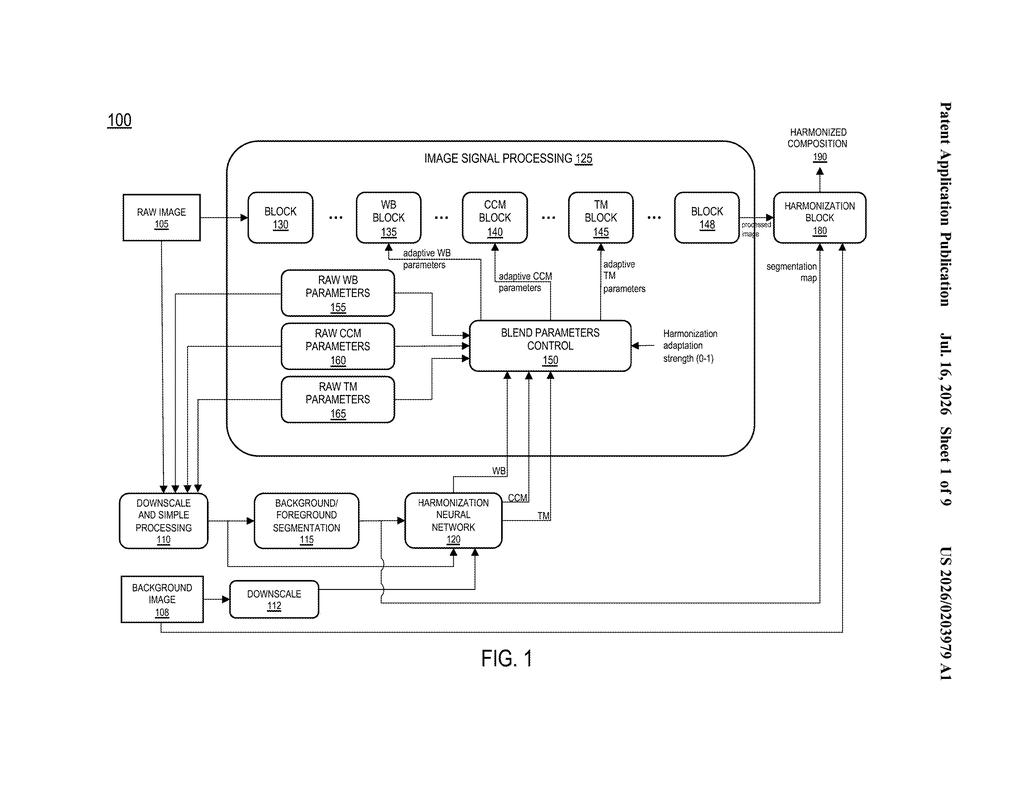
Intel's patent describes a system that corrects this mismatch automatically. A small AI model analyzes a shrunken-down version of both your camera image and the replacement background, then figures out exactly how to adjust your camera's internal color and lighting processing so your foreground looks like it belongs in that background.
The clever part is where this happens. Instead of fixing things after the photo is taken (which can introduce blurriness or color errors), Intel's system applies the corrections inside the camera's own processing chip, before the image is fully formed. You get a natural-looking blend without the usual quality hit.
How Intel's ISP pipeline predicts and applies color corrections
The patent describes a pipeline built into an image signal processor (ISP), the dedicated chip inside cameras and phones that converts raw sensor data into a viewable image. The key insight is that color-matching corrections applied after an image is processed tend to degrade quality, while corrections applied during processing preserve the full detail the sensor captured.
Here's the step-by-step flow:
- The camera captures a raw sensor image of you (the foreground) against whatever is physically behind you.
- Both that raw image and the chosen replacement background are downscaled (shrunk to low resolution) to keep things computationally light.
- A harmonization neural network (a small AI model trained to match visual styles) analyzes the two low-resolution images and predicts a set of parameter adjustments, things like color temperature, tone curves, and white balance settings.
- Those predicted parameters are fed back into the ISP's hardware blocks, which reconfigure themselves on the fly.
- The full-resolution foreground image is then processed with those new settings, so your appearance matches the lighting and color of the background.
- Finally, the adjusted foreground is blended with the background image to produce the finished output.
Running the AI inference on low-resolution images keeps the processing fast and power-efficient, which matters on laptops and mobile devices.
What this means for video calls and content creation
Background replacement is already everywhere: video calls, streaming, social media filters, and content creation tools. The persistent problem is that the technology has mostly been a compositing trick, cutting out your silhouette and dropping it onto a new image, without adjusting how you look to match the new environment. Intel's approach addresses the root cause rather than masking it.
For you as a user, this could mean video calls where your face actually looks like it belongs in the background scene, not like a cutout pasted on top. For Intel, it represents a way to make its integrated camera processing hardware more attractive to laptop makers and phone manufacturers who want better built-in video quality as a selling point, particularly as remote work and content creation continue to drive camera hardware demand.
This is a genuinely thoughtful engineering solution to a problem that has annoyed anyone who has used virtual backgrounds seriously. Fixing the color match at the ISP level rather than in software post-processing is the right architectural call, and doing the AI inference at low resolution shows the team was thinking about real-world power budgets. Whether it ships in a product soon depends on Intel's camera platform roadmap, but the underlying idea is sound and practical.
There are more where this came from
We read every patent application Big Tech publishes and send you the ones worth knowing. Plain English, free, every week.
Want this weekly breakdown for a company we don't cover? Patentlyze Pro →