
Apple Patents a System for Giving AI Characters Their Own Goals in Mixed Reality
Apple is exploring a way to give virtual characters in mixed-reality environments their own objectives, letting them behave more like autonomous actors than scripted props. It's the kind of system that could make a virtual world feel genuinely alive.
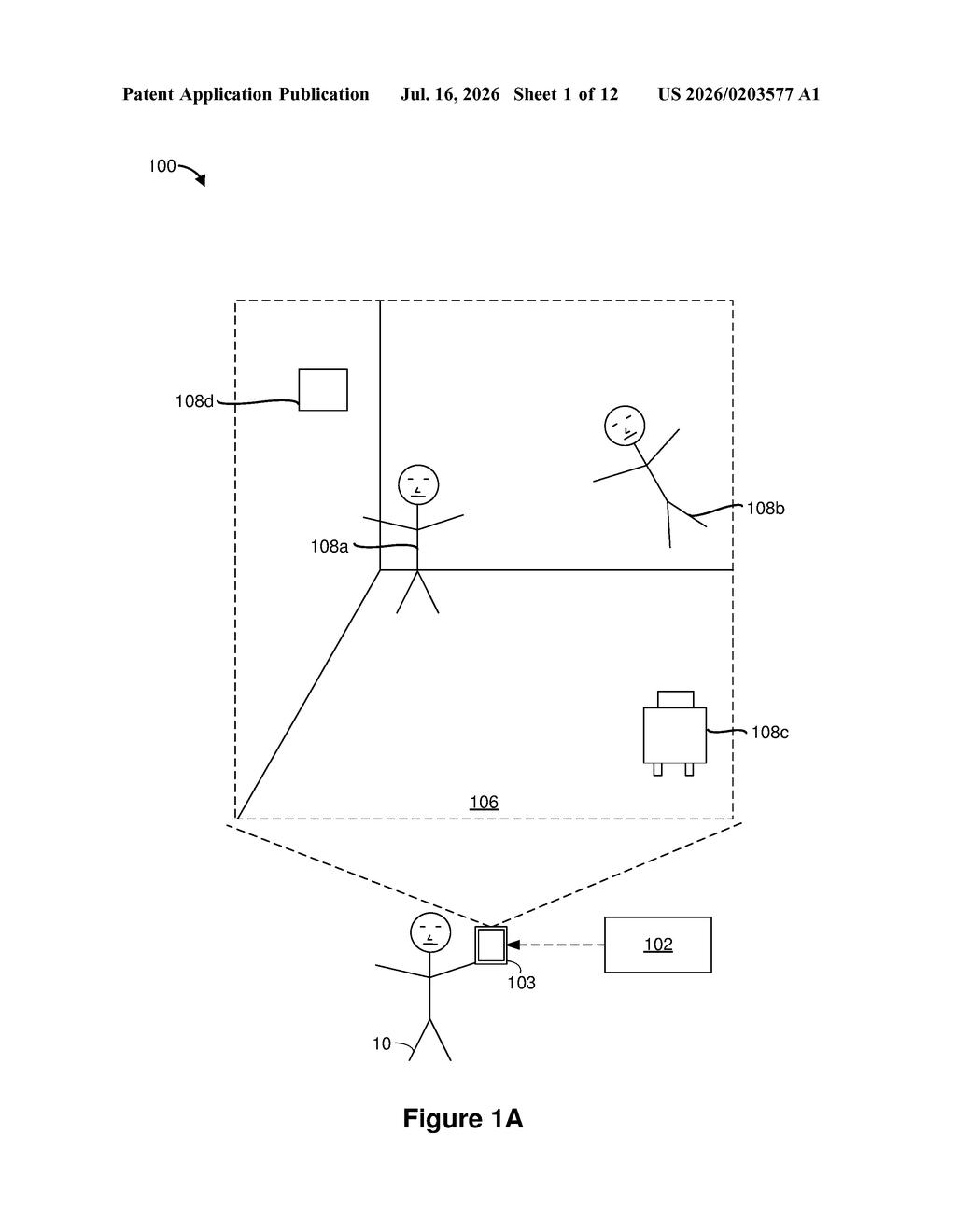
What Apple's goal-driven mixed-reality characters actually do
Imagine playing a game on your Apple Vision Pro where the characters around you aren't just following a rigid script. Instead, each one has its own goal, maybe to find shelter before a storm, or to trade goods with another character, and the world around you shifts to support whatever that character is trying to accomplish.
That's roughly what this patent describes. Apple is working on a system that drops AI-driven characters into mixed-reality scenes, gives them a set of goals drawn from a predefined list, and then adjusts the environment and the character's starting conditions to match those goals.
The result is a scene that's generated around what the characters are trying to do, rather than hand-crafted by a developer for every possible situation. You get a more dynamic, less repetitive experience without someone manually scripting every interaction.
How the system generates objectives and sets scene conditions
The patent introduces a concept Apple calls an objective-effectuator, essentially an AI-controlled character or agent placed inside a synthesized (mixed or virtual) reality scene. Each agent comes with two built-in lists: a set of predefined objectives (the goals it can pursue) and a set of predefined actions (the moves it can take).
When the system spins up a scene, it reads contextual information about the environment and then generates a specific objective for the agent by combining those two lists. Think of it like a function that takes 'what this character can want' and 'what it can do,' and outputs a concrete goal for this particular moment.
Once a goal is chosen, the system does two more things:
- It adjusts environmental conditions in the scene to match the objective (setting the stage, so to speak).
- It establishes initial conditions and a current action set for the agent, so it starts the scene already oriented toward its goal.
Finally, the agent itself is modified to reflect its objective, which likely includes updating how it looks or moves. All of this happens programmatically, meaning scenes can be generated fresh rather than pre-built by hand.
What this could mean for Apple Vision Pro experiences
For Apple Vision Pro and whatever spatial computing hardware comes after it, this kind of system is a building block for experiences that don't feel repetitive. Right now, most interactive scenes in AR and VR are carefully hand-scripted, which means you hit the same beats every time. A goal-generation system like this one could let developers describe the rules of a world and let the AI fill it with varied, purposeful behavior.
This matters most for games and interactive entertainment, but the same logic applies to training simulations, educational tools, or any mixed-reality experience where you want characters to feel like they have their own agenda. It also signals that Apple is thinking seriously about the infrastructure layer beneath spatial apps, not just the hardware.
The claims in this filing were all canceled, which makes it a dead end legally and limits how much weight you can put on it as a product signal. The underlying idea is genuinely interesting for spatial computing, but without active claims, this is more a window into Apple's research thinking than evidence of something shipping soon.
There are more where this came from
We read every patent application Big Tech publishes and send you the ones worth knowing. Plain English, free, every week.
Want this weekly breakdown for a company we don't cover? Patentlyze Pro →