
Nvidia Patent Lets Carmakers Customize How Vehicles Detect and Monitor Passengers
Nvidia has filed a patent for a system that lets automakers customize exactly how a vehicle's sensors work together to detect what's happening inside the cabin, from whether a driver's hands are on the wheel to whether a child has been left behind in the back seat.
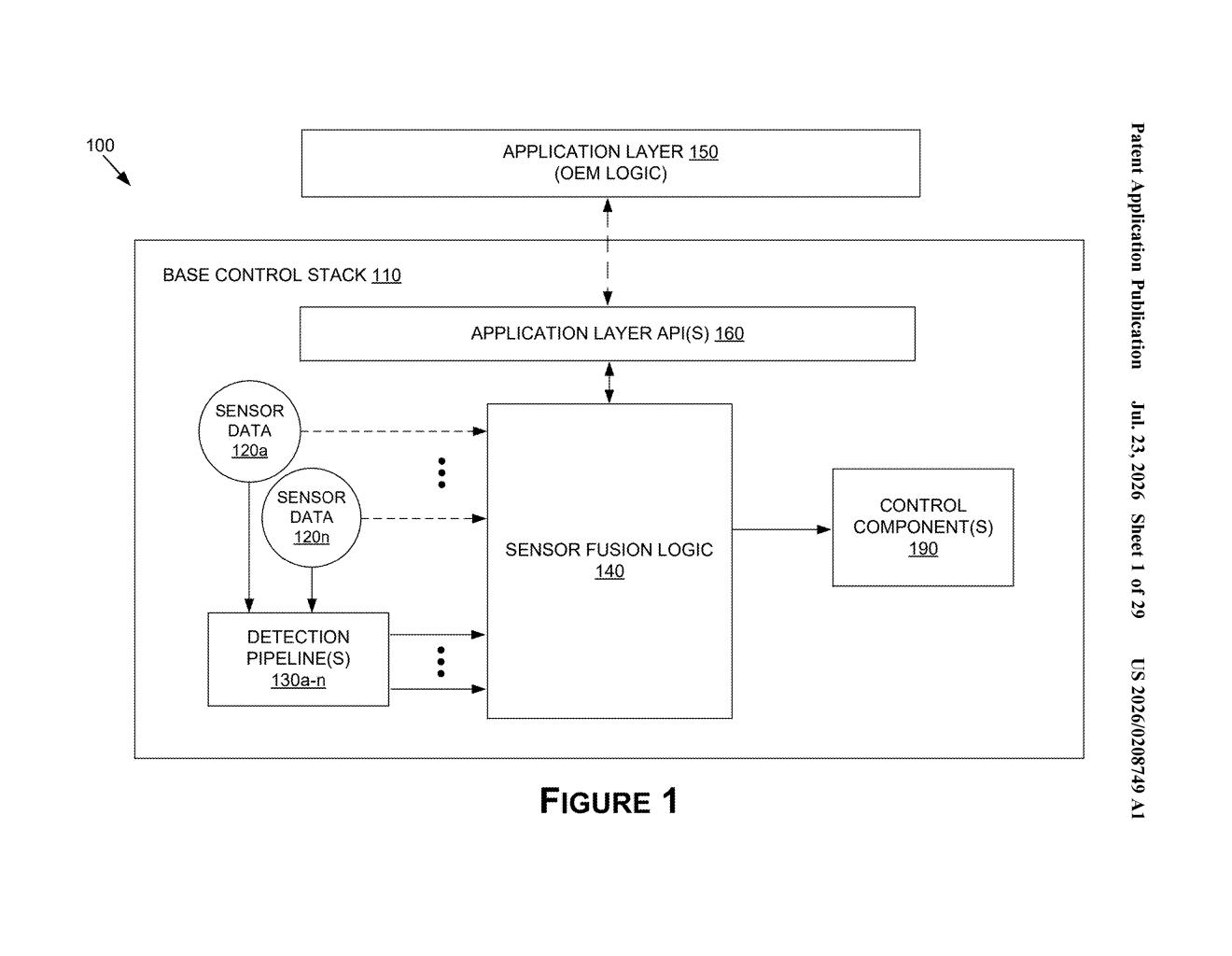
How Nvidia's in-car sensor mixing system works
Imagine your car has half a dozen sensors pointing at you and your passengers: cameras, radar, maybe a heart-rate monitor built into the seat. Right now, how all that data gets combined to make decisions is largely baked into the system at the factory. Nvidia's patent describes a way to make that process adjustable.
The idea is that the software layer responsible for blending sensor readings together can be tuned using configurable settings, so a carmaker building a family SUV can dial up the priority on child-detection alerts, while a robotaxi company might emphasize driver attentiveness monitoring instead. Each physical seat position can even get its own set of rules.
Sensor fusion (the process of combining data from multiple sources into a single, more reliable picture) is already common in self-driving tech. What's new here is the proposal to make those rules a kind of dial that manufacturers, not just engineers at Nvidia, can turn.
How the fusion layer combines camera, radar, and other inputs
The patent centers on a concept Nvidia calls configurable sensor fusion. A vehicle's compute platform runs a "base control stack" (think of it as the core software brain of the car) that continuously pulls in data from multiple sensors at once. Those sensors might include cameras, radar, lidar, infrared readers, or biometric monitors.
Rather than fusing all that data in a fixed way, the system exposes a layer of configurable parameters: weights (how much to trust each sensor), thresholds (at what confidence level to trigger an alert), and flags (whether a particular detection task is even active). An original equipment manufacturer (OEM) can set these values to customize behavior for their specific vehicle.
The patent lists several detection tasks the system can handle:
- Hands-on-wheel detection (is the driver touching the steering wheel?)
- Child presence detection (is a child left alone in the car?)
- Abnormal pose detection (has a passenger slumped or collapsed?)
- Heart rate monitoring and liveness detection (confirming a person is conscious)
- Body size detection (adjusting airbag force based on passenger size)
Critically, the system is slot-dependent, meaning different seat positions in the vehicle can each have their own sensor selection rules and fusion logic.
What this means for driver safety and car customization
For drivers and passengers, this patent points toward a future where safety features are less generic. A car could automatically apply stricter child-detection rules to rear seats and less intensive monitoring to the driver's seat, all from a single underlying platform.
For Nvidia, the business angle is about making its automotive compute platform (the DRIVE system) more attractive to a wide range of carmakers. If a manufacturer can drop Nvidia's core stack into their vehicle and then configure the safety-sensing behavior themselves without writing new algorithms from scratch, that reduces both development time and cost. It also positions Nvidia's software as infrastructure that OEMs build on top of, not around.
This is a smart piece of platform strategy dressed up as a safety patent. The actual sensor-fusion math isn't new, but wrapping it in a manufacturer-configurable interface is a real engineering problem worth solving. If Nvidia can make its automotive stack genuinely plug-and-configure for different car models, that's a meaningful competitive advantage in a market where every major carmaker is wrestling with how much sensor software to build in-house.
There are more where this came from
We read every patent application Big Tech publishes and send you the ones worth knowing. Plain English, free, every week.
The drawings
29 drawing sheets from US 2026/0208749 A1 · click any drawing to enlarge


Want this weekly breakdown for a company we don't cover? Patentlyze Pro →
Be the first to weigh in