
IBM Patents a Color-Flickering Method to Make Slide Content Unrecordable
IBM has patented a way to make slides look perfectly normal to anyone in the room while turning any screen recording of them into a garbled, color-scrambled mess.
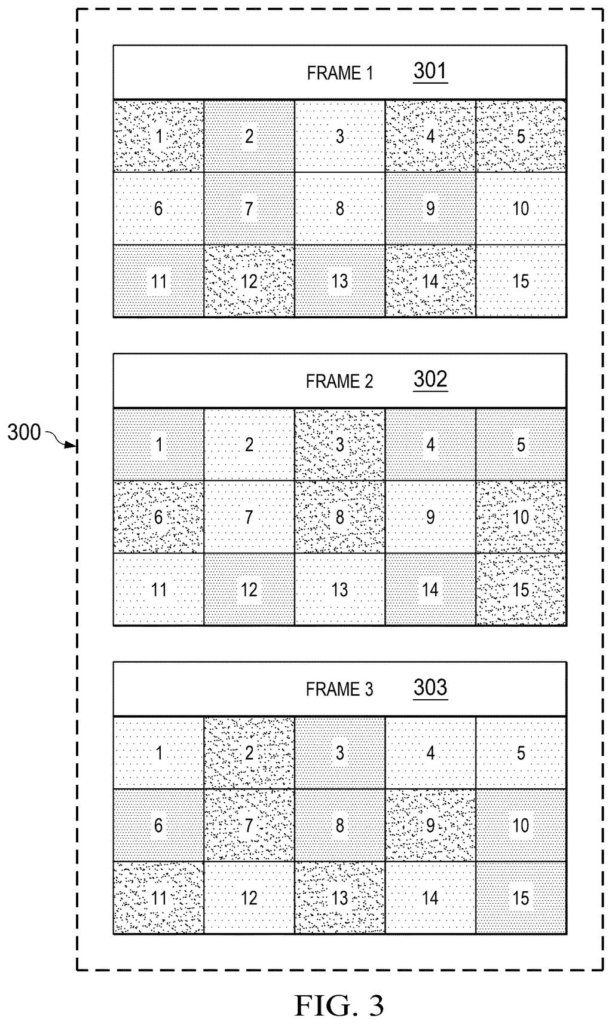
How IBM's RGB flicker trick protects presentation slides
Imagine you're presenting confidential business data on a screen. Someone in the back hits record on their phone. IBM's patented method is designed to make that recording useless, even though the slides look completely fine to every human eye in the room.
Here's the trick: instead of displaying a slide as a single static image, the system secretly breaks it into three rapid frames, each tinted red, green, or blue in a rotating pattern. Your eyes and brain automatically blend those flickers into a normal-looking image, the same way a spinning color wheel looks white. But a camera or screen-capture tool records each frame separately, capturing only fragments of color-scrambled pixels that don't add up to anything readable.
IBM's approach essentially exploits the gap between how human eyes perceive flickering light and how digital recording devices sample it. No special glasses or hardware required for the audience, just a different way of saving the slide itself.
How pixels get split across three color-filtered frames
The patent describes a software method that converts a slide's content into a pixel image, then divides every pixel into one of three groups. From those groups, the system generates three distinct frames, each with a different color filter applied: red, green, and blue.
Those three frames cycle in a loop at a carefully chosen frame rate (the number of times per second the frames switch). The rate is tuned to sit above the threshold where the human visual system stops perceiving individual flashes and instead sees a stable, blended image, a well-known phenomenon called flicker fusion.
The key trade-off the patent exploits:
- Human eyes fuse the three color passes into one coherent image at that speed.
- Screen-recording software or a phone camera captures individual frames, getting only one-third of the image data per frame, each tinted a single color, making reconstruction difficult.
- The finished slide file saves this frame loop as its actual content, so the protection is baked in rather than applied externally.
There's no mention of encryption keys or viewer-side hardware. The method relies entirely on the perceptual gap between human vision and digital capture devices.
What this means for confidential presentations and screen capture
Leaked slide decks are a chronic headache for corporations, law firms, and anyone presenting sensitive data in a room full of phones. Most existing protections, like watermarks or PDF restrictions, don't stop someone from simply recording the screen. IBM's approach tries to make the recording itself the weak point rather than policing who gets access to the file.
That said, the protection has obvious limits. A determined attacker could use a high-speed camera or software that records at a fast enough frame rate to reconstruct the image. The patent also doesn't address live streaming scenarios or projector color accuracy. Still, for everyday corporate settings where casual screen-grabbing is the threat, a method baked directly into the slide format, requiring no special viewer software, is a genuinely practical angle worth watching.
This is a clever low-tech solution to a real problem: it uses basic human visual biology rather than complex cryptography, which means it could actually ship as a simple feature in presentation software. The protection is far from bulletproof against a sophisticated attacker, but IBM isn't trying to stop nation-states here. For locking down a quarterly earnings preview or an M&A pitch deck, this kind of friction-free deterrent could be surprisingly useful.
There are more where this came from
We read every patent application Big Tech publishes and send you the ones worth knowing. Plain English, free, every week.
The drawings
8 drawing sheets from US 2026/0212545 A1 · click any drawing to enlarge


Want this weekly breakdown for a company we don't cover? Patentlyze Pro →
Be the first to weigh in