
Sony Patents AI Tool for Collaborative Game Asset Creation and Sourcing
Sony Interactive Entertainment has filed a patent for an AI-assisted content creation tool that lets multiple users contribute ideas, sketches, or other starting points to collaboratively build game artwork and in-game objects through iterated AI generation.
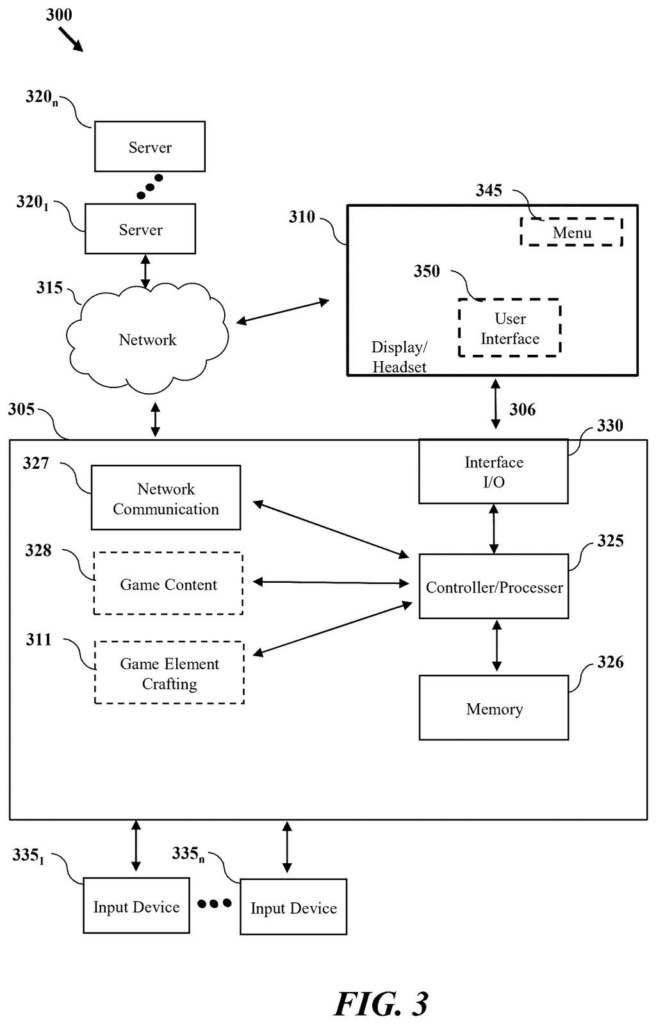
How Sony's collaborative game asset builder would work
Imagine you and a teammate both want to design the look of a weapon for a video game. Instead of one person doing all the work in a graphics program, you each drop in rough ideas, notes, or reference images, and an AI takes those inputs and starts building something. Each round of suggestions refines what the AI produces, getting closer to what the team wants.
That's the basic idea behind this Sony patent. It describes a system where users feed "seed elements" (a starting sketch, a description, a style reference) into an AI model, which generates a piece of game content. Then additional seeds can be added to update or steer that content through multiple rounds of refinement.
The system also supports multiple contributors, so game developers or even players could each add their own input to shape the final result. Sony also describes ways to merge or layer different users' contributions into a single output.
How seed inputs drive iterative game element generation
The patent describes a method and system for generative game content creation that uses an AI model (called a "machine model" in the filing) to turn user-supplied starting points into usable game assets like character art or environmental elements.
The core loop works like this:
- A user provides a seed element, which could be a sketch, a text description, a style reference, or similar input.
- The AI model generates a source element iteration, essentially a draft version of the game asset, formatted in a way that the game engine can actually render on screen.
- The system then accepts additional seed elements, which can come from the same user or different users, and uses them to produce a second (or further) iteration.
- User annotations on those seeds, notes or markups attached to an input, can also be detected to give the model more context about what to do with them.
The patent also describes merging contributions from multiple users into a single crafted element, and applying seed inputs across multiple generation layers at different points in the process. The output is a finished asset that can be dropped directly into the game.
What this means for game development pipelines
For professional game studios, this kind of tool could speed up the early stages of asset production, letting designers rough out ideas collaboratively and let AI do the heavy lifting on turning those rough ideas into something usable. That matters most in large productions where art pipelines are expensive and slow.
For Sony specifically, the filing hints at interest in giving users, not just internal developers, tools to create game content. If this made its way into something like a player-facing creation mode, it would put Sony closer to what platforms like Roblox or Fortnite's Creative mode already do, but with AI generation at the center rather than manual building blocks.
This is a sensible and well-scoped patent for AI-assisted game content creation, but it covers ground that a lot of game studios and tool makers are already working on. The multi-user collaboration angle and the iterative seed-input loop are interesting specifics, though nothing here is a dramatic leap beyond what's already being discussed publicly. It's worth tracking because it signals Sony is thinking about AI creation tools at the platform level, not just for internal teams.
There are more where this came from
We read every patent application Big Tech publishes and send you the ones worth knowing. Plain English, free, every week.
The drawings
7 drawing sheets from US 2026/0208047 A1 · click any drawing to enlarge


Want this weekly breakdown for a company we don't cover? Patentlyze Pro →
Be the first to weigh in