
Nvidia Patent Covers AI Model That Predicts and Generates Character Motion Together
Most AI animation tools do one job: either guess how a character moved from partial data, or invent new movement from scratch. Nvidia is filing a patent for a single model that does both at the same time, learning from both tasks together.
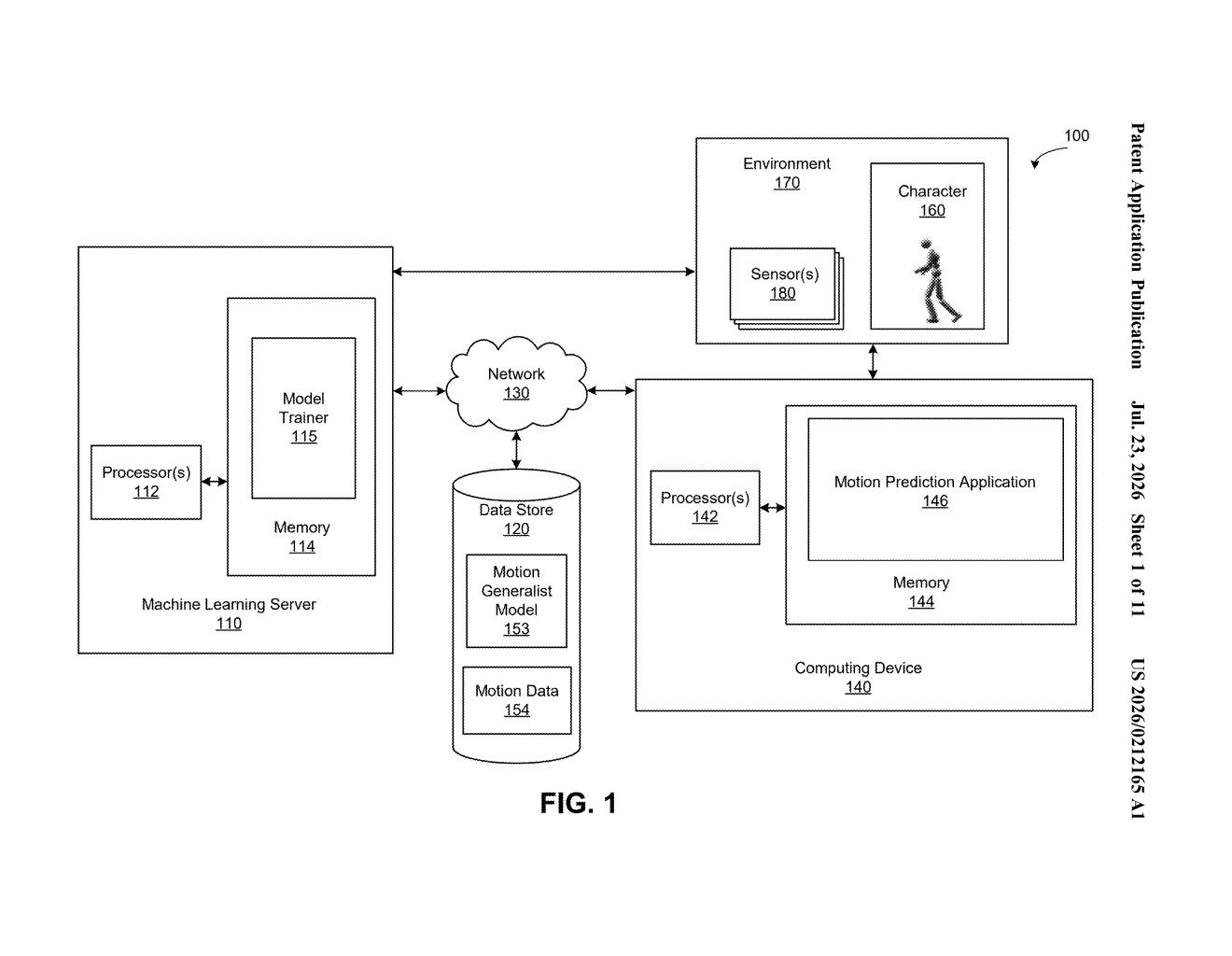
What Nvidia's motion generalist model actually does
Imagine a director filming an action scene but the camera only caught part of the stunt. One AI tool could fill in the missing frames. A different tool could dream up entirely new stunts from a text prompt. Nvidia's patent describes training one model to do both jobs simultaneously.
The idea is that learning to reconstruct movement you've seen and learning to invent movement you haven't seen actually teach the model complementary things about how bodies move. By training on both tasks together and measuring errors from both, the model ends up with a broader understanding of motion than a specialist trained on just one task.
This has obvious uses in video games, animated films, and even robotics, anywhere a system needs to understand or produce realistic human (or character) movement. The patent covers the training method itself, not a finished product.
How the model learns from two motion tasks at once
The patent describes a training procedure for what Nvidia calls a "motion generalist model." During training, the model is given two different types of tasks at the same time.
- Motion estimation: Given some partial or noisy input (think: a few camera angles, sensor readings, or incomplete pose data), predict what the full motion must have looked like. This is reconstruction from evidence.
- Motion generation: Given a different kind of prompt or condition (think: a text description, a target action, or a style cue), invent plausible motion from scratch.
The model produces outputs for both tasks, then the system computes a combined loss (a measure of how wrong both outputs are, compared to known correct motions). That combined error signal is used to update the model's internal parameters, nudging it to get better at both jobs simultaneously.
The key insight is that estimation and generation, though they sound opposite, both require a deep internal model of how motion works physically and stylistically. Training jointly means the model builds that shared understanding faster and more broadly than training on either task alone.
What this means for games, film, and robotics animation
For game studios and animation houses, the practical payoff is a single AI tool that can both clean up motion-capture data and generate new animations on demand, without maintaining two separate systems trained separately. That consolidation has real workflow and cost implications.
For robotics, a model that understands motion at this level could help robots interpret human movement from incomplete sensor data and then predict or plan their own movement in response. Nvidia's position in robotics simulation (Isaac) makes this filing worth watching beyond the entertainment context. The patent covers the training method broadly, so it could apply anywhere character or body motion needs to be understood or produced by a machine.
This is a foundational training-method patent, not a flashy product announcement, but that's actually why it's worth paying attention. Whoever owns a strong general motion AI has leverage across games, film VFX, and robotics. Nvidia is clearly planting a flag here before the field gets crowded.
Which company should we read for you?
We track 17 companies here. Pro is the same weekly breakdown for any company you choose, delivered privately. Type a name and we'll scope it and send you a quote.
Get one Big Tech patent every Sunday
Plain English, intelligent commentary, no hype. Free.
Editorial commentary on a publicly published patent application. Not legal advice.