
Samsung Patents a Stretchable Screen That Reinforces Its Own Weak Spots
Stretching a screen sounds simple until the part that bends starts to crack. Samsung's latest patent tackles that weak-point problem head-on with a system of reinforcing patterns built directly into the display.
What Samsung's stretchable screen protection actually does
Imagine a screen that can physically stretch, like the display on a future smartwatch or a piece of flexible wearable tech. The tricky part isn't making the screen itself flexible; it's the narrow bridge sections that connect one part of the screen to another. Those connector zones take the most stress every time the display bends or stretches, and they're the first things to fail.
Samsung's patent describes a way to protect those stress points using a set of carefully placed reinforcing patterns. Think of them like the extra stitching you'd find at the corners of a pocket on a good pair of jeans. The patterns are positioned right at the boundaries where the rigid display sections meet the stretchy connectors.
The goal is to spread the mechanical stress more evenly so that the display doesn't crack or delaminate at its most vulnerable spots. This is the kind of unglamorous engineering that makes the difference between a product that survives daily wear and one that falls apart after a few weeks.
How the overlapping patterns guard each connection zone
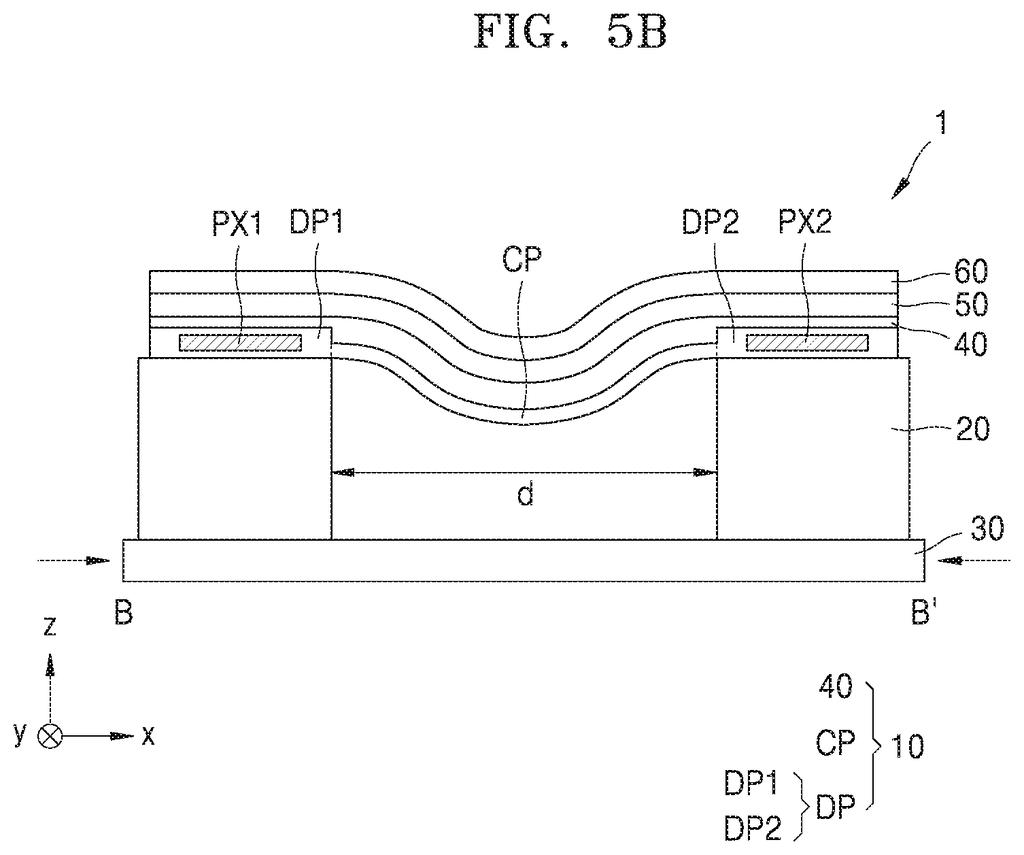
The patent describes a display panel divided into distinct sections: display parts (the areas that actually show pixels) and connection parts (the thin bridging segments that link those display areas together and allow the overall screen to stretch or flex).
To keep those connection bridges from failing, Samsung's design places three categories of reinforcing structures at the critical junctions:
- First pattern: sits on the display part itself, right next to where the connection bridge begins
- Second pattern: sits on the connection part, right next to the display section it's attached to
- Third pattern: sits on the opposite end of the connection part, adjacent to the next display section
The key detail in the independent claim is that the second pattern extends along the boundary line between the display part and the connection part. That boundary is where stress concentrates most during stretching, so lining it with a reinforcing structure distributes the mechanical load before it can cause a crack or separation.
The patent also mentions that penetration openings (holes cut through the panel) are part of the design. Those openings are what give the overall display its ability to stretch in the first place, similar to how a mesh fabric stretches because of the gaps in it.
What this means for foldable and wearable screen tech
Stretchable displays are a logical next step beyond today's foldable phones, especially for wearables and health-monitoring devices that need to conform to skin or curved surfaces. The mechanical failure of connector bridges is one of the biggest engineering obstacles standing between concept demos and durable consumer products. A patent focused specifically on reinforcing those junctions suggests Samsung is working through the practical durability problems, not just the display-chemistry ones.
For you as a consumer, this kind of work is what eventually separates a wearable with a screen that lasts years from one that develops dead zones after a few months of normal use. It's not flashy, but solving it is a prerequisite for any stretchable screen product reaching store shelves.
This is quiet but necessary engineering. Stretchable displays have been a research fixture for years, and the reason they haven't shown up in products is almost never the display material itself but the mechanical reliability of everything around it. Samsung patenting specific stress-relief patterns at connector boundaries is the kind of detail-oriented work that signals a company moving from lab prototypes toward something they actually intend to manufacture.
There are more where this came from
We read every patent application Big Tech publishes and send you the ones worth knowing. Plain English, free, every week.
The drawings
42 drawing sheets from US 2026/0215115 A1 · click any drawing to enlarge


Want this weekly breakdown for a company we don't cover? Patentlyze Pro →
Be the first to weigh in