
Samsung Display Patents Screen Power Control That Adjusts Brightness Per Individual Pixel
Samsung Display has filed a patent for a screen power system that can flip between positive and negative voltage rails depending on how the display is being driven, a lower-level trick that could help fine-tune power delivery across different brightness or refresh modes.
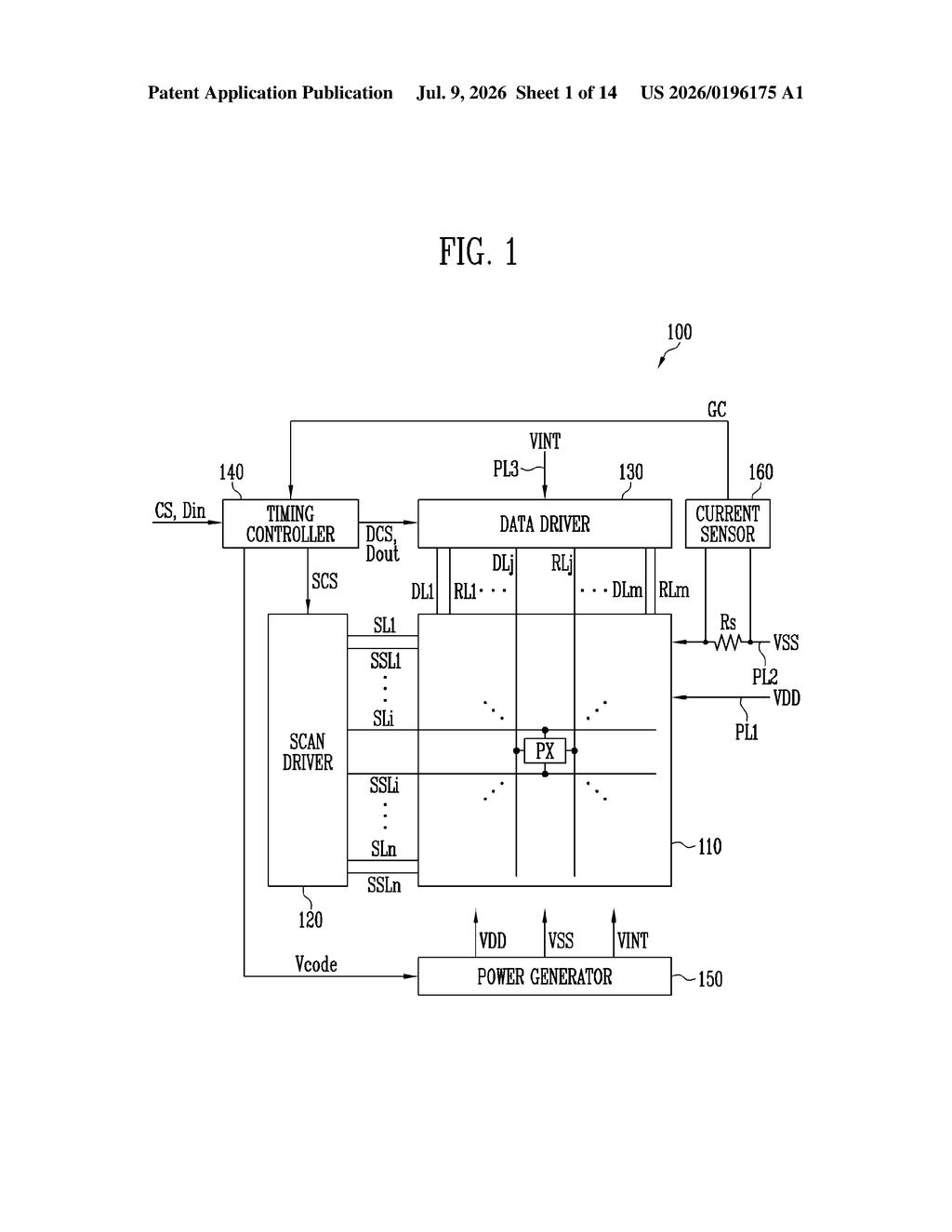
What Samsung's two-mode display power system actually does
Think of a display as a grid of tiny lights, each one needing a precise amount of electricity to glow at the right brightness. Normally, that electricity flows in one direction. Samsung's patent describes a system that can send power in two different directions, positive or negative, depending on what the screen is doing at any moment.
The display's internal controller generates signals that tell a set of switches which type of power to route to the pixels. In one driving mode, a switch delivers a negative voltage; in another mode, a different switch takes over and delivers a positive voltage instead. The system chooses based on what the screen needs.
This kind of flexibility lets a display behave differently in, say, a low-power mode versus a full-brightness mode, without redesigning the hardware from scratch. It's the sort of behind-the-scenes plumbing that most people never see, but that can affect battery life and image consistency on the screens you use every day.
How the switch units route positive and negative power
The patent describes an electronic device built around a display panel whose pixels are connected to two power lines: a first power line and a second power line. A component called the power generator feeds both lines, but the second power line is where the interesting work happens.
The second power line can carry one of two types of voltage:
- (2_1)-th driving power: a positive voltage, used in what the patent calls the second mode
- (2_2)-th driving power: a negative voltage, used in the first mode
A timing controller (the chip that choreographs when pixels turn on and off) generates four enable signals that tell a pair of switch units which voltage to route. The first switch unit handles the positive rail; the second switch unit handles the negative rail. Only one is active at a time, depending on the driving mode.
This architecture means the display can adapt its low-side power supply to match different operating conditions, such as a high-refresh gaming mode versus a power-saving always-on mode, without needing separate hardware paths for each.
What this means for display efficiency and driving modes
Display power management is one of the main levers manufacturers use to control battery drain and image quality simultaneously. Being able to switch the polarity of a power rail under software control, rather than hard-wiring it, gives engineers more flexibility when tuning a panel for different use cases like always-on displays, variable refresh rates, or low-power standby modes.
For Samsung Display, which supplies OLED panels to Samsung's own Galaxy devices as well as Apple and other manufacturers, incremental improvements to power delivery architecture can show up across hundreds of millions of screens. This patent is narrow in scope, but it points to ongoing work on making display power systems more adaptable at the hardware level.
This is a fairly deep infrastructure patent with no flashy consumer angle. It describes switching logic for display power lines, the kind of work that matters a lot to panel engineers and almost no one else. It's not unimportant, but it won't make headlines outside a display-engineering trade publication.
Get our take in your Top Stories
Liked this breakdown? Add Patentlyze as a preferred source on Google, and our plain-English take shows up more often in your Top Stories the next time Samsung patent news breaks.
There are more where this came from
We read every patent application Big Tech publishes and send you the ones worth knowing. Plain English, free, every week.
Want this weekly breakdown for a company we don't cover? Patentlyze Pro →