
Samsung Patents a System for Automatically Cleaning Up Idle 5G Network Slices
Every time a 5G carrier sets up a dedicated lane of network capacity for a customer, that lane costs resources even when nobody's using it. Samsung's patent describes a system that automatically pauses or deletes those lanes when they're idle, like a hotel that checks unused rooms out of the booking system rather than heating them all winter.
What Samsung's network slice cleanup system actually does
Imagine a highway authority that builds private express lanes for different companies. Each lane costs money to maintain, even overnight when no trucks are running. That's roughly what happens inside 5G networks: carriers carve out dedicated virtual "slices" of capacity for specific customers or services, and those slices keep consuming server resources whether traffic is flowing or not.
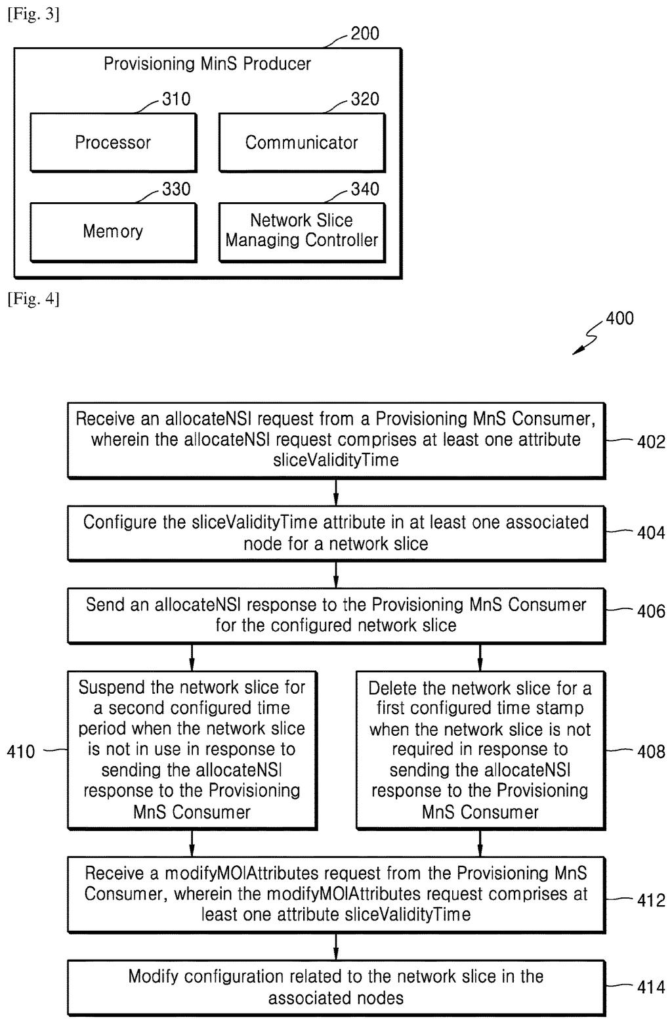
Samsung's patent describes a way to give each network slice an expiry clock. When a slice is no longer needed, the system can delete it outright at a scheduled time. When it's just temporarily quiet, the system can suspend it instead of deleting it, freeing up resources without losing the configuration entirely.
The goal is to stop management data from flowing constantly to slices that aren't doing anything, and to free up virtualized server capacity in data centers. It's housekeeping logic, but in large carrier networks running hundreds of slices, that housekeeping adds up fast.
How the slice timer and suspend logic work together
The patent covers lifecycle management for network slices (dedicated virtual portions of a 5G or 6G network assigned to specific customers, apps, or service types) inside a carrier's management system.
The core mechanism is a new configuration attribute called sliceValidityTime, which gets attached to each slice when it's created. This timestamp or timer tells the network management layer two things:
- Hard delete: if a slice is no longer required at a specific point in time, the system triggers deletion at that timestamp automatically.
- Soft suspend: if a slice is still technically active but not carrying traffic for a configured period, the system suspends it, pausing resource consumption without fully removing the slice's settings.
- Configuration sync: when a slice is modified (created, suspended, or deleted), the changes propagate to all associated network nodes through standard management operations called allocateNSI and createMOI (essentially the API calls carriers use to stand up and configure slices).
The patent is specifically aimed at reducing unnecessary management data flows and improving utilization of virtualized network resources (compute, memory, and storage running in carrier data centers rather than on dedicated physical hardware).
What this means for 5G data center efficiency
For mobile carriers and enterprise customers buying dedicated 5G capacity, wasted slice resources translate directly into wasted money and constrained capacity. A system that automatically suspends or retires idle slices could meaningfully improve how efficiently a carrier runs its data center infrastructure, especially as 5G network slicing becomes a core selling point for enterprise contracts.
For the average phone user, the impact is indirect: better-managed slices mean carriers can offer more of them without adding hardware. As 6G planning accelerates and network slicing moves from niche to standard, the kind of housekeeping logic described here becomes table stakes for any serious carrier management platform.
This is operational plumbing, not a headline feature. The concept of expiring or suspending unused virtual network slices is straightforward, and similar lifecycle management ideas exist in cloud computing already. What makes it worth noting is that Samsung is one of the few companies selling both the network equipment and the management software to carriers, so a patent like this could become part of the tooling carriers rely on as 5G slicing deployments scale up.
There are more where this came from
We read every patent application Big Tech publishes and send you the ones worth knowing. Plain English, free, every week.
The drawings
4 drawing sheets from US 2026/0213997 A1 · click any drawing to enlarge


Want this weekly breakdown for a company we don't cover? Patentlyze Pro →
Be the first to weigh in