
Qualcomm Patents a More Efficient Way for Cars to See Themselves From Above
Your car's driver-assist system already stitches together feeds from several cameras, but doing that in real time takes serious computing power. Qualcomm's new patent describes a way to pre-teach an AI model exactly where to look, so the stitching gets done faster and with less work.
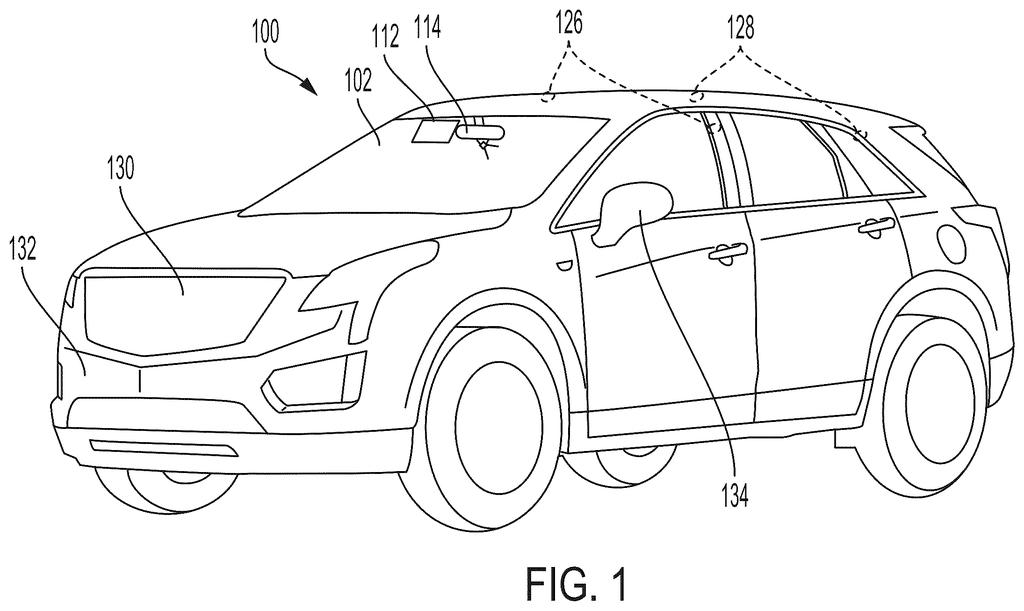
What Qualcomm's bird's-eye-view camera system actually does
Imagine you're backing out of a parking space and your car shows you a top-down view, as if a drone were hovering overhead. That view isn't a real camera shot; your car is combining images from several cameras pointed in different directions and mathematically reassembling them into a single overhead picture. That process has to happen dozens of times per second, and it's expensive for the chip inside your car.
Qualcomm's patent describes a way to make that process cheaper. Instead of the AI figuring out, from scratch each time, which part of each camera image corresponds to which spot on the overhead map, the model is pre-trained with a fixed set of reference points. Those reference points are locked in during training, so at runtime the chip just looks up the answer rather than calculating it on the fly.
The result is that the same overhead map gets built using less computation, which matters a lot in cars where the chip has to juggle many tasks at once and can't run hot.
How the model pre-learns where to look in each camera frame
The patent centers on building a bird's-eye-view (BEV) representation, which is the overhead map that advanced driver-assist systems use to track lanes, other vehicles, and obstacles around a car.
The core challenge is called inverse projection: for every point on the overhead grid, the system has to figure out which pixel in which camera image corresponds to that real-world location. Normally, a neural network would compute those pixel locations dynamically, recalculating them for every frame. That's flexible but computationally heavy.
Qualcomm's approach pre-computes a set of predetermined indices (essentially a lookup table baked into the model during training) that map each overhead grid point to the relevant image regions. At inference time (when the car is actually driving), the model consults those fixed indices rather than re-deriving the geometry from scratch. The AI then reads out a set of image features (local patterns like edges, textures, and shapes) from the indexed locations and attaches them to the corresponding overhead grid point.
- Multiple cameras feed image frames simultaneously.
- The model maps overhead grid points back into each camera's image using pre-learned indices.
- Features are pulled from those indexed locations and assembled into the final overhead map.
The efficiency gain comes from trading flexible runtime computation for a faster, pre-learned lookup, which is a classic design choice when a system's geometry is fixed (as it is in a car with cameras in fixed positions).
What this means for driver-assist chips in everyday cars
Driver-assist chips have to process camera feeds, radar, lidar, and sensor fusion all at once, often on a power budget measured in watts. Any reduction in the computational cost of building the overhead map frees up headroom for other tasks, or lets the same chip run cooler and cheaper. For automakers trying to hit a target bill-of-materials cost, that matters.
Qualcomm is a major supplier of automotive-grade chips, including the Snapdragon Ride platform. A patent like this fits squarely into the company's strategy of making perception workloads run more efficiently on its silicon, which is the kind of improvement that shows up in every car using the platform rather than in a single flashy product.
This is a targeted engineering optimization, not a conceptual leap in how cars perceive the world. The idea of pre-computing lookup indices to replace dynamic geometry calculations is a well-understood efficiency trade-off. What makes it worth watching is the applicant: Qualcomm supplies chips to a wide range of automakers, so an efficiency gain in their perception pipeline could end up in millions of vehicles.
There are more where this came from
We read every patent application Big Tech publishes and send you the ones worth knowing. Plain English, free, every week.
The drawings
10 drawing sheets from US 2026/0220736 A1 · click any drawing to enlarge


Want this weekly breakdown for a company we don't cover? Patentlyze Pro →
Be the first to weigh in